
Introductions - Why Does the Civil War Era Have a Hold on American History?
Explore the enduring fascination with the Civil War era, its impact on American history, and its relevance to modern society in this thought-provoking lecture.

Slavery and State Rights - What Caused the Civil War?
Explores five theories on Southern secession, including slavery preservation and fear, and examines how historians have interpreted the Civil War's causes, from Rhodes to the Beards' economic perspective.

The Peloponnesian War - Causes and Thucydides' Perspective - Part 2
Explore the causes of the Peloponnesian War, challenging Thucydides' view of its inevitability and examining his motivations as a historian. Gain insights into ancient Greek politics and historiography.

Freeman's Top Five Tips for Studying the American Revolution
Discover five essential tips for studying the American Revolution, challenging common misconceptions and offering a fresh perspective on this pivotal historical period.

Dante's Divine Comedy: Paradise Cantos XV-XVII - Cacciaguida and Exile - Lecture 19
Explore Dante's Paradise cantos XV-XVII, examining the interplay of history, self, and exile through Cacciaguida's encounter. Delve into historiographic modes, mythic references, and the redemptive power of exile in Dante's poetic journey.
Legacies of the Civil War - Lecture 27
Explore the enduring impact of the Civil War through three memory strains: reconciliationist, white supremacist, and emancipationist. Examine how historical interpretations and control of war memories have evolved over time.

The Sumter Crisis and the Outbreak of the Civil War - 1861
Explore the pivotal Fort Sumter crisis, its impact on secession, and the motivations driving Americans to war in this in-depth examination of the Civil War's outbreak.

Un Gaticidio y Cómo Hacer Historia - Análisis Crítico de un Extraño Acontecimiento Histórico
Análisis crítico de un extraño evento histórico: la matanza de gatos por obreros en 1730. Explora las causas, las condiciones laborales y cómo la historia puede formar ciudadanos conscientes y tolerantes.
Istoria fără praf - Redescoperirea fascinației istoriei
Explorarea fascinantă a istoriei dincolo de stereotipuri, evidențiind importanța cunoașterii și înțelegerii corecte a trecutului pentru a evita derapaje și a descoperi frumusețea acestui domeniu captivant.
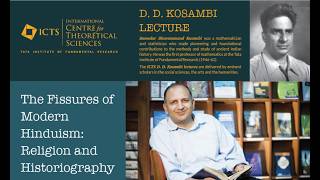
The Fissures of Modern Hinduism - Religion and Historiography by Pratap Bhanu Mehta
Explore the transformation of Hinduism from worldview to ethnic identity, examining intellectual shifts and historiographical approaches that shaped this transition in modern India.
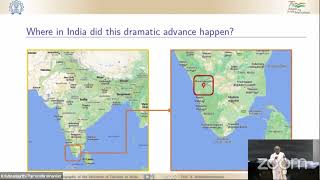
The History and Historiography of the Discovery of Calculus in India
Explore the evolution of calculus in India, from Āryabhaṭa to Mādhava's pioneering work, uncovering mathematical breakthroughs hidden in Sanskrit verses and examining historiographical aspects.
Redemption Song - Reckoning with History and Charting a Path Forward
Historians discuss reckoning with America's racial history and charting a path forward, exploring ways to address the past while fostering national unity and progress.
How History Creates Allies and Enemies
Explore how history shapes relationships between nations through lived experiences, empowering us to build connections and overcome differences.
India - The Ancient Intellectual Capital of the World
Discover India's rich intellectual heritage and its global impact. Anica Mann explores how understanding our roots enhances appreciation for everyday life and reveals hidden historical significance.
Writing Women Back into History Matters - Rediscovering Medieval Female Power and Influence
Discover how medieval women like the Birka Warrior and Hildegard of Bingen wielded significant power and influence, challenging traditional historical narratives and revealing a more diverse, complex past.

How to Talk Truthfully About Black History | Clint Smith | How to Be a Better Human | TED
Clint Smith discusses grappling with national history, legacy, and historical contradictions in American history. He explores cognitive dissonances like Thomas Jefferson's "all men are created equal" while enslaving people, growing up in New Orleans as a major slave trade site, and the importance of teaching joyous moments in Black history beyond slavery and Jim Crow.

Labirinti di Storie | Federico Carlo Simonelli | TEDxSalò
EN: Starting from toponymy, this talk explores how collective memory is shaped through the names we give to places and the stories we choose to preserve. Why do some figures become widely remembered while others fade from public consciousness? The talk also reflects on the paradox of memory: if we r
Technology, time, and cinema | Peter Hildebrand | TEDxYouth@FranklinSchoolOfInnovation
How did people think about time when moving pictures were invented? How did that thinking affect the development of cinema? And how do our cultural concepts related to time affect the ways we think about movies today? This talk traces the history of cinema, from the end of the 1800s to our modern er

Reframing art history: Power, memory and the future | Jenny LaMonica | TEDxMolloy University
Art history is shifting from a linear, Eurocentric story of “great masters” to a global, digital, and inclusive network of creative voices. This talk explores how expanding the canon, embracing technology, decolonizing narratives, and blurring disciplinary lines transforms not only the discipline bu
Everything you have, you owe to fashion. | Charlene Gross | TEDxPSU
Humans have been wearing clothes for a very, very long time, and it turns out we're really good innovators in the pursuit of fashion. From how the spindle whorl became the wheel to how the loom became the computer, fashion historian Charlene Gross explores the ways textiles have shaped societies and

Ancient American objects and the stories they tell | James Doyle | TEDxPSU
There's a lot to be learned from the artifacts of ancient civilizations. Anthropologist James Doyle takes a tour of objects and architecture from the ancient Americans, explaining both what we see on the surface, and what that tells us about who left it behind. Dr. James Doyle is an archaeologist a