Popular Protest in Early Modern England - Politics, Religion, and Society
Explores popular protest in Early Modern England, examining food riots and agrarian disturbances as orderly defenses of traditional rights, their tactics, and impact on later labor movements.
A Polarizing Society in Early Modern England, 1560-1640
Explores economic and social changes in early modern England, focusing on wealth disparities, the rise of the 'middling sort', and government responses to increasing poverty and vagrancy.

Economic Expansion in Early Modern England, 1560-1640
Explore England's economic growth from 1560-1640, covering population rise, agricultural improvements, urban expansion, industrial changes, and trade developments, despite persistent economic challenges.
Countries and Nation: Social and Economic Networks in Early Modern England - Lecture 5
Explores early modern England's regional diversity and economic integration through local customs, trade networks, market towns, and London's influence on national unity and development.

Households in Early Modern England: Structures, Priorities, and Roles
Explore household structures, roles, and strategies in early modern England, focusing on gender dynamics, children's experiences, and survival priorities in different social classes.

Weber's Theory of Class - Foundations of Modern Social Thought
Explore Weber's theory on the shift from status to class in determining life chances, comparing feudal and modern capitalist eras, and examining the interplay between class and status in society.
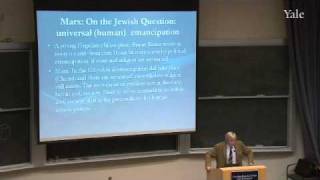
Marx's Theory of Historical Materialism - Lecture 1
Exploración profunda de la teoría de alienación de Marx, su materialismo histórico y su crítica a Hegel, enfatizando la transición del joven Marx al Marx maduro y su visión del cambio social.

Rousseau - Popular Sovereignty and General Will - Lecture 5
Explore Rousseau's influential ideas on popular sovereignty, general will, and social contract, shaping modern political thought and the French Revolution.

Hobbes - Authority, Human Rights and Social Order in Modern Social Thought
Explore Hobbes's political philosophy, examining his views on human nature, social contracts, and the role of sovereign power in maintaining social order and individual security.

Sites of Memory and Mourning in Post-World War I Europe - Lecture 18
Explore how Europe commemorated World War I through memorials, media, and ceremonies, shaping a unique understanding of war and its lasting impact on society and politics.

War in the Trenches - World War I Stalemate and Its Cultural Impact
Explore WWI's trench warfare, its impact on soldiers and society, and key events like French mutinies, Russian Revolution, and US involvement. Understand the war's unprecedented scale and cultural legacy.

Retreat from Reconstruction - The Grant Era and Paths to Southern Redemption
Explore the complexities of post-Civil War Reconstruction, debunking myths, examining African-American rights progress, and analyzing the rise of white political terrorism in the South.
The Kansas-Nebraska Act and the Birth of the Republican Party, 1854-55
Explore pivotal 1850s political crises: Compromise of 1850, Fugitive Slave Act opposition, Uncle Tom's Cabin impact, Kansas-Nebraska Act, and Republican Party formation. Gain insights into pre-Civil War tensions.
Wartime Reconstruction - Imagining the Aftermath and a Second American Republic
Explore Lincoln's re-election, the Civil War's end, and the challenges of Reconstruction in this insightful lecture on a pivotal period in American history.

The End of Reconstruction - Disputed Election of 1876 and the Compromise of 1877
Explore the violent end of Reconstruction, examining key events like the Colfax Massacre, Supreme Court decisions, economic panic, and political scandals that led to the retreat from radical reforms.

A Southern World View: The Old South and Proslavery Ideology - Lecture 3
Explore the complex history of southern slavery, including the internal slave trade and various pro-slavery arguments, from biblical to economic perspectives.
Expansion and Slavery: Legacies of the Mexican War and the Compromise of 1850
Explore conflicts and compromises leading to the Civil War, including Douglass's speech, Mexican War impacts, and the Compromise of 1850, highlighting slavery's expansion and its political consequences.

Dred Scott, Bleeding Kansas, and the Impending Crisis of the Union, 1855-58 - The Civil War and Reconstruction
Explore key events of 1855-58: Kansas conflict, Sumner's caning, Republican Party's rise, Fremont's campaign, and the Dred Scott decision's impact on pre-Civil War America.

The Election of 1860 and the Secession Crisis - Civil War and Reconstruction
Explore the 1860 election, John Brown's impact, and Southern secession in this Yale lecture on the Civil War's origins, examining key events and rationales behind the conflict.

Homefronts and Battlefronts - The Social Impact of the Civil War
Explore the Civil War's profound impact on society, economics, and government, examining personal experiences and broader changes in both Union and Confederate territories.
Legacies of the Civil War - Lecture 27
Explore the enduring impact of the Civil War through three memory strains: reconciliationist, white supremacist, and emancipationist. Examine how historical interpretations and control of war memories have evolved over time.