Saving Lives in the Path of Destructive Tornadoes - Congressional Briefing
Experts discuss recent tornado outbreaks, improved warning systems, and strategies for better preparation and response to severe weather, focusing on saving lives and reducing vulnerability in affected communities.
Tsunami Preparedness: Understanding Our Nation's Risk and Response
Explore tsunami risks, warning systems, and community preparedness strategies. Learn from experts about advances in understanding, predicting, and mitigating the impact of these devastating natural disasters.
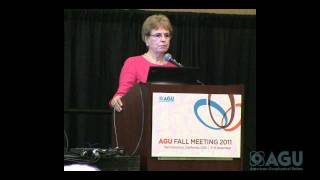
NOAA Scientific Integrity Policy - Press Availability at AGU Fall Meeting 2011
NOAA's Scientific Integrity Policy explained: impacts on operations, extreme weather analysis, and scientific practices. Insights into policy implementation and its significance for climate research.
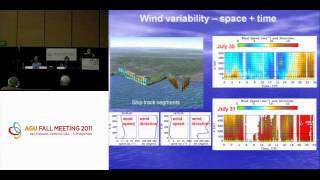
Changing the Energy Landscape - Renewable Energy Research Advances
Renewable energy research insights: biofuel crop emissions, wind turbine wake effects, and offshore wind patterns. Experts discuss findings that could enhance wind farms and inform biofuel choices.
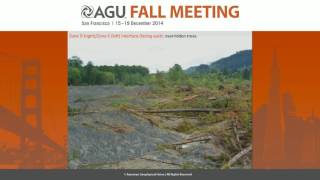
The 22 March 2014 Oso Landslide - Findings of the GEER Reconnaissance Investigation
Findings from NSF-supported investigation of the deadliest U.S. landslide, including causes, geomorphic zones, and two-stage movement hypothesis. Risk assessment compared to international guidelines.
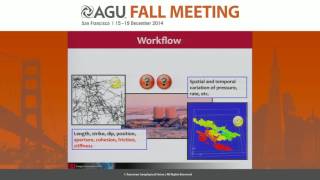
Large Scale Geologic Controls on Hydraulic Stimulation
Explore advanced 3D hydraulic fracturing simulation techniques, incorporating geological data to optimize stimulation strategies and improve economic viability in low permeability formations.
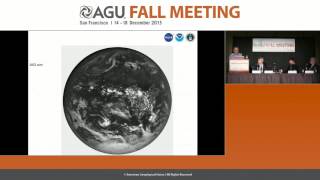
EPIC First Results from the DSCOVR Satellite - Fall Meeting 2015
Researchers present initial findings from NASA's EPIC camera on DSCOVR satellite, showcasing new perspectives on Earth's cloud cover, dust transport, and vegetation from a million miles away.
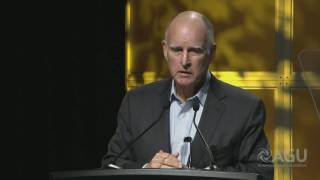
A Conversation with California Governor Jerry Brown on Climate Change - Fall Meeting 2016
California Governor Jerry Brown discusses climate change, environmental policies, and scientific research at the American Geophysical Union's Fall Meeting, offering insights on state and global initiatives.
Campaign Trail - Political Science and Environmental Policy
Explore Newt Gingrich's insights on the campaign trail during the 2000 AGU Spring Meeting, offering a unique perspective on politics and science intersections from a prominent political figure.
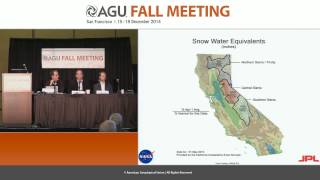
California's Epic Drought as Viewed from Space - Fall 2014
Explore California's severe drought through space-based observations, examining water storage, groundwater depletion, and snowpack changes using advanced geodetic sensors and satellite data.
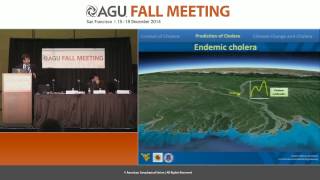
Climate Change and Cholera: Seasonal Patterns and Global Impact
Explore the impact of climate change on cholera outbreaks, examining case studies from Mozambique, South Sudan, and Haiti to understand seasonal patterns and predict future trends.
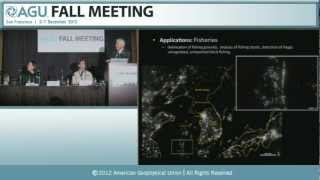
Earth at Night - New Satellite Imagery Reveals Detailed Global View
Unveiling a groundbreaking cloud-free view of Earth at night, revealing new insights into human activity, natural phenomena, and global patterns through advanced satellite imagery and scientific analysis.
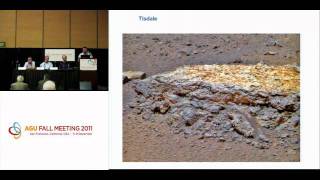
NOAA's Scientific Integrity Policy - Unveiling and Discussion
Unveiling of NOAA's scientific integrity policy, emphasizing protection of scientific findings, transparency, and strengthening science. Follows a lecture on predicting and managing extreme events.
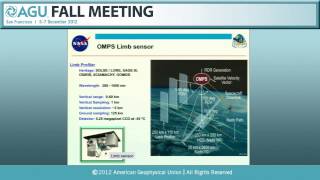
Space-Based Operational Global Earth Observations From NPP and JPSS - 2012
Explore operational applications and initial results from Suomi NPP and JPSS satellites, including sensor performance, data products, and their impact on global Earth observations and weather forecasting.
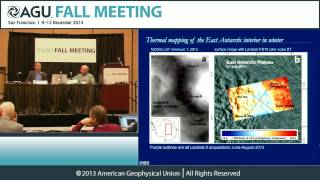
Taking Landsat to the Extreme - Exploring Earth's Coldest Spots
Explore Earth's coldest spots using satellite data, including Landsat 8. Discover record-breaking temperatures, locations, and weather patterns in extreme cold environments.
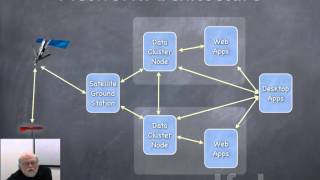
Robots and Oceans: Deep Sea Robotics with Liquid Robotics
Explore deep sea robotics with Java pioneer James Gosling, discussing Liquid Robotics' innovative ocean-monitoring technology, its applications, and network architecture.
Modelling Coupled Social-Climate Systems and Using Data-Driven Dynamical Systems
Explore innovative approaches to modeling complex social-climate interactions using data-driven dynamical systems, offering insights into sustainable solutions and policy implications.
Ecological Stressors and Pathogen Shedding
Explore how ecological stressors impact pathogen shedding in animal populations, integrating theories from ecology, evolution, and mathematics to understand disease dynamics and their broader implications.
Parasites in Biodiversity Conservation - Friend or Foe?
Explore the complex role of parasites in biodiversity conservation, examining their impact on ecosystems, conservation efforts, and the importance of considering them in ecological restoration.
Biodiversity and Finance - Making Space for a Common Planet
Explore the intersection of biodiversity science and private finance, examining tipping points, common metrics, and solutions for environmental challenges in complex global systems.
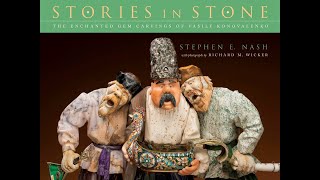
The Konovalenko Gem Carving Sculptures at DMNS - A Curator's Overview
Explore the world-renowned Konovalenko gem carving sculptures at DMNS, their Soviet origins, and their journey to Denver in this captivating anthropological lecture.