Machine Learning Papers in Virtual Reality - IEEE VR 2022
Cutting-edge machine learning research in VR, covering topics like stereoscopic photography, adversarial attacks, 360° depth estimation, scanpath generation, autism screening, and projector deblurring.
Evaluation of Open Source Options to Build Container Images
Explore various open-source container image building tools, comparing Dockerfile options, Cloud-Native Buildpacks, Google's JIB, and Source2Image. Gain insights on build time, size, standardization, robustness, and security.
Camera Sensor Drivers Compliance for Linux
Explore the importance of open camera sensor drivers in Linux, focusing on compliance with libcamera requirements for consistent implementation and improved functionality.

Sensors and PWM Control from Linux
Explore sensor systems and PWM control for autonomous vehicles, covering interfaces, challenges, and techniques for solid control using on-board mechanisms and microcontrollers.

AI Landmark Recognition With Tensorflow Lite and CameraX on Android
Integrate Tensorflow Lite model for landmark recognition in Android using CameraX library. Learn professional techniques for AI-powered camera applications.
Computer Vision AI Model Building and Deployment with Docker
Build and deploy computer vision AI models quickly using Navan's no-code platform. Learn to create and implement advanced visual recognition systems efficiently.
From Phase Separation in Heterogeneous Media to Learning Training Schemes for Image Denoising
Exploring variational approaches in phase separation and image denoising, focusing on heterogeneous media, geometric measure theory, and optimized training schemes for improved performance.
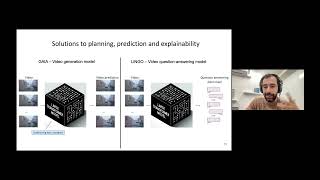
Language and Video-Generative AI in Autonomous Driving - Guest Lecture by Wayve
Explore Wayve's innovative approach to autonomous driving, featuring language and video-generative AI advancements. Learn about GAIA-1 and LINGO technologies, and their applications in self-driving vehicles.
AI News: Open Source Advancements and Recent Developments
Explore latest AI advancements: new models, papers, and tools. Learn about HyperAttention, MemGPT, Self-RAG, PaLI-3, Fuyu-8B, MistralLite, and more. Stay updated on AI developments in various domains.
Doubling Stable Diffusion Inference Speed with RTX Acceleration and TensorRT - A Comprehensive Guide
Comprehensive guide on boosting Stable Diffusion performance with RTX Acceleration TensorRT, covering installation, optimization, and troubleshooting for various models and extensions.
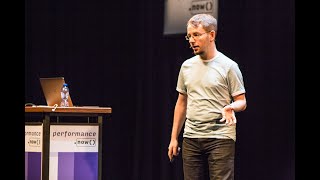
Image Optimization Techniques for Web Performance
Discover advanced techniques for optimizing images to enhance web performance, covering formats, compression, and best practices for faster loading and improved user experience.
Adaptive Attention: Bringing Active Vision into the Camera
Explore innovative camera designs and vision algorithms that mimic animal eyes, enabling adaptive and selective active vision for enhanced imaging capabilities and scene understanding.
Computer Vision to Phenotype Human Diseases Across Physical and Molecular Scales
Innovative computer vision algorithms for disease phenotyping across scales, from video-based heart function assessment to spatial transcriptomics and immune cell dynamics, with focus on robust and human-compatible AI.
Self-supervising 3D Scene Representations for Perception and Control
Explore 3D scene representation models that learn object permanence, emergence, and dynamics without annotations, supporting language grounding and generalizing across scenes and cameras.
FarmBeats: An AI and IoT Platform for Data-driven Agriculture
Explore FarmBeats, an innovative IoT platform revolutionizing agriculture with AI-driven data collection from sensors, cameras, and drones. Learn how it overcomes connectivity challenges and enhances farm productivity.
Fast and Accurate Deep Neural Networks Training
Exploring LARS and LAMB optimizers for scaling deep learning on supercomputers, enabling faster training and higher accuracy in AI applications across various industries.
Building Machines that Discover Generalizable, Interpretable Knowledge
Exploring program induction as a path to human-like AI, focusing on systems that learn generalizable, interpretable knowledge from limited experience across diverse problem domains.
Do ImageNet Classifiers Generalize to ImageNet? - Analyzing ML Progress and Challenges
Analyzing ImageNet classifiers' generalization, exploring overfitting and distribution shift in ML benchmarks, and addressing robustness issues like adversarial examples to improve machine learning reliability.
Learning 3D Perception from Single Images - Unifying Learning and Geometry
Exploring unified learning approaches for single image 3D understanding, combining 2D perception with 3D world modeling to enable more comprehensive computer vision systems.
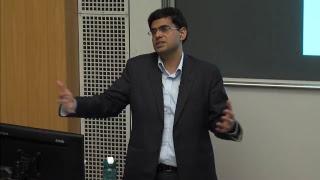
Visual Perception and Navigation in 3D Scenes
Exploring 3D scene understanding and visual navigation for robotics, bridging computer vision and robotics. Discusses representation learning, 3D perception, and future research directions in these intersecting fields.
Computer Vision for Global-Scale Biodiversity Monitoring
Exploring AI-driven earth observation systems for real-time biodiversity monitoring and conservation, addressing challenges in ecological data analysis and promoting collaborative, interdisciplinary approaches.