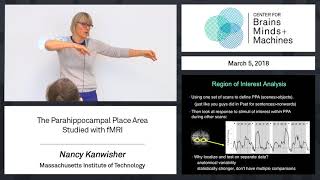
The Parahippocampal Place Area Studied with fMRI
Explores the parahippocampal place area's role in scene recognition using fMRI, discussing methodological considerations and replication in cognitive neuroscience research.
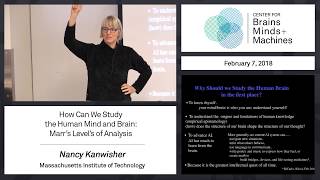
How Can We Study the Human Mind and Brain? - Marr's Levels of Analysis
Explore Marr's levels of analysis for studying the human mind and brain, focusing on computational theory and its application to color vision and other cognitive processes.

Nancy Kanwisher: History of Neuroimaging Research on Face Recognition
Explore the evolution of neuroimaging research on face recognition, from early studies to modern fMRI techniques, and discover key findings in this fascinating field of cognitive neuroscience.
Does the Neocortex Use Grid Cell-Like Mechanisms to Learn the Structure of Objects?
Explore how the neocortex might use grid cell-like mechanisms to learn object structure, drawing parallels between spatial navigation and object recognition in the brain.
Automated Reconstruction of Synaptic-Resolution Neural Wiring Diagrams
Explore automated reconstruction of neural wiring diagrams using advanced techniques like generative adversarial networks and crowdsourcing, with applications in connectomics and targeted brain data discovery.
Faces
Explore primate face recognition, from neural substrates to computational principles, examining face cells, processing systems, and recognition architectures in this comprehensive overview.
Faces and Social Interactions
Explore primate social intelligence, face perception, and neural mechanisms behind facial recognition and social interactions.
What Are the Computations Underlying Primate vs. Machine Vision?
Explore primate and machine vision computations, comparing face recognition, image processing, and neural networks. Gain insights into computational neuroscience and visual perception illusions.
The Neural Circuits for Face Recognition
Explore neural circuits for face recognition, including a newly discovered temporal pole region. Learn about face processing systems, computational principles, and their implications for visual intelligence.

Functional Specificity in the Human Brain - What, Whether, and Why?
Explore the functional specificity of the human brain, examining key questions, methodologies, and findings in cognitive neuroscience with MIT researcher Nancy Kanwisher.

Toward Brain Computer Interface - Deep Generative Models for Brain Reading
Explore deep generative models for brain reading, covering GAN implementation, image reconstruction from brain signals, and evolving latent codes using genetic algorithms.
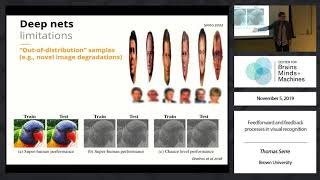
Feedforward and Feedback Processes in Visual Recognition
Explore visual recognition processes, comparing deep learning models with neuroscience-inspired approaches. Gain insights into complex visual reasoning and potential advancements in AI through computational neuroscience.

Importing a Video and Getting Data - Tracker for Beginners Lesson 1
Learn to import videos and generate graphs using Tracker, a video analysis tool for physics exploration. Covers basic processes like creating axes, setting scales, and auto-tracking.

Selfie With Blackhole ODRAW Hands on Session by Ananda Hota
Hands-on training for citizen-scientists to create and analyze astronomical images using NASA tools and GMRT data, focusing on galaxies with supermassive black holes and plasma jets.
Machine Learning for Determining Protein Structure and Dynamics from Cryo-EM Images
Explore machine learning techniques for analyzing cryo-EM images to determine protein structure and dynamics, focusing on the cryoDRGN algorithm and its applications in structural biology.
Capturing the First Portrait of Our Milky Way's Black Hole & Beyond
Explore the groundbreaking methods used to capture the first image of Sagittarius A*, our galaxy's central black hole, and future directions in black hole imaging technology.
Bits and Atoms - Exploring the Intersection of Machine Learning and Microscopy
Explore the intersection of machine learning and microscopy, focusing on AI models for active learning in materials discovery, automated experiments, and physics discovery through advanced microscopy techniques.
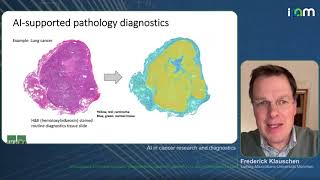
AI in Cancer Research and Diagnostics - IPAM at UCLA
Explore AI's impact on cancer diagnostics, focusing on pathology applications, explainable methods, and multi-modal data integration for research and clinical use.
Pose Estimation, Temperature, Noise, and Biological Temperature Sensors via Cryo-EM
Explore pose estimation, temperature, noise, and heterogeneity in cryo-EM for understanding biological temperature sensors, with focus on TRP channels and advanced analytical techniques.
Detection of Objects in Cryo-Electron Micrographs Using Geometric Deep Learning
Explore geometric deep learning techniques for object detection and segmentation in cryo-electron micrographs, focusing on unsupervised methods and graph-based transformers for complex structures.
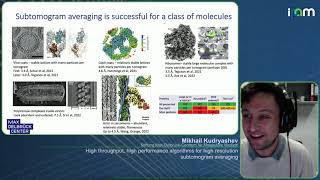
High Throughput, High Performance Algorithms for High Resolution Subtomogram Averaging
Explore high-performance algorithms for subtomogram averaging in cryo-electron microscopy, focusing on tools like TomoBEAR and SUSAN to enhance throughput and resolution in structural biology.