
Large Scale Multi-Microscope Datasets and Their Challenges in Medical AI
Explore groundbreaking research on multi-microscope datasets for malaria and leukemia detection, featuring innovative domain adaptation techniques and object detection methods to enhance early disease diagnosis.
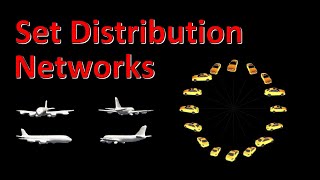
Set Distribution Networks - A Generative Model for Sets of Images
Explores a novel framework for generating and encoding sets of images, introducing Set Distribution Networks that can create new object/identity sets while preserving key attributes.
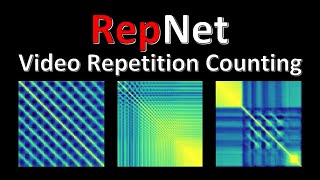
RepNet - Counting Out Time - Class Agnostic Video Repetition Counting in the Wild
Explore RepNet's innovative approach to video repetition counting using temporal self-similarity matrices, synthetic data, and a constrained model for class-agnostic period prediction in real-world videos.
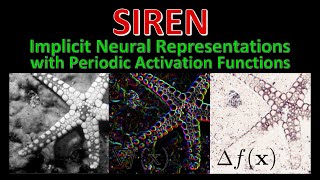
SIREN - Implicit Neural Representations with Periodic Activation Functions
Explore SIREN neural networks for representing complex signals like images and 3D shapes. Learn about their unique periodic activation functions, initialization, and applications in solving differential equations.
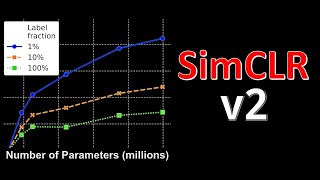
Big Self-Supervised Models Are Strong Semi-Supervised Learners
Explore SimCLRv2, a powerful semi-supervised learning approach combining self-supervised pre-training, fine-tuning, and distillation to achieve state-of-the-art results with minimal labeled data.
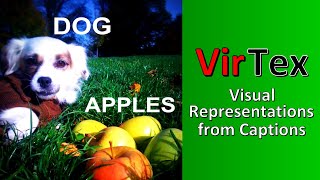
VirTex- Learning Visual Representations from Textual Annotations
Explore VirTex, a novel approach to visual representation learning using high-quality image captions, outperforming traditional methods with fewer images for various computer vision tasks.
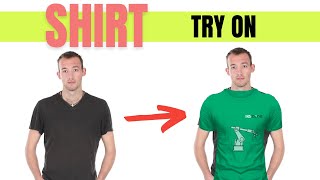
Shirt Try On Using Computer Vision
Learn to create a virtual shirt try-on system using computer vision techniques. Explore pose detection, image manipulation, and interactive features for a realistic digital fitting experience.
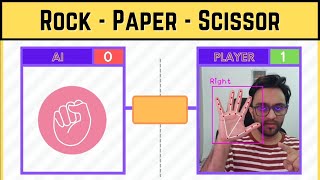
Rock Paper Scissor Using Computer Vision - OpenCV Python
Learn to build a Rock Paper Scissors game using OpenCV and Python, covering webcam integration, hand detection, AI opponent moves, and scoring system implementation.
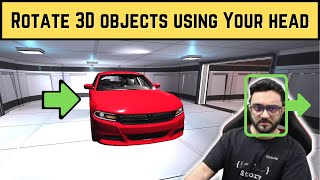
3D Head Tracking with Car Movement - Computer Vision
Learn 3D head tracking and car movement in computer vision, integrating face detection with Unity for interactive camera control and smooth motion simulation.

3D Hand Tracking in Virtual Environment - Computer Vision
Learn to implement 3D hand tracking in virtual environments using Python, OpenCV, and Unity. Gain practical skills in computer vision and real-time data transfer for interactive applications.
PNG Overlay and Image Rotation Using OpenCV - CVZone
Learn to overlay PNG images and logos on images and webcams using OpenCV, plus create rotating gear mechanisms with image rotation techniques in this hands-on computer vision tutorial.
Is Machine Learning Smarter Than a Toddler? - Roboflow + OpenCV Webinar
Explore how AI and ML compare to toddlers in object recognition, drawing, and writing. Gain insights into the current capabilities and limitations of machine learning technology.
Intro to Computer Vision - Fireside
Explore computer vision fundamentals, from basic concepts to problem-solving approaches, model building, and ethical considerations in this comprehensive introduction.
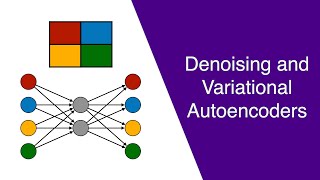
Denoising and Variational Autoencoders
Explore autoencoders, powerful generative models for dimensionality reduction and data generation. Learn about denoising and variational autoencoders, their applications, and training techniques.

A Friendly Introduction to Convolutional Neural Networks and Image Recognition
Friendly explanation of image recognition using Convolutional Neural Networks, covering basics to advanced concepts. Suitable for beginners, with minimal math required.

Convolutional Neural Networks
Explore convolutional neural networks for computer vision, covering feature extraction, convolution operations, and applications in autonomous navigation and medical imaging.

Convolutional Neural Networks
Explore convolutional neural networks for computer vision, covering feature extraction, convolution operations, and applications like object detection and self-driving cars.
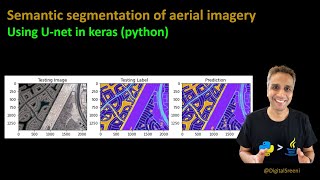
Semantic Segmentation of Aerial Imagery Using U-Net
Learn to preprocess aerial imagery, train U-net for semantic segmentation, and make predictions using Python, focusing on data preparation and model implementation for satellite image analysis.
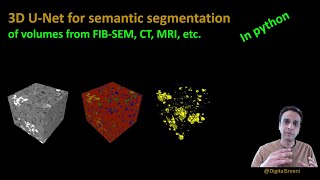
3D U-Net for Semantic Segmentation
Learn to implement 3D U-Net for semantic segmentation on volumetric data like FIB-SEM, CT, and MRI. Covers data preparation, model architecture, training, and multichannel image processing using Python libraries.
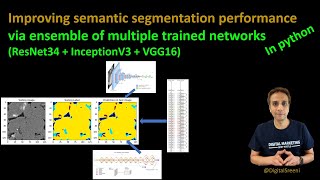
Improving Semantic Segmentation - U-Net Performance via Ensemble of Multiple Trained Networks
Enhance U-Net performance for semantic segmentation using ensemble methods with ResNet34, Inception V3, and VGG16 networks. Includes code, dataset, and practical implementation tips.
How to Build a Quokkabot
Learn to create a chatbot that identifies quokkas using Twilio APIs and Microsoft's Custom Vision, combining machine learning with engaging communication channels.