Explainable AI - The Apex of Human and Machine Learning
Explore the emerging field of Explainable AI, its importance in high-risk domains, and how it bridges the gap between human cognition and machine learning for more intuitive and understandable AI systems.
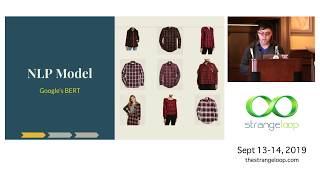
Computer Vision and NLP for Multi-Task Fashion Modeling
Explore multi-task learning for e-commerce attribute modeling using CNNs for images and BERT for text, with insights on ensemble architectures and training protocols.

Can Androids Conceive of Electric Sheep
Explore the journey of creating an android artist, delving into biomechanics, cognition, creativity, and insight simulation. Discover novel applications and thought-provoking questions about artificial artistic expression.
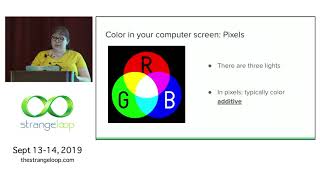
Complexities of Color in Computing
Explore color's impact on computing, from ADA compliance to AI challenges. Uncover hidden complexities in color perception, implementation, and its historical significance in technology.
Narrated Reality
Explore neural networks for creative language applications, from expressive image captioning to AI-generated screenplays, with insights on new interfaces and forms for written expression.
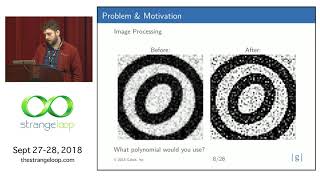
Your Secrets Are Safe with Julia - A Compiler for Secure Computation
Explore Ramparts, a compiler translating Julia code for homomorphic encryption, enabling secure computation on encrypted data without cryptography expertise.

What You Always Wanted to Know About Deep Learning, but Were Afraid to Ask
Demystifying deep learning concepts like back-propagation, gradient descent, and neural networks. Practical guide to training a model for object recognition using TensorFlow and Keras.
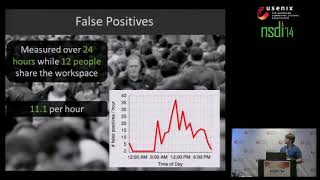
Bringing Gesture Recognition to All Devices
Innovative gesture recognition system for low-power devices, utilizing existing wireless signals to enable always-on functionality across various platforms, including battery-free devices.

Adventures in Hardware Hacking or Building Expensive Tools on a Budget
Explore hardware hacking techniques like CT scanning and chip decapping for non-destructive device analysis, circuit reconstruction, and vulnerability identification in embedded systems and access control.
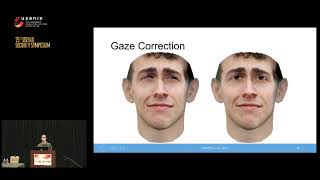
Virtual U - Defeating Face Liveness Detection by Building Virtual Models from Your Public Photos
Innovative approach to bypass face authentication using 3D models created from social media photos, exploiting virtual reality to simulate liveness and fool security systems.
Cells to Silicon - Your Brain in 2050
Explore cutting-edge brain-machine interactions with leading neuroscientists and experts, discussing advancements in neural technology, consciousness replication, and the future of human-machine integration by 2050.

Portraits of Perception with Chuck Close
Explore the science behind facial perception through art and neuroscience. Artists and scientists discuss how we process and interpret faces, from Mona Lisa's smile to Picasso's portraits.
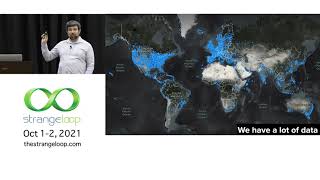
Impacting Global Policy by Understanding Litter Data
Explore how data analysis of global litter can inform policy, influence packaging, and inspire personal responsibility using computer vision and machine learning techniques.

DeepLocker - Concealing Targeted Attacks with AI Locksmithing
DeepLocker: AI-powered targeted attacks using deep neural networks for evasive malware. Explores mechanisms, implications, and defenses against AI-weaponized cybercrime.
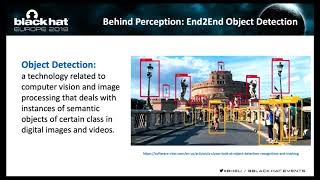
Perception Deception - Physical Adversarial Attack Challenges
Explore physical adversarial attacks on object detection systems, focusing on YOLOv3. Learn tactics to overcome challenges in real-world scenarios and understand implications for AI security.

Video Killed the Text Star - OSINT Approach
Explore OSINT techniques for video analysis in security, focusing on person recognition and adapting to the growing trend of video content in internet information.
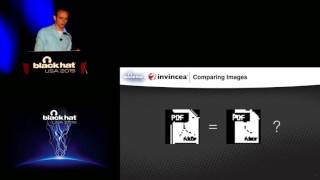
Graphic Content Ahead - Towards Automated Scalable Analysis of Graphical Images Embedded in Malware
Explores automated analysis of images in malware, focusing on identifying visually similar samples and classifying images into categories to enhance malware triage and reveal attacker patterns.

Hidden Risks of Biometric Identifiers and How to Avoid Them
Explore cutting-edge biometric technologies, their advantages, and potential risks. Learn to evaluate security, reliability, privacy, and ethical concerns for informed implementation of future identification systems.
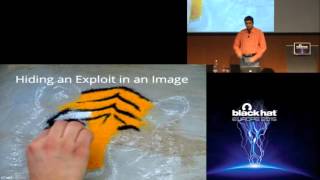
Exploit Delivery With Steganography and Polyglots
Explore innovative exploit delivery techniques using steganography and polyglots, focusing on encoding browser exploits in image files for undetectable payload transmission.

The Future of JavaScript and AI
Explore AI-powered JavaScript apps using TensorFlow.js and APIs. Learn to build innovative applications without extensive math or experience, unlocking new possibilities for JS developers.
Strike a Pose - Gesture Recognition in JS with Machine Learning
Explore gesture recognition using JavaScript, Arduino, and machine learning to create intuitive human-technology interactions. Learn to build a simple system for smarter, adaptive experiences.