
Claude 3.5 Sonnet - Anthropic's Latest AI Model Challenging GPT-4
Explore Claude 3.5 Sonnet's advanced capabilities in language, coding, and multimodal tasks. Learn how it compares to GPT-4 and its potential impact on AI development.
From Entropy to Artistry: Thermodynamics and Generative AI
Explore connections between diffusion models and physics, focusing on non-equilibrium thermodynamics and its applications in image/video generation and climate modeling.

The Potential Power of AI - Beyond Belief
Explore AI's transformative potential, from text to audio generation. Discuss its societal impact, ethical concerns, and the possibility of an AI-supported future, inviting viewers to engage in shaping this technological revolution.

Object Detection Using Detection Transformer (DETR) for Bone Fracture Dataset
Learn to build an advanced object detection system using DETR, covering data preparation, model implementation, training, and inference with PyTorch, Transformers, and PyTorch Lightning.
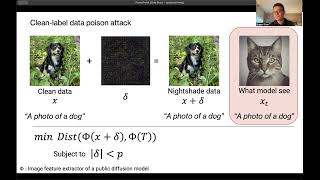
Nightshade: Prompt-Specific Poisoning Attacks on Text-to-Image Generative Models - Session 335
Explore poisoning attacks on text-to-image models, focusing on the Nightshade technique's ability to manipulate AI-generated images through targeted data manipulation.
LLM News: Claude 3.5 Sonnet, Open-Sora, Context Caching, PlanRAG, and Safe SuperIntelligence Inc
Explore latest AI advancements: Claude 3.5, Open-Sora, context caching, PlanRAG, and more. Stay updated on cutting-edge developments in language models, video generation, and AI research.
Powering Generative AI Workloads with AMD and Open-Source ROCm
Explore cost-effective generative AI using AMD hardware and open-source ROCm. Learn to run language and image models, compare performance with NVIDIA, and discover ROCm's latest features and support.

Approximate Caching for Efficiently Serving Text-to-Image Diffusion Models
Innovative caching technique for text-to-image generation, reducing GPU compute, latency, and costs while maintaining quality. Explores real-world applications and performance improvements.

MadEye - Boosting Live Video Analytics Accuracy with Adaptive Camera Configurations
Adaptive camera system that automatically adjusts orientations to maximize accuracy in live video analytics, improving performance or reducing resource costs for diverse workloads.
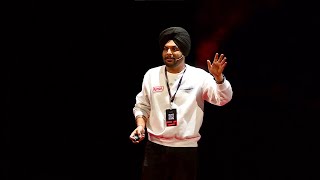
Self-Driving Cars and the Human Brain - The Missing Link to Intelligence
Explore the connection between self-driving cars and human cognition, uncovering insights into AI decision-making and the future of autonomous vehicles with Minus Zero's CEO.
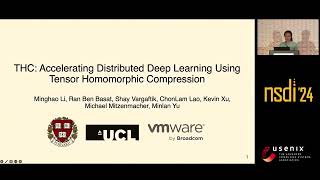
THC - Accelerating Distributed Deep Learning Using Tensor Homomorphic Compression
Accelerates distributed deep learning with Tensor Homomorphic Compression, enabling direct aggregation of compressed values and compatibility with in-network aggregation for faster training of vision and language models.
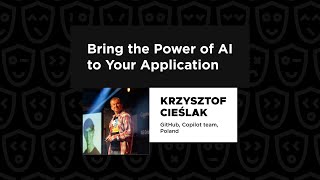
Bring the Power of AI to Your Application
Explore integrating AI capabilities into applications, focusing on practical implementation strategies and leveraging AI's potential to enhance functionality and user experience.
The Fundamentals of Modern Deep Learning with PyTorch
Learn PyTorch for deep learning: train neural networks for image and text classification, explore tensor operations, automatic differentiation, and modern libraries like PyTorch Lightning for efficient GPU training.

The Modern Trolley Problem - Responsible AI Principles
Explore ethical challenges in AI-driven vehicles, from decision-making algorithms to object recognition. Delve into Responsible AI Principles and their crucial role in shaping autonomous technology's future.

Using RunPod Storage Network Volume with Automatic1111 and ControlNet - Advanced Tutorial
Comprehensive guide on using RunPod's Storage Network Volume, deploying Automatic1111 with ControlNet, and leveraging InstantID for advanced image generation and face transfer techniques.
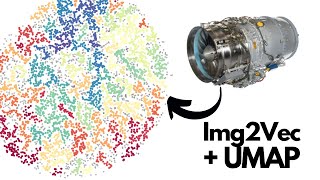
Img2Vec and UMAP for High-Dimensional Data Visualization
Learn to visualize high-dimensional image data using Img2Vec for embeddings, UMAP for dimensionality reduction, and Bokeh for interactive exploration. Ideal for vision classification projects.

Emu Video Generation - From MAE Pre-training to Multimodal Embeddings
Explore Emu Video generation with Ishan Misra from Meta, covering SSL, multimodal data, and recent advancements in video AI technology.
Best Practices for Production-ready .NET Docker Images
Learn insider tips for creating optimized, secure, and high-performance .NET Docker images. Discover how to containerize applications, fix vulnerabilities, and prepare for production using a hands-on web API example.
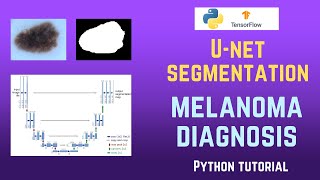
Medical Melanoma Detection - TensorFlow U-Net Tutorial
Step-by-step guide to implementing a U-Net model for melanoma detection using TensorFlow/Keras, covering data preparation, augmentation, model building, training, testing, and result visualization.
On Your Mark, Get Set, Go! Data Scientists Making Platforms for Your Exercise Data
Explore how data scientists create platforms to analyze exercise data from wearable devices, showcasing trackeRapp for tracking running, cycling, and swimming activities.
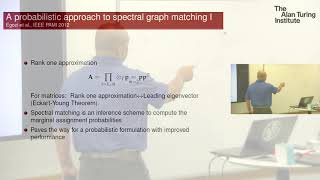
Deep Spectral Graph Matching
Explore high-level computer vision and machine learning concepts with a focus on deep spectral graph matching techniques, presented by an expert in the field.