Fabric Attached Memory: Hardware and Software Architecture for HPC Systems
Explore fabric-attached memory architecture and software solutions for handling large datasets in HPC clusters, focusing on AI and data analytics workloads using CXL and Arkouda-based applications.
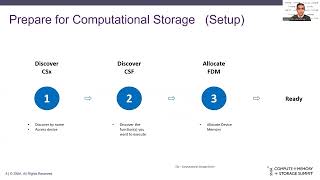
Computational Storage APIs - Programming and Implementation Guide
Explore Computational Storage APIs and their implementation across hardware architectures, focusing on performance optimization, interface definitions, and practical problem-solving applications.
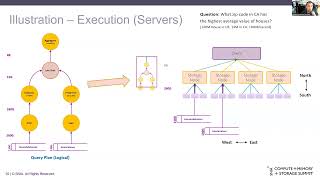
Decomposing Compute to Grow Computational Storage - Dynamic Query Partitioning in Storage Systems
Explore dynamic query partitioning in computational storage systems and learn how decomposable queries can optimize performance across storage device hierarchies for enhanced data processing capabilities.
Infrastructure Programming with IPU for Storage Orchestration and Management
Discover how Infrastructure Programming Units (IPUs) simplify storage orchestration by offloading complex workloads from compute nodes, improving efficiency and scalability in cloud environments.
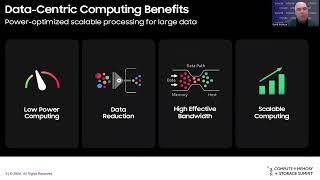
Compute, Memory, and Storage: Optimized Configurations for a New Era of Workloads
Explore modern infrastructure optimization strategies for cloud-to-edge applications, covering UCIe compute, CXL memory pooling, and advanced storage configurations for real-time decision-making requirements.
Accelerating PMEM Device Operations in Ceph with Hardware-based Memory Offloading
Discover how hardware-based memory offloading devices can enhance PMEM operations in Ceph, reducing CPU pressure and improving performance through IOAT and DSA implementation.
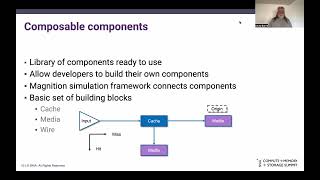
Optimizing Complex Memory and Storage Systems Using Simulations - A Modular Approach
Discover how to optimize complex storage systems through modular simulations, enabling rapid testing of variables and components while significantly reducing development time and resources.

Unleash the Graphics Magic - OpenGL and OpenGL ES Development for Apple M1 and M2
Discover the journey of OpenGL driver development for Apple M1/M2, exploring hardware magic, conformance achievements, and the intricate code behind graphics acceleration.
Cross-Architecture Dynamic Migration Solution for Heterogeneous AI Acceleration Systems
Discover a unified solution for seamless application migration across diverse AI accelerators, enabling cross-architecture compilation and dynamic runtime adaptation without code modifications.
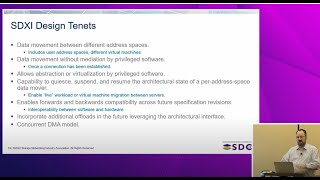
SDXI Internals and Standardizing Memory to Memory Data Movement
Delve into memory-to-memory data movement standardization through SNIA's SDXI specification, exploring acceleration techniques, use cases, and future developments for modern system architectures.
Latest Developments in SNIA Computational Storage - Implementation and Security Updates
Explore the latest developments in Computational Storage, including deployment strategies, security considerations, and implementation guidelines from SNIA's Technical Work Group leadership.

Computational Storage: Understanding NVMe and SNIA Standards Integration
Discover how NVMe and SNIA standards harmonize in computational storage, exploring terminology, architectural components, and implementation approaches for seamless integration between both frameworks.
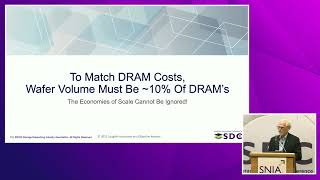
Persistent Memories and Computing Architecture Evolution - From Optane to Future Technologies
Explore emerging memory technologies, their impact on computing architecture, and the legacy of Intel's Optane, including developments in persistent memory, Near/Far Memory paradigms, and chiplet evolution.

NVMe Computational Storage: Updates and Architecture in the NVMe Standard
Explore the latest developments in NVMe Computational Storage standards, including architecture, command sets, memory models, and implementation strategies for computational programs and devices.

Making Real File Systems Faster with Applied Computational Storage - SDC 2022
Explore how computational storage revolutionizes file systems through real-world demonstrations of NVMe standards, ZFS acceleration, and distributed computational offloads near storage devices.
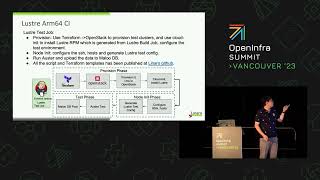
HPC Storage Solutions and Performance Optimization for Arm64 Architecture
Dive into high-performance computing storage optimization for Arm64 architecture, covering Lustre, DAOS, Ceph, and BeeGFS implementations, with focus on functionality, stability, and performance enhancements.

EfficientML.AI - Introduction to Efficient Machine Learning
Master efficient machine learning techniques and optimization strategies for deploying ML models in resource-constrained environments, focusing on practical implementation methods.
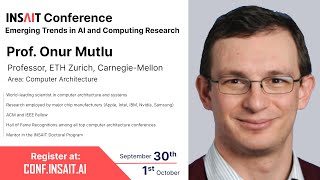
Intelligent Architectures for Intelligent Machines - Data-Centric Computing Systems
Explore modern computing architecture challenges and innovative solutions for data-centric design, focusing on machine learning acceleration, in-memory operations, and 3D-stacked memory technology.
Sokovan - Container Orchestrator for Accelerated AI/ML Workloads and Massive Scale GPU Computing
Discover how Sokovan optimizes AI/ML workloads through intelligent container orchestration, featuring dual-layer scheduling and hardware acceleration integration for enhanced GPU computing performance.
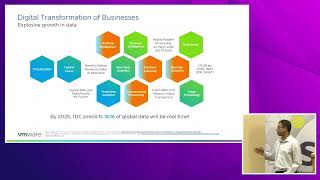
Addressing Capacity and Cost Challenges for Oracle Workloads Using VMware Software Memory Tier
Discover how VMware Software Memory Tiering optimizes Oracle workloads, addressing capacity challenges through memory disaggregation and efficient infrastructure management for enhanced performance and cost savings.
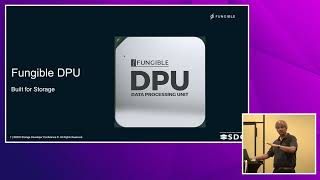
Next-Generation Storage Using DPUs Instead of CPUs
Discover how DPUs revolutionize data center storage systems, offering 3-10x better performance than CPU-based solutions while exploring architectural advantages, implementation examples, and the future of storage technology.