End-to-End Learning and Auto-Differentiation - Forces, Uncertainties, Etc.
Explore deep learning and auto-differentiation in molecular simulations, covering surrogate functions, sampling distributions, and time-propagation of differential equations for scientific problem-solving.
Advancing Molecular Simulation with Deep Learning - IPAM at UCLA
Explore cutting-edge applications of deep learning in molecular simulation, covering quantum chemistry, force fields, and Markov State Models for advanced scientific research.
Tensor Networks -QC-DMRG- in a Complete Active Space Coupled Cluster Method
Explore tensor networks in quantum mechanics, focusing on their application in coupled cluster methods for modeling strongly correlated systems and computing dynamical correlations.
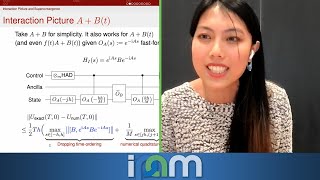
Time-Dependent Hamiltonian Simulation of Highly Oscillatory Dynamics - IPAM at UCLA
Explore highly oscillatory dynamics in quantum systems, focusing on efficient simulation algorithms for time-dependent Hamiltonians with applications in various scientific fields.
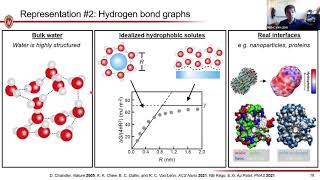
MD Simulations and Machine Learning to Quantify Interfacial Hydrophobicity
Explore molecular dynamics simulations and machine learning techniques to analyze interfacial hydrophobicity, focusing on efficient data analysis methods and topological approaches for complex chemical systems.
Physical Review Journal Club - Quantum Research with the Authors
Explore efficient quantum simulation for molecular spectroscopy using superconducting bosonic processors, with insights on implementation, photon detection, and algorithmic approaches.
Approximating Many-Electron Wave Functions Using Neural Networks - IPAM at UCLA
Explore neural network applications in quantum mechanics, focusing on Fermionic neural networks for approximating many-electron wave functions and enhancing variational quantum Monte Carlo methods.
Message Passing Neural Networks for Atomistic Systems - Molecules
Explore message passing neural networks for molecular systems, focusing on their application in quantum mechanics and multiscale approaches to atomistic modeling.
Creating Complex Scientific Workflows that Reach into the Real World - IPAM at UCLA
Explore laboratory automation and complex scientific workflows with ESCALATE software, focusing on experiment planning, data capture, and machine learning integration for halide perovskite synthesis.
Accurate Global Machine Learning Force Fields for Molecules with Hundreds of Atoms
Explore innovative approaches to developing accurate global machine learning force fields for large molecular systems, overcoming scaling limitations without compromising on non-local interactions.
New Approaches in Simulation of Transition Paths - IPAM at UCLA
Explores tensor methods for simulating chemical transition processes, focusing on compressing high-dimensional PDE functions and introducing a novel tensor-network generative modeling approach without optimization.
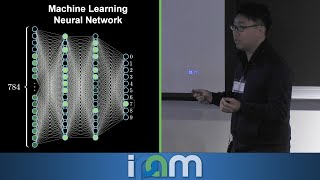
AI Inroads in Imaging Sciences for Materials Research - IPAM at UCLA
Explore deep learning applications in materials research, focusing on convolutional neural networks for transmission electron microscopy and tomographic imaging advancements.
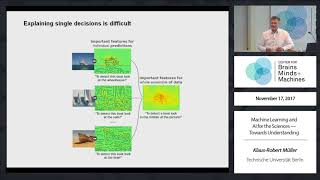
Machine Learning and AI for the Sciences - Towards Understanding
Explore ML and AI applications in sciences, focusing on neuroscience, medicine, and physics. Learn about extracting insights from ML models to enhance understanding in fields like quantum chemistry.
How Will Quantum Computing Change the Technology Landscape? - Bruce Davie, Systems Approach, LLC
Explore quantum computing's potential impact on technology, from achieving quantum supremacy to revolutionizing cryptography, optimization, and machine learning, while addressing challenges and separating hype from reality.
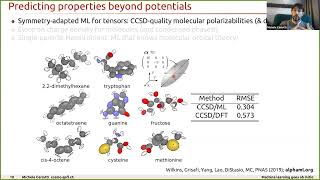
Machine Learning in Condensed Matter and Materials Physics
Explore how machine learning enhances simulations of matter, from electronic to molecular structures, boosting computational methods and potentially leading to new physical insights and exotic materials.
In Pursuit of the First Useful Quantum Computations for Chemistry
Exploring recent quantum algorithms for chemistry, their potential impact, and resource requirements for practical implementation on current and future quantum hardware.
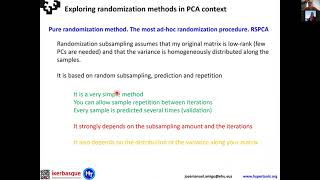
Randomization - Speeding Up Huge Problems
Explore data reduction techniques for analyzing large datasets efficiently, focusing on randomized sub-sampling and local-rank approximations in PCA and sparse-PCA contexts.
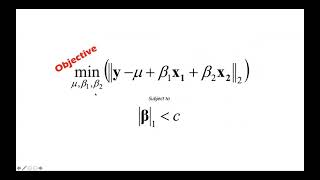
LASSO in One Hour
Discover sparse modeling techniques for linear regression, PLS, and PCA with the LASSO method in this concise introduction.
Introduction to Quantum Information Science - Part II
Explore advanced quantum information science concepts with UCLA expert Wes Campbell in this comprehensive lecture, part of IPAM's Winter School on Quantum Information Science for Chemistry.
Introduction to Quantum Information Science - Part I
Comprehensive introduction to quantum information science, covering fundamental concepts and their applications in chemistry, presented by expert Wes Campbell at UCLA's IPAM Winter School.
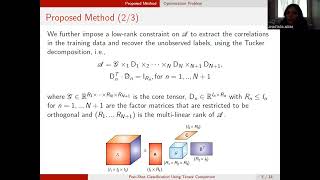
Few-Shot Classification Using Tensor Completion
Explore tensor-based modeling for enhanced classification performance, especially with limited training data, outperforming traditional methods.