Computational Chemistry and Classical Molecular Dynamics
This course introduces learners to elementary programming and numerical methods that are useful to solve problems in chemistry. These methods are useful for understanding molecular structures as well as condensed media such as liquids and solutions
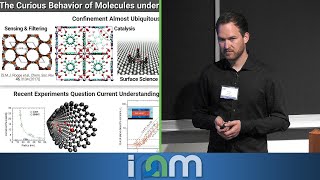
More is Different - Non-Scalability of Approximation in Modeling Noncovalent Interaction
Exploring the limitations of common approximations in modeling non-covalent interactions at the nanoscale, revealing complex scaling behaviors and the need for advanced quantum-mechanical methods.

Molecular Dynamics Simulation with GROMACS - Installation and Beginner Tutorial
Step-by-step guide to install GROMACS and run a beginner-level molecular dynamics simulation of a protein in water, covering both Windows and Linux platforms.
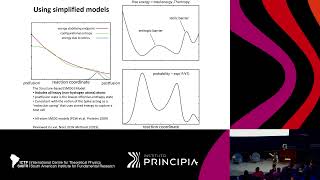
Quantifying Large-Scale Dynamics of Complex Molecular Assemblies
Explore quantitative methods for analyzing large-scale dynamics in complex molecular systems, focusing on advanced techniques and their applications in molecular biophysics.
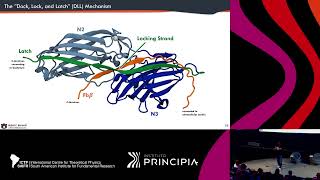
Computational Biophysics Approaches to Mechanosensing
Explore computational biophysics methods for understanding mechanosensing, focusing on cutting-edge approaches and their applications in molecular biology research.
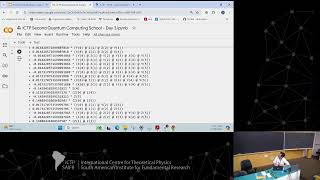
Introduction to Applications of Quantum Computing to Quantum Chemistry - Class 3
Explore quantum computing applications in quantum chemistry, focusing on advanced concepts and practical implementations.
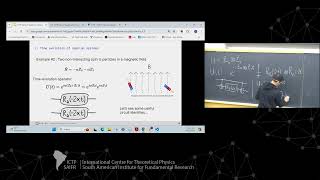
Introduction to Applications of Quantum Computing to Quantum Chemistry - Class 4
Explore quantum computing applications in quantum chemistry, focusing on advanced concepts and practical implementations.
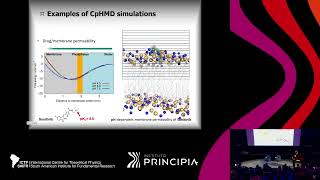
Constant-pH MD Simulations as a Tool to Unveil pH Effects on Biomolecules
Explore constant-pH MD simulations to uncover pH effects on biomolecules. Gain insights into advanced molecular biophysics techniques and their applications.
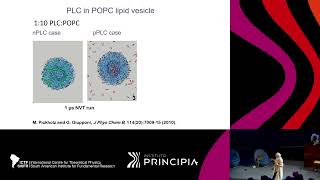
Exploring the Mechanical Properties of Polymerosomes through Molecular Dynamics Simulations
Explore mechanical properties of polymerosomes using molecular dynamics simulations, gaining insights into their behavior and potential applications.
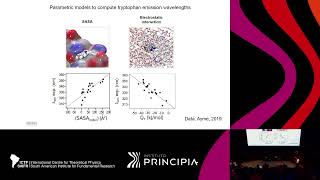
Computational Investigation of Ultrafast Protein-Water Interactions
Explore computational methods for studying ultrafast interactions between proteins and water molecules, uncovering insights into molecular biophysics.
AI-Driven Drug Design: Optimizing Pharmacokinetics and ADME
Explore AI-driven drug design techniques for optimizing pharmacokinetics and ADME with Novartis Principal Scientist Raquel Rodríguez Pérez at the Broad Institute symposium.
Automating Design of Molecules via Retrieval Augmented Generative Language Models - Broad Institute Machine Learning in Drug Discovery Symposium 2023
Explore automated molecule design using retrieval-augmented generative language models in drug discovery, presented by Andrew White from the University of Rochester.
AI in Drug Discovery: What Do We Need for Being Successful?
Explore AI's role in drug discovery with Sanofi-Aventis scientist Christoph Grebner, discussing key success factors and industry insights.
PROTPARDELLE: An All-Atom Protein Generative Model - Broad Institute Machine Learning in Drug Discovery Symposium 2023
Explore PROTPARDELLE, an all-atom protein generative model, presented by Stanford's Possu Huang at the Broad Institute's Machine Learning in Drug Discovery Symposium.
Introduction to Applications of Quantum Computing to Quantum Chemistry - Class 2
Explore quantum computing applications in quantum chemistry, focusing on advanced concepts and practical implementations.
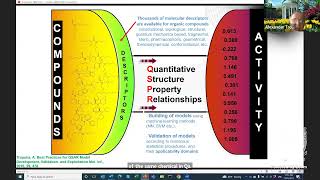
Methods and Models for Chemical Toxicity Prediction - 2022
Explore computational methods for predicting chemical toxicity, integrating structural alerts and QSAR models for comprehensive safety assessment of new compounds.
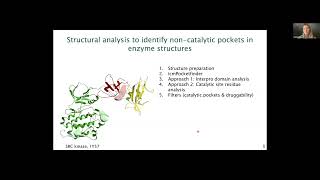
Computational Approaches and Methodologies in Proximity Induced Pharmacology
Explore computational approaches in proximity-induced pharmacology, focusing on PROTACS, structural analysis, and strategies for optimizing PROTAC screening and predicting activity.
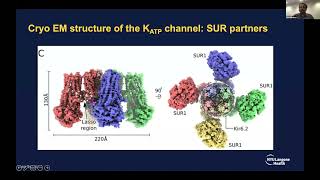
Chemically Probing the Mechanism of KATP Channels
Explore the mechanism of KATP channels through chemical probing, focusing on structure, gating, and the role of palmitoylation in channel opening.
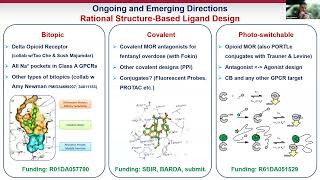
Computer-Driven Discovery of GPCR Ligands with New Chemotypes and Functional Selectivity
Explore computer-driven discovery of GPCR ligands, focusing on new chemotypes and functional selectivity. Learn structure-based techniques for rational ligand design and virtual screening.
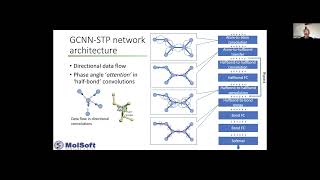
New Technologies in MolSoft ICM: Neural Networks and Beyond
Explore cutting-edge neural networks and advanced technologies in molecular modeling with MolSoft ICM, enhancing your computational chemistry capabilities.
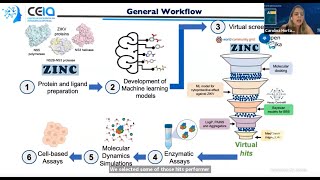
Cheminformatics-Driven Discovery of Hits for Neglected and Emerging Diseases - 2022
Explore AI-driven drug discovery for neglected diseases with Dr. Carolina Horta, focusing on computational methods and QSAR models for identifying new drug candidates.