Organic Chemistry in Biology and Drug Development
Explore organic chemistry's role in biology and drug development, covering biomolecules, enzymes, nucleic acids, and pharmacology. Gain insights into drug discovery, synthesis, and therapeutic applications.
Computational Chemistry and Classical Molecular Dynamics
This course introduces learners to elementary programming and numerical methods that are useful to solve problems in chemistry. These methods are useful for understanding molecular structures as well as condensed media such as liquids and solutions

Biochemistry
Comprehensive overview of biochemical processes, covering protein structure, photosynthesis, lipids, amino acids, cellular respiration, and key metabolic pathways.
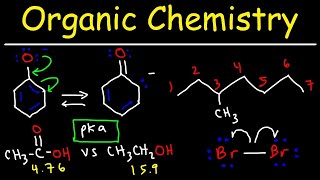
Organic Chemistry - Basic Introduction
Comprehensive introduction to organic chemistry fundamentals, covering bonding, structures, and key concepts for college students preparing for their first semester.
Principles and Applications of NMR Spectroscopy
The objective of the course is to teach the basic aspects of nuclear magnetic resonance (NMR) spectroscopy, which is an important analytical tool in chemical and pharmaceutical industry for the structural characterization of molecules.
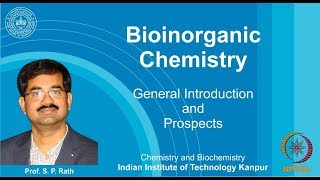
Bioinorganic Chemistry
This short course will give a brief overview on some selected topics from this highly interdisciplinary subject and will provide some insights into various applications of inorganic molecules on the life-related processes

General Chemistry Laboratory Experiments
Hands-on laboratory experiments covering fundamental chemistry concepts, from introductory techniques to advanced topics like kinetics and electrochemistry. Develop practical skills and deepen understanding through diverse experiments.
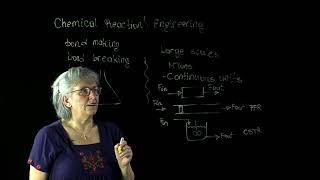
Advanced Chemical Reaction Engineering - Prof. Dr. Deniz Üner
Explore advanced concepts in chemical reaction engineering, including reactor design, energy balances, kinetics, and complex reactions for both ideal and non-ideal systems.
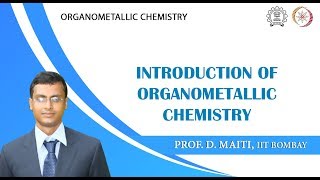
Introduction of Organometallic Chemistry
Comprehensive exploration of organometallic chemistry, covering electron counting, ligand reactions, oxidative addition, reductive elimination, migratory insertions, and industrial applications like hydrogenation and carbonylation.
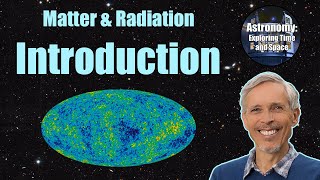
Introduction to Astronomy: Matter and Radiation
Explore matter, radiation, and fundamental physics concepts in astronomy, from atoms to the Higgs boson, energy forms, light, and gravity, with insights into relativity and space-time.

Archaeological Dating Methods
Explore various techniques used to determine the age of archaeological artifacts and sites, from radiocarbon dating to dendrochronology and stratigraphy.

Organic Chemistry Lab Workshop
In this course, you will learn Workshop on Techniques in Organic Chemistry, Introduction to claesen- Condensation, How to separate different components from a mixture using column chromatography, Chemiluminescence Phenomenon etc.
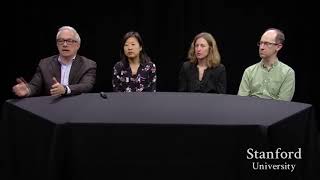
Stanford Chemical Engineering Online Master's Degree Program Webinar
Explore Stanford's online Chemical Engineering MS program: curriculum, career benefits, and enrollment details. Faculty discuss this part-time degree's unique features and answer questions.
Chemistry I
The Course is divided into two units, namely, Quantum Chemistry: Introduction and Introduction to Molecular Spectroscopy.

Biochemistry
Comprehensive overview of biochemistry, covering biomolecules, cellular functions, metabolism, and health. Equips learners with knowledge to understand nutrition, medicine, and debunk medical myths.
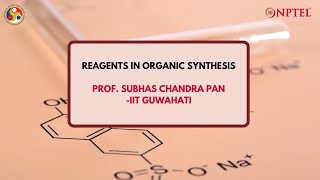
Reagents in Organic Synthesis
This course will deal with the various synthetic strategies using organic reagents. Both classical and modern reagents shall be discussed emphasizing the mechanistic details.
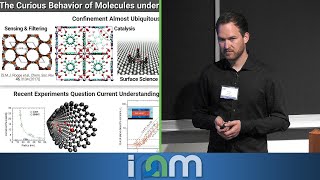
More is Different - Non-Scalability of Approximation in Modeling Noncovalent Interaction
Exploring the limitations of common approximations in modeling non-covalent interactions at the nanoscale, revealing complex scaling behaviors and the need for advanced quantum-mechanical methods.
Coordination Chemistry
Explore coordination chemistry concepts, from ligand classification to reaction mechanisms, with emphasis on bonding, isomerism, spectra, magnetism, and biological applications.
Engineering Chemistry 1
Learn about Engineering chemistry starting with Introduction to Chemistry & Quantum Chemical Methods and explore Oppenheimer Approximation, etc. in this course.

Chemistry by CrashCourse
Crash Course creates free, high-quality educational videos used by teachers and learners of all kinds. In 46 episodes, Hank Green will teach you chemistry!
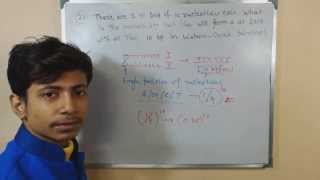
CSIR NET Problems and Answers
Comprehensive video series explaining CSIR NET life sciences exam problems, covering molecular biology, genetics, biochemistry, and cell biology. Includes step-by-step solutions and practical applications of key concepts.