
Stanford Chemical Engineering Online Master's Degree Program Webinar
Explore Stanford's online Chemical Engineering MS program: curriculum, career benefits, and enrollment details. Faculty discuss this part-time degree's unique features and answer questions.
Basic Construction Materials
Comprehensive exploration of construction materials, covering engineering concepts, material properties, and applications in stone, brick, cement, metals, polymers, pavements, and wood.

Biomedical Engineers and Artificial Organs - Frontiers of Biomedical Engineering
Explore biomedical engineering's role in artificial organs, focusing on synthetic biomaterials, body responses, and the design of various implants and devices for medical applications.

Macromolecules Review
Comprehensive introduction to biomolecules covering carbohydrates, lipids, proteins, and nucleic acids. Includes examples, practice problems, and detailed explanations of structures, functions, and biochemical processes.

Przyszłość jest plastikowa - Pozytywna wizja polimerów
Odkryj pozytywną wizję polimerów i ich rolę w zrównoważonej przyszłości. Alicja Trojanowska-Laskowska przedstawia nowe spojrzenie na tworzywa sztuczne, łącząc chemię z ekologią i innowacją.

Physics of Life by Vijaykumar Krishnamurthy
Explore the physics of living systems, focusing on soft condensed matter and emergent self-organization in cells and tissues. Gain insights into the fascinating intersection of physics and biology.
Soft and Biological Matter - Introduction to States and Structures in Living Systems - Lecture 1
Explore the intersection of biology and physics, covering topics from molecular evolution to ecology. Learn about physical constraints, evolutionary outcomes, and mathematical models in living systems.
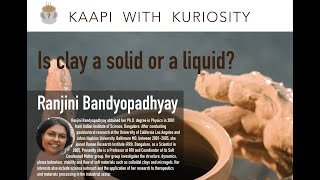
Is Clay a Solid or a Liquid?
Explore the fascinating properties of soft materials like clay, suspensions, and polymers. Discover how these everyday substances challenge our understanding of solids and liquids.
Modelling Physical Phenomena in Alloys and Polymers with Quantum Mechanical Accuracy
Explore data-driven interatomic potentials and Hyperactive Learning for modeling alloys and polymers with quantum accuracy. Gain insights into precipitate formation and chemical ordering.

Plastic as Packaging Material - Part 2
Explore polymer types for packaging, bottle production from plastic pellets, and pros/cons of plastics in packaging applications.

Fascination and Industrial Value of Materials Modeling
Explore materials modeling's role in sustainable energy solutions. Discover how simulations across scales support technological advancements in alloys, batteries, and CO2 capture.
Large Language Molecular Representation and Learning
Explore molecular machine learning's potential in drug discovery, focusing on representation challenges, self-supervised learning, and leveraging pre-trained language models for property prediction.
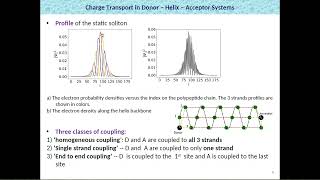
Soliton Mechanism of Long-Range Electron Transport in Donor-Acceptor Systems Mediated by Polymers
Dive into advanced physics concepts exploring soliton-mediated electron transport mechanisms in donor-acceptor systems and their role in long-range charge transfer processes.
An Introduction to Web Components and Polymer - Lecture 7
Explore Web Components and Polymer to create custom HTML elements and enhance web apps with ready-made functionality. Learn about encapsulation, the Polymer ecosystem, and practical implementation.
Machine Learning for Multi-Scale Molecular Simulation and Design
Explore multi-scale molecular simulation techniques using machine learning for accelerated MD simulations and MOF design, focusing on coarse-grained modeling and graph neural networks.
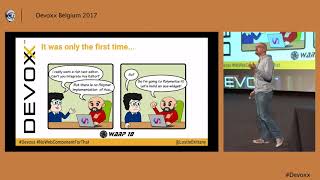
But There Is No Web Component for That!
Learn to transform JavaScript libraries into web components using Polymer, enabling seamless integration of custom elements in complex web applications. Practical examples from real-world projects included.
Bringing Handwriting Recognition to Your Webapp with a Polymer Component
Explore handwriting recognition integration in webapps using MyScript's Polymer component. Learn about text, math, and music recognition technologies and their machine learning foundations.
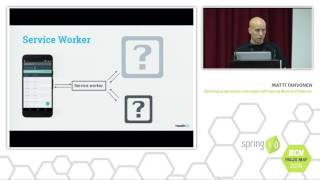
Building Progressive Web Apps with Spring Boot and Polymer
Explore building Progressive Web Apps using Spring Boot and Polymer, covering Service Workers, App Shells, and Web App Manifests for enhanced user experience and offline functionality.
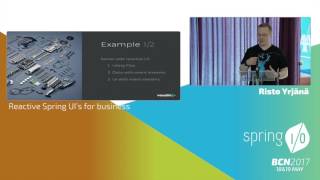
Reactive Spring UI's for Business
Explore reactive UI development for business applications using Spring and Polymer, covering server-side Java and web components for scalable, efficient web apps.
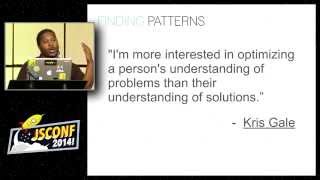
Finding Patterns Across Front-end Frameworks
Comparative analysis of popular front-end frameworks, exploring their unique approaches to solving common patterns in client-side development. Insights from Angular, Backbone, Ember, Polymer, React, and Yammer's custom solution.
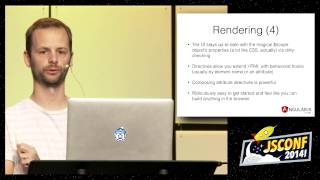
Embularactymerbone
Comparative analysis of popular frontend frameworks: Ember, Angular, React, Polymer, and Backbone. Explores their strengths, weaknesses, and use-cases through code examples and key features.