An Introduction to Web Components and Polymer - Lecture 7
Explore Web Components and Polymer to create custom HTML elements and enhance web apps with ready-made functionality. Learn about encapsulation, the Polymer ecosystem, and practical implementation.
Transforming Enterprise Development With Clojure
Explore Clojure's approach to modularity and composability in enterprise development, with live demos showcasing loose coupling and reusable code practices.
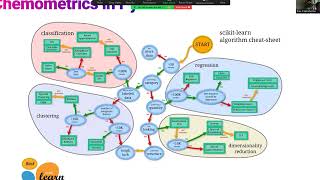
Chemotools - Integrating Chemometrics and Scikit-Learn for Spectral Data Analysis
Explore chemotools, a Python library unifying chemometrics and machine learning for spectral data analysis, streamlining model development and implementation in the scientific community.
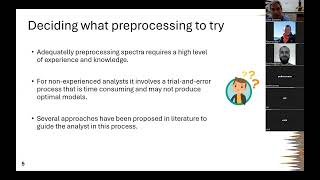
ExpertPLS - A MATLAB Toolbox for Spectral Preprocessing Selection
Automated MATLAB toolbox for spectral preprocessing selection, quantifying noise and scatter effects to optimize PLS models efficiently and objectively, surpassing trial-and-error methods.
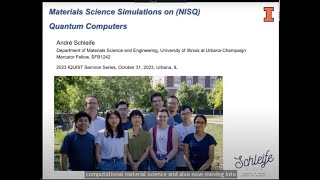
Materials Science Simulations on Quantum Computers
Explore quantum computing applications in materials science, focusing on electronic-structure simulations, quantum defect embedding theory, and noise mitigation strategies for IBM quantum hardware.

Molecule Testing for Ansible-Driven Data Lake Deployments on Kubernetes
Master automated data lake deployment workflows using Molecule, Ansible, and Kubernetes. Learn to set up and test multi-node clusters with essential data services like Elasticsearch, JupyterHub, Spark, and Airflow.
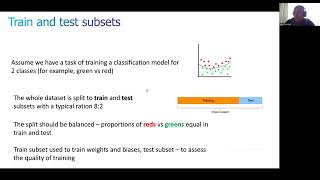
Application of Machine Learning Approaches to the Generation of Organic Compounds and Properties Prediction
Explore machine learning techniques for generating organic compounds and predicting their properties, focusing on practical applications in theoretical physics and chemistry.

Reinforcement Learning-Based Fine-Tuning of Diffusion Models for Drug Discovery
Dive into advanced reinforcement learning techniques for fine-tuning diffusion models, focusing on accelerated drug discovery, bioinformatics, and molecular compound predictions.
Quantum Computation of Stopping Power for Inertial Fusion
Explore quantum computational methods for calculating stopping power in inertial fusion, focusing on first-principles calculations and fault-tolerant quantum computing protocols for electronic systems.
Topological Message Passing: From Graph Neural Networks to Simplicial Complexes on CW Networks
Delve into advanced Graph Neural Network concepts, exploring topological message passing, simplicial complexes, and high-dimensional interactions for computational graph networks and molecular design applications.
Generating Approximate Ground States of Molecules Using Quantum Machine Learning
Explore quantum machine learning techniques for approximating molecular ground states, advancing our understanding of quantum chemistry and computational methods.
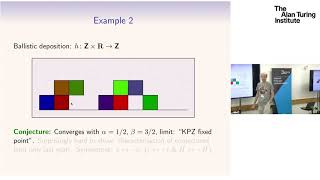
Universality Classes for 1+1 Dimensional Systems
Explore universality classes in 1+1 dimensional systems, focusing on weak universality conjecture, graphical construction, and links to Brownian web. Gain insights into complex systems modeling.
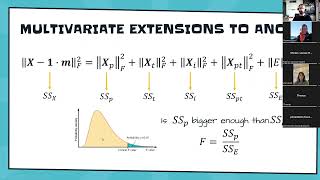
Statistical Inference of Omics Data with Variable-Selection
Learn statistical inference techniques for omics data analysis, focusing on variable selection methods to enhance spectral matching and predict molecular structures from LC-MS/MS spectra using chemometrics and deep learning approaches.
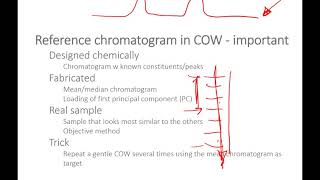
Preprocessing - Warping Data
Learn about Correlation Optimized Warping (COW) for aligning misaligned data, including its principles, parameters, and applications in bilinear models and data preprocessing.
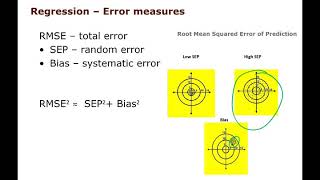
PLS Number of Components
Learn validation techniques for PLS models, including outlier detection, error measures, cross-validation, and practical tips for selecting the optimal number of components.
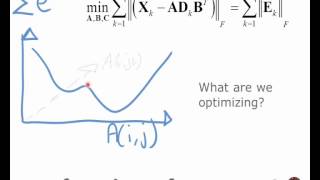
Multi-Way Analysis - The Algorithm
Explore the alternating least squares algorithm for multi-way analysis, focusing on PARAFAC modeling in chemometrics. Learn about notation, potential problems, and alternative approaches.
Estimating Normalizing Constants for Log-Concave Distributions - Algorithms and Lower Bounds
Explore algorithms and lower bounds for estimating normalizing constants in log-concave distributions, covering annealing, Monte Carlo methods, and Langevin dynamics.

Towards Practical Quantum Advantage - Quantum Colloquium
Explore quantum computing's potential for practical advantage, focusing on small data problems with superquadratic speedups. Discusses progress in quantum algorithms for chemistry and simulation challenges.
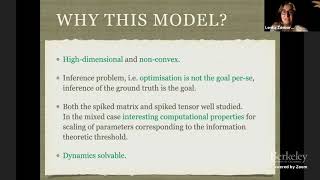
Insights on Gradient-Based Algorithms in High-Dimensional Learning
Explore gradient-based algorithms in high-dimensional learning, covering statistical physics solutions for performance analysis in nonconvex settings like spiked mixed matrix-tensor model, perceptron, and phase retrieval.
Recent Advances in Quantum Simulation with Applications to Chemistry and Field Theory
Explore recent quantum simulation advances in chemistry and field theory, covering time-dependent Hamiltonians, QDRIFT, Dyson series, and interaction picture simulation techniques.
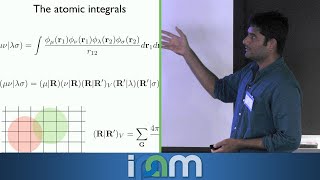
Auxiliary Field Quantum Monte Carlo - AFQMC with Multi Slater Wavefunctions
Explore advanced quantum Monte Carlo techniques, focusing on AFQMC with multi-Slater wavefunctions and efficient exchange matrix evaluation for large-scale quantum systems.