Data Science for Assembly Engineering - Sharon C Glotzer
Explore data science applications in assembly engineering, covering self-assembly, crystallization, and machine learning techniques for structural analysis and visualization.
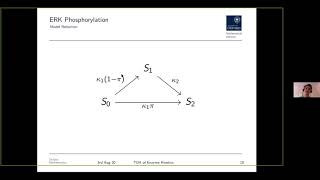
Geometric and Topological Data Analysis of Enzyme Kinetics
Explore geometric and topological data analysis techniques applied to enzyme kinetics, focusing on ERK molecular dynamics and its implications for cancer and developmental defects.
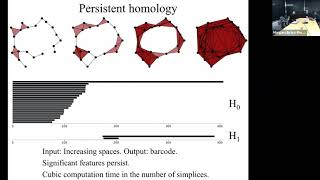
An Introduction to Persistent Homology
Explore persistent homology in applied topology, focusing on energy landscapes in chemistry. Learn about sublevelset analysis and its applications to real-valued functions and point cloud data.
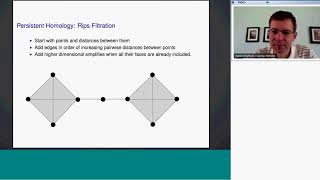
Anthony Bak - Spaces of Shapes Persistent Homology for Drug Discovery
Explore persistent homology in drug discovery, focusing on structure-based design, chemical compound analysis, and machine learning applications for virtual screening and classification.
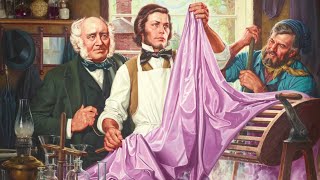
Quinine and the Birth of the Dye Industry
Explore the fascinating history of quinine, from its discovery as a malaria treatment to its impact on the dye industry and modern pharmaceuticals. Learn about key figures and accidental discoveries that shaped scientific progress.

Molecular Docking with AutoDock VINA - Script-Based Method for Multiple Ligands
Learn script-based molecular docking with AutoDock Vina for virtual screening of multiple ligands. Explore conformational space, calculate binding energies, and identify potential lead compounds efficiently.
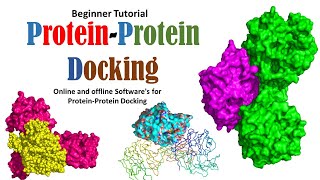
Protein-Protein Docking Tutorial for Beginners Using ClusPro, PatchDock, and Hex
Learn to perform protein-protein docking using validated tools like ClusPro, PatchDock, and Hex. Gain hands-on experience with step-by-step demonstrations and access to relevant literature.
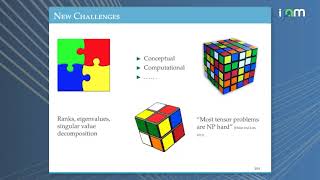
Low Rank Tensor Methods in High Dimensional Data Analysis
Explore low rank tensor methods for analyzing high-dimensional data in various fields. Learn about recent progress, challenges, and applications in extracting information from multilinear arrays.
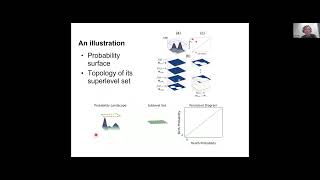
Non-Diffusive Vortexes at Transition State of Activated Process by Persistent Homology
Exploring non-diffusive dynamics in molecular transitions using persistent homology, revealing reactive vortexes and rotational fluxes at transition states of alanine-dipeptide isomerization.
Topological Data Analysis Based Machine Learning Models for Drug Design
Explores TDA-based models for effective molecular representation in drug design, combining persistent homology, spectral models, and Ricci curvature with machine learning for improved performance.
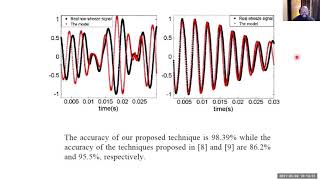
Quasiperiodicity and Persistent Kunneth Theorems
Explore quasiperiodicity in signals, persistent homology, and Kunneth theorems. Learn applications in time series analysis and computational chemistry through topological data analysis.
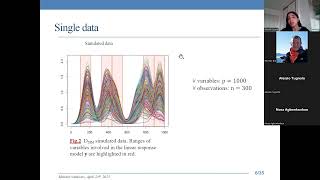
Dual-SPLS - A Versatile Approach Improving PLS with Lasso Shrinkage
Explore dual-sPLS, an innovative algorithm combining PLS and Lasso for improved variable selection and dimension reduction in high-dimensional analytical chemistry problems, offering enhanced accuracy and interpretability.
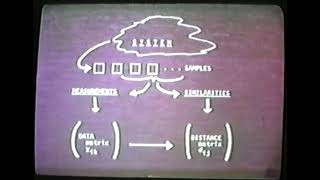
Introduction to Chemometrics - Historical Lecture by Bruce Kowalski
Explore the foundations of chemometrics with Bruce Kowalski's 1991 lecture, covering key concepts like CLS, PLS, regression, and neural networks that remain relevant in modern data science.
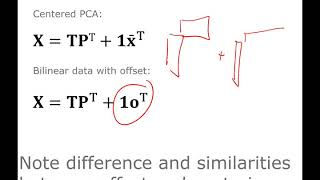
Preprocessing: Centering and Scaling in Chemometric Machine Learning
Learn techniques for centering and scaling data to enhance information in chemometric machine learning contexts like PCA and PLS models.

Pharmaceutical Method Development Workflow - From Ideation to Validation
Explore the analytical method development workflow in pharmaceuticals, from ideation to validation, covering key concepts and industry-specific terminology.
Methods for Computational Biology and Drug Discovery
Explore fundamental computational methods in physics and chemistry, presented by their creators, with insights into their development and applications.
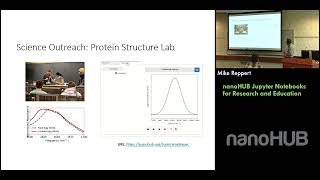
NanoHUB Jupyter Notebooks for Research and Education in Chemistry
Explore nanoHUB Jupyter Notebooks for creating chemistry teaching applications. Learn about tools for simulating proteins, analyzing lab data, and studying molecular spectroscopy. Discover how to develop and share scientific software effectively.
Modeling of Nucleosome Clustering in Euchromatin Resulting from Reader Protein Interactions
Explore nucleosome clustering in euchromatin through modeling interactions between reader proteins. Gain insights into chromosomal organization and dynamics from the Spakowitz lab's research.
Coarse-grained Simulations of Nucleosomes
Explore coarse-grained simulations of nucleosomes to understand chromatin organization and gene regulation through interdisciplinary computational modeling techniques.
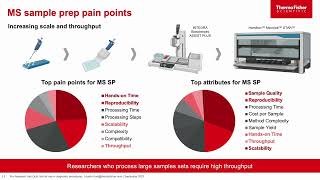
Adapting TMT and EasyPep Sample Preparation Reagents for High-Throughput, Automated Workflows
Explore high-throughput, automated workflows for TMT and EasyPep sample preparation in quantitative proteomics, focusing on efficiency and reproducibility for large-scale experiments.
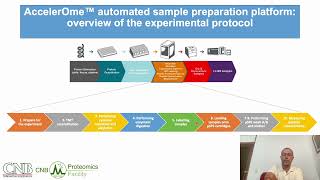
Assessing the Performance of the Automated Sample Preparation Platform AccelerOme
Explore the AccelerOme platform's performance in automating proteomics sample preparation, optimizing extraction, digestion, and labeling processes for improved experimental quality.