
Molecular Docking and Virtual Screening with AutoDock VINA - Bioinformatics Tutorial
Learn molecular docking with AutoDock VINA for virtual screening in drug discovery. Explore ligand-protein interactions, scoring functions, and post-processing techniques to identify potential lead compounds.
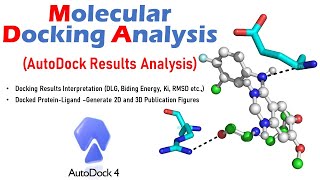
Molecular Docking Analysis - Autodock Results and Visualization
Learn to analyze molecular docking results using Autodock, extract key scores, and generate 2D/3D visualizations with tools like Pymol and LigPlot for effective protein-ligand interaction studies.

Molecular Docking for Beginners - Autodock Full Tutorial
Guía paso a paso sobre acoplamiento molecular proteína-ligando utilizando AutoDock. Aprenda a investigar interacciones a nivel atómico para comprender mecanismos bioquímicos.
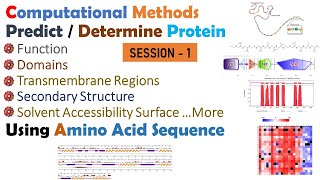
Bioinformatics Methods for Protein Function Identification - Domains and Transmembrane Regions
Explore protein sequence annotation using computational tools for properties, domains, transmembrane regions, and structural elements. Learn to analyze amino acid sequences effectively.
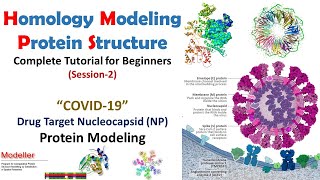
Homology Modeling for Beginners - COVID-19 NP Protein Modeling - Session 2
Learn sequence alignment, model generation, and validation for COVID-19 NP protein using Modeller and PROCHECK tools in this practical bioinformatics tutorial on homology modeling.
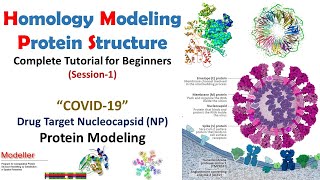
Homology Modeling for Beginners - COVID-19 NP Protein Modeling with Modeller
Learn homology modeling basics and hands-on pipeline using Modeller tool to construct atomic-resolution protein models from amino acid sequences and related homologous structures.
NGS Analysis Practical Using Galaxy Server - Section 1
Hands-on demonstration of NGS analysis using Galaxy server, covering step-by-step procedures and providing practical insights for bioinformatics researchers.
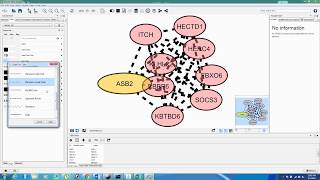
Identification of Nodes and Edges in Cluster Finder - CFinder and Clique Percolation Method
Explore k-clique communities in networks using CFinder's Clique Percolation Method algorithm for effective subgraph analysis and community detection.
Non-Diffusive Vortexes at Transition State of Activated Process by Persistent Homology
Exploring non-diffusive dynamics in molecular transitions using persistent homology, revealing reactive vortexes and rotational fluxes at transition states of alanine-dipeptide isomerization.
Lab-in-the-Loop De Novo Antibody Design - What Are We Missing From Machine Learning?
Explore lab-in-the-loop de novo antibody design, focusing on computational aspects. Discover generative modeling, computational oracles, and active learning in molecular systems research.
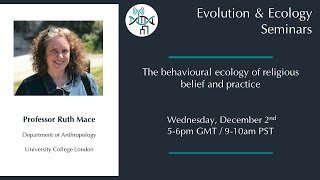
The Behavioural Ecology of Religious Belief and Practice
Explore the evolutionary and ecological aspects of religious beliefs and practices, including their impact on behavior, reputation, and social structures.

The 17 Best Traps in the London System
Discover 17 powerful traps in the London System to gain a strategic advantage. Learn clever tactics and surprising moves to outmaneuver your opponents and improve your chess game.

Data-Driven Discovery: Revolutionizing Medical Research
Discover how big data and outsourced research are revolutionizing scientific inquiry, challenging traditional methods, and unlocking new possibilities in genomics and medicine.
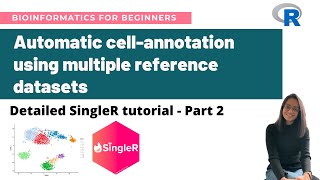
Automatic Cell Annotation for Single-Cell RNA-Seq Data - Multiple Reference Strategies in SingleR - Part 2
Explore advanced cell-annotation techniques for single-cell RNA-Seq data using SingleR, including multiple reference datasets, visualization strategies, and harmonized labeling approaches.
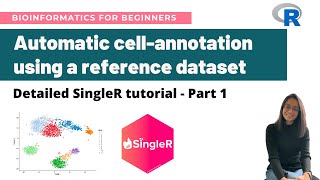
Automatic Cell-Annotation for Single-Cell RNA-Seq Data Using a Reference Dataset - A SingleR Tutorial
Learn to annotate cell types in single-cell RNA-Seq data using SingleR. Explore annotation strategies, reference datasets, and diagnostic tools for accurate cell type assignment and visualization.
Kubernetes and AI in Cancer Diagnosis and Treatment
Explore how distributed Kubernetes clusters and AI revolutionize cancer diagnosis, combining computational biology with cloud computing for faster, more precise treatments.
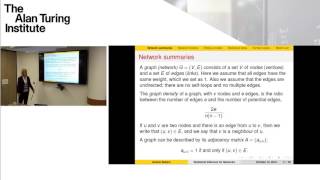
Statistical Inference for Networks - Professor Gesine Reinert, University of Oxford
Explore network analysis, from basic concepts to advanced statistical methods, covering degree distributions, clustering coefficients, and mathematical models for understanding complex interconnected systems.

Networks from Real Data - Algorithmic Information Dynamics
Explore algorithmic information dynamics and its applications in causality and living systems, from networks to cells, using computational approaches.
De Novo Protein Design Using Deep Learning and Musical Representations
Explore innovative protein design using deep learning and musical representations, bridging materials science and artificial intelligence for groundbreaking bioengineering applications.
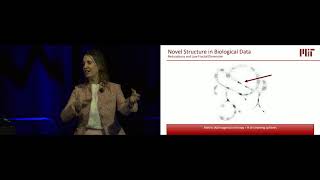
Biomedical Data Sharing and Analysis at Scale
Explore cutting-edge techniques for large-scale biomedical data sharing and analysis, addressing challenges and opportunities in this rapidly evolving field of computational biology and mathematics.
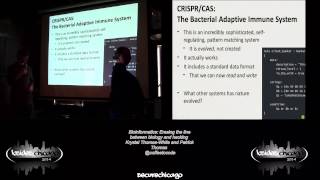
Bioinformatics - Erasing the Line Between Biology and Hacking
Explore the intersection of biology and hacking in bioinformatics, discovering how computational techniques are revolutionizing biological research and creating new security challenges.