Beyond Cells: The Importance of Gene Programs and Tissue Context
Explore gene programs and tissue context beyond individual cells, uncovering novel insights into pressing biomedical questions through advanced machine learning techniques.
Generative AI for Modeling Single-Cell Responses
Explore generative AI applications in single-cell response modeling, covering data integration, representation learning, and multiomics analysis for biomedical insights.
Spatial and Single Cell Diversity of Cells and Humans
Explore spatial and single-cell diversity in humans, examining how our surroundings influence cellular and individual variations through cutting-edge genomic research.
Stochasticity in Transcription - MPG Primer 2023
Dive into stochasticity in transcription, exploring single-cell data, dynamic regulatory elements, and transcriptional bursting in autoimmune diseases. Gain insights into modeling techniques and gene regulatory programs.
High-Throughput In Silico Genetic Screen for 3D Genome Organization - Models, Inference and Algorithms
Explore cutting-edge approaches in 3D genome organization research, including in silico genetic screening and graph representation learning for analyzing multiscale chromatin structure.

Julia for Biologists - A Perspective on Speed, Abstraction, and Metaprogramming
Explore Julia's potential in biology: speed, abstraction, and metaprogramming for data analysis, modeling, and research. Learn practical examples and discover the Julia ecosystem for biologists.
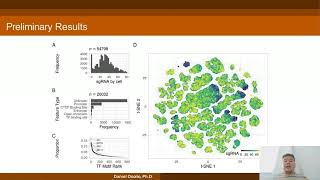
Systematic Characterization of Gene Regulatory Networks Rewiring Patterns Mediated by Non-Coding Regions
Explore gene regulatory network rewiring patterns through innovative experimental methods and computational approaches for characterizing effects of perturbations at single-cell level.
Supporting Biomarker Discovery One Cell at a Time - Single Cell Analysis Solutions That Drive Results
Explore single-cell gene expression analysis for revealing complex cell populations, uncovering regulatory relationships, and visualizing gene expression differences across cell types.
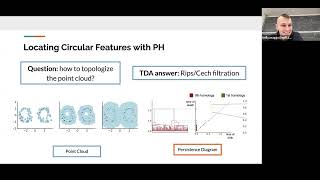
Cohomology Classes in the RNA Transcriptome
Explore how cohomology classes in single-cell sequencing data can model transient biological processes, using persistent cohomology and differential forms to infer gene expression dynamics.
Inferring Cell-state Dynamics from High-resolution Lineage Tracking of Single Cells
Explore cell-state dynamics through high-resolution lineage tracking, uncovering insights into cancer progression and potential treatment approaches in this theoretical biology lecture.
To Live or Not to Live - Decision Making in Single Cancer Cells - Lecture 1
Explore decision-making processes in individual cancer cells, examining factors influencing cell survival and death. Gain insights into cellular behavior and its implications for cancer progression and treatment.
Chance and Necessity: Decision Making in Single Cancer Cells - Lecture 2
Explore decision-making processes in individual cancer cells, examining the interplay between randomness and determinism in cellular behavior and its implications for cancer progression.
Excavating the Architecture of Chromatin: From Nucleosomes to Chromosomes
Explore chromatin architecture from nucleosomes to chromosomes, unraveling its complex organization and role in gene regulation through interdisciplinary perspectives and cutting-edge research.
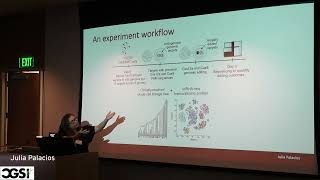
Inference from Single Cell Lineage Tracing Data Generated via Genome Editing
Explore single-cell lineage tracing via genome editing, covering inference methods, design parameters, and data analysis for understanding cellular phylodynamics and evolution.
Direct cDNA Synthesis Using Template Switching RT for Highly Sensitive Gene Expression Analysis
Explore reverse transcriptases, template switching RT, and direct cDNA synthesis from cell lysates for enhanced single-cell analysis and gene expression studies.
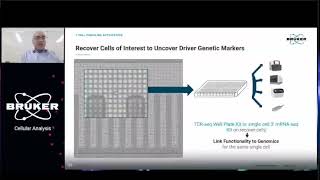
Harnessing the Power of Beacon Platform to Accelerate Antibody Discovery and Cell Therapy Development
Explore Bruker's Beacon® Optofluidic System for comprehensive single-cell analysis, enabling serial multi-modal examination and real-time imaging to accelerate antibody discovery and cell therapy development.
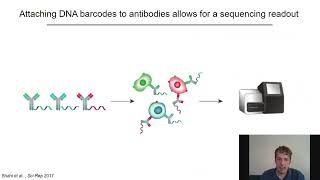
Cell Pathology Revealed by Single-Cell Genotype-Phenotype Mapping
Explore single-cell genotype-phenotype mapping to uncover cancer mutation effects and HIV latency mechanisms. Gain insights into tumor heterogeneity and disease progression using advanced genomic methods.
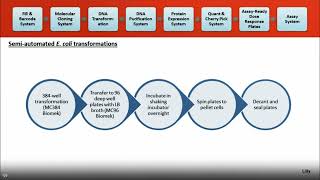
Single Cell Antibody Discovery Using Islands of Automation
Explore advanced automation techniques for single cell antibody discovery, focusing on Eli Lilly's 'Islands of Automation' approach to accelerate drug development timelines and increase research efficiency.
Chromatin Readers as Molecular Architects in Shaping Metabolic Landscape
Explore chromatin 'readers' as molecular architects shaping metabolic landscapes. Delve into interdisciplinary aspects of chromatin organization and gene regulation in this comprehensive lecture.
Unravelling the Cell-type Specific Roles of Disease-associated Mutations in Chromatin Organization and Gene Regulation
Explore cell-type specific impacts of disease-associated mutations on chromatin organization and gene regulation through interdisciplinary approaches and cutting-edge techniques.
Understanding Epigenetic Mechanisms Through the Engineering of Synthetic Chromatin
Explore epigenetic mechanisms through synthetic chromatin engineering. Gain insights into chromatin organization and gene regulation using interdisciplinary approaches and cutting-edge techniques.