Tiling the Genome - Naming the Parts of Your Genome That Make You You
Explore genomic tiling, precision medicine, and the future of DNA-based healthcare. Learn about organizing computational resources, big data platforms, and the Personal Genome Project's impact on clinical genetics.
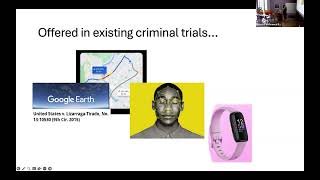
Beyond Prediction: Algorithmic Proof of Guilt or Innocence in Criminal Trials
Explore the use of algorithms in criminal trials for evidence, examining accuracy, fairness, and transparency concerns. Discuss challenges and potential solutions for courts and researchers.

Genetics
Explore genetics through expert lectures on topics like genome annotation, behavioral genetics, and the interplay between genes and environment. Gain insights into cutting-edge research and applications.

Ötzi the Iceman and the Copper Age World
Explore the life, death, and world of Ötzi, a 5,300-year-old mummy discovered in the Alps, offering insights into Copper Age society, technology, and human migration in prehistoric Europe.
Bioinformatics in Python - DNA Toolkit
Learn to build a comprehensive DNA toolkit in Python, covering nucleotide validation, transcription, GC content calculation, translation, protein search, and more for practical bioinformatics applications.
I viaggi della Sindone raccontati dal DNA
Esplora i risultati di un innovativo progetto di ricerca finanziato dall'Università di Padova che analizza il DNA genomico isolato da residui organici della Sindone. Scopri come il Prof. Gianni Barcaccia ha utilizzato tecniche avanzate di sequenziamento…
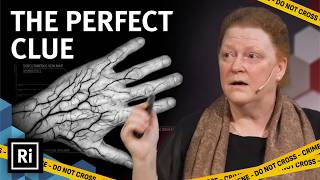
How Does Forensic Anthropology Help Solve Crimes? - With Sue M. Black
Explore forensic anthropology's role in solving crimes through case studies, innovative techniques, and the power of human anatomy in identifying individuals and uncovering evidence.
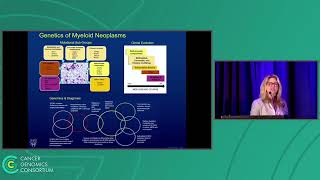
High-Resolution Target-Capture DNA Analysis for Suspect Clonal Hematopoiesis
Explore high-resolution DNA analysis for clonal hematopoiesis. Learn about mutational hierarchy, precision medicine, and clinical applications in cancer and bone marrow failure.

Interpretation of Evidence Using Fundamental Physics in Forensic Science
Explore how fundamental physics principles and instrumentation contribute to forensic evidence analysis, from microscopic DNA to large-scale crime scene elements.

Significance of DNA Evidence: Crime Scene to Conviction
Explore the crucial role of DNA evidence in criminal investigations, from crime scene collection to courtroom conviction, with insights from real-case experiences shared by an expert in forensic science.

Is Quality Compromised in Forensic DNA - Preventing Contamination and Working with Imperfect Specimens
Explore measures to prevent forensic DNA contamination and techniques for working with imperfect specimens, ensuring the integrity of crucial evidence in criminal investigations.

The Use of 3D Printing in Humanitarian Forensics
Explore 3D printing's innovative applications in humanitarian forensics for identifying the deceased, including antemortem data collection, DNA sampling, and dental record analysis.
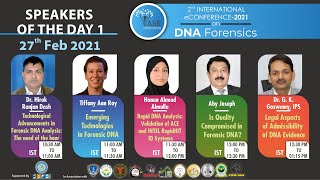
DNA eConference - Day 1
Explore cutting-edge DNA forensics research and applications in this international eConference, featuring expert presentations on the latest advancements in forensic science.
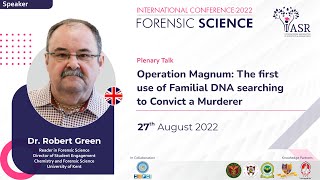
Operation Magnum - First Use of Familial DNA Searching to Convict a Murderer
Dr. Robert Green explores the groundbreaking use of familial DNA searching in Operation Magnum, leading to the conviction of the Saturday Night Strangler, Joseph William Kappen, for his 1973 crimes.

The New Advances in Forensic Science
Renowned forensic scientist Dr. Henry Lee discusses recent advancements in forensic science, drawing from his extensive experience in high-profile cases to illustrate the field's evolving role in criminal justice.
Science of Crime and Criminal Justice System
Explore scientific approaches in crime-solving and criminal justice with insights from Dr. Akhil Chaudhary IPS. Learn how forensic evidence aids police investigations and judicial processes.
Wrongful Conviction and Innocence Claims in India - The Role of Forensic Science
Exploring forensic science's role in sexual offense investigations, wrongful convictions, and the Innocence Project's importance in India's criminal justice system.
Are DNA Testing Kits Good? - Benefits and Concerns
Explore the science, accuracy, and ethical implications of at-home DNA testing kits with experts in genetic genealogy, evolutionary genetics, and scientific publishing.

Integrating Functional Studies into Variant Interpretation
Explore DNA and RNA functional data integration in ACMG classification, evaluating assay quality and weighting in variant interpretation, with insights from recent ClinGen SVI recommendations.
Machine Learning Models of Differential Gene Expression
Explore deep learning models for predicting regulatory functions from genomic DNA, uncovering mechanisms behind genetic variation's impact on cellular function and gene expression.
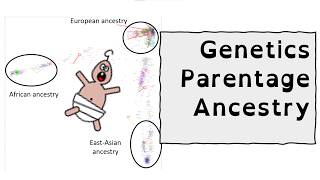
Parent-Child vs. Ancestry - Understanding Genetic Relationships
Unraveling genetic relationships: parent-child vs. ancestry. Explore how genetic coefficients differ between direct lineage and population-wide ancestry, debunking misconceptions and clarifying genomic analysis methods.