Meet Your Inner Microbial Zoo - Understanding the Human Microbiome
Explore the human microbiome's impact on health, development, and immunity. Learn about metagenomics, predictive modeling, and future clinical applications in this fascinating lecture on our inner microbial ecosystem.
Multi-omics Variational Autoencoding - Deep Dive and Primer
Explore multi-omics variational autoencoding for integrating complex biological datasets. Learn about MOVE pipeline, data preprocessing, model optimization, and approaches for determining associations between omics variables and categorical labels.
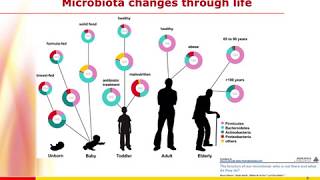
Microbiome Summer School- Big Data Analytics for Omics Science 2017
Explore microbiome research through bioinformatics and big data analytics, covering topics from metagenomics to machine learning for biological data and microbiome database mining.
Getting Started with ESM Metagenomic Atlas with API and Large Language Models
Introduction to Meta AI's ESM Metagenomic Atlas, exploring protein structures and their importance. Covers API usage, large language models, and practical demonstrations using various tools and resources.
Metagenomics Taxonomic Classification Using Kraken 2 in OmicsBox
Learn metagenomics analysis using Kraken 2 in OmicsBox. Covers data preprocessing, taxonomic classification, visualization, and differential abundance analysis for shotgun sequencing data.
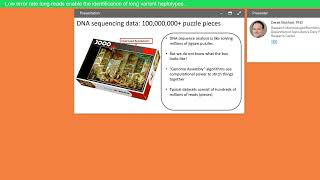
Low Error Rate Long-Reads Enable the Identification of Long Variant Haplotypes in Metagenome Assemblies
Explore how low error rate long-reads improve metagenome assembly, enabling identification of long variant haplotypes in microbial communities. Learn about overcoming challenges in separating closely related organisms.
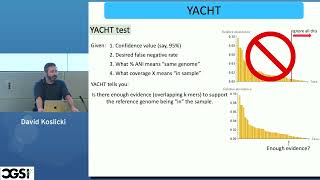
YACHT: An ANI-Based Statistical Test to Detect Microbial Presence or Absence in Metagenomes
Explore YACHT, an ANI-based statistical test for detecting microbial presence in metagenomes. Learn about its applications and implications for microbiome research.
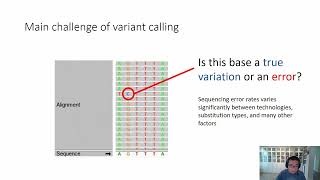
Rescuing Low Frequency Variants Within Intra-Host Viral Populations from Oxford Nanopore Sequencing Data
Explore techniques for identifying low-frequency viral variants from Oxford Nanopore sequencing data, enhancing understanding of intra-host viral populations and mutation patterns.
Eco-evolutionary Feedbacks in the Human Gut Microbiome
Explore eco-evolutionary dynamics of human gut microbiomes, examining feedbacks and interactions shaping microbial communities and host health.
The Human Microbiome and its Implications for Philosophy
Explore the human microbiome's philosophical implications with renowned researcher Rob Knight, delving into its impact on our understanding of biology and self.
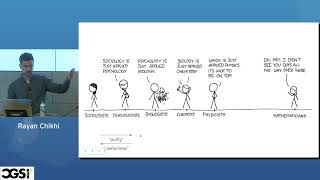
Living in the Future of Genomics
Explore cutting-edge genomics research and its future implications with insights from Rayan Chikhi at the Computational Genomics Summer Institute.
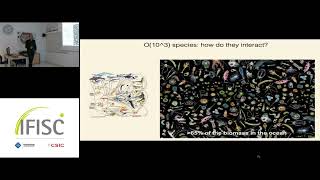
Understanding the Structure and Functioning of Oceans' Microbiomes - Toward a Holistic View
Explore ocean microbiomes' structure and function, gaining a holistic perspective on these complex ecosystems and their impact on marine environments.
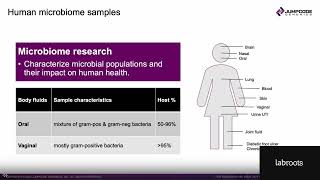
Boost Microbial Detection Sensitivity with Unbiased Human Host DNA and RNA Depletion
Enhance microbial detection in human microbiome samples through unbiased host DNA/RNA depletion. Learn about CRISPRclean technology for improved taxonomic resolution and increased microbial genome coverage.
A Bad Year with Great Papers in Clinical Microbiology
Explore key clinical microbiology research from 2020, including COVID-19 testing innovations, metagenomics advances, and emerging antibiotic resistance, as discussed by journal editors.
Molecular Epidemiology - Critical Applications in Public Health and Clinical Laboratories
Explore emerging technologies in molecular epidemiology and their impact on public health and clinical laboratories. Learn about pathogen genomics, metagenomics, and their applications in disease surveillance and outbreak investigations.
Microbes Controlling the Climate
Explore how airborne microorganisms may influence weather events, focusing on bacteria's role in hailstone formation and its implications for understanding microbial impact on climate.
The Role of the Microbiome in Infection Control
Explore the impact of microbiome disruption on infection control, focusing on C. difficile and multidrug-resistant organisms. Learn about potential interventions and future directions in healthcare epidemiology.
Challenges in Developing a Universal Metagenomic Diagnostic Test - 2024
Explore challenges in creating a universal metagenomic diagnostic test for disease detection, focusing on scalability, sensitivity, and application in community surveillance.
An Open MetaGenomic Corpus for Mixed-Modality Genomic Language Modeling
Explore the Open MetaGenomic corpus for genomic language modeling, featuring 3.1T base pairs and 3.3B protein coding sequences. Learn about mixed-modality approaches and their impact on AI for drug discovery.
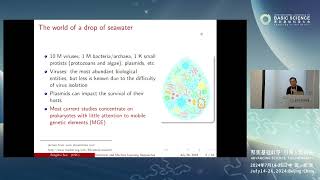
Statistical and Machine Learning Approaches for Investigating Viruses and Virus-Host Interactions
Explore statistical and machine learning methods for identifying novel viruses and virus-host interactions in metagenomic studies, enhancing understanding of microbial communities.