AI in Early Detection of Diseases - Session 2
Exploring AI innovations in early disease detection, discussing challenges, opportunities, and future prospects for AI-driven health technologies across various medical fields.
Kaemika App - Simulating Reaction Networks and Digital Protocols
Explore integrated descriptions for automated scientific processes, extracting models and protocols for analysis and execution using the Kaemika app across multiple platforms.

Data-Driven Understanding of Human Disease: From Machine Learning Methods to Biological Discoveries
Data-driven disease understanding: machine learning methods for genomic analysis, integrating model organism data with human studies to uncover disease mechanisms and genetic architecture.
Demystifying Conda and Virtual Environments for Bioinformatics
Comprehensive guide to Conda and virtual environments, covering installation, package management, and environment creation for Python and R projects. Includes practical demonstrations and comparisons between different tools.
Language AI for RNA Virus and RNA Vaccine Design
Exploring unexpected connections between linguistics and biology, revealing efficient algorithms for mRNA vaccine design and COVID genome structure prediction with significant biological impacts.
Advances in Predictive Models for Single-cell and Regulatory Genomics
Explore cutting-edge predictive models for single-cell and regulatory genomics, enhancing understanding of cancer progression and potential treatment approaches.
From Genomes to Life: Computing Cell Phenotypes Using Biochemical Network Reconstruction
Explore computational approaches to predict cell phenotypes from genomic data using biochemical network reconstruction, advancing our understanding of cellular behavior and disease mechanisms.
Tumor Phylogeny Inference from Single-cell Datasets - Lecture 2
Explore tumor evolution through single-cell data analysis. Learn advanced techniques for inferring phylogenetic relationships and understanding cancer progression at the cellular level.
Computational Cancer Biology: An Expedition Towards Precision Oncology
Explore computational approaches in cancer research, from mathematical modeling to machine learning, aimed at understanding disease progression and developing precision treatments.
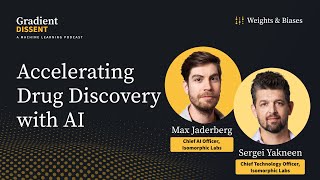
Accelerating Drug Discovery with AI - Insights from Isomorphic Labs
Explore AI's transformative role in drug discovery with Isomorphic Labs experts, discussing challenges, innovations, and future prospects in biotech and healthcare.
Cover Your Bases: Minimizing Sequencing Coverage in DNA Storage Systems
Explores minimizing DNA sequencing coverage in storage systems, focusing on error-correcting codes and retrieval algorithms to reduce costs and latency while optimizing information retrieval efficiency.
Toward Efficient Genomic Compression Using Channel Codes for Joint Alignment and Reconstruction
Explore innovative genomic compression techniques using channel codes for efficient alignment and reconstruction, advancing data storage and analysis in genomics research.
Applications of Topology to Oncology Data
Exploring Persistent Homology in oncology: predicting leukaemia relapse risk and analyzing tumor microenvironments using topological data analysis and machine learning techniques.
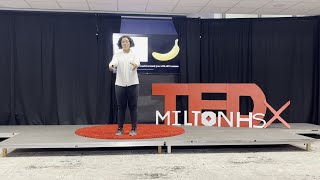
A Quest for Little Eureka Moments
Explore the intersection of poetry, science, and learning with Sara Garg as she shares insights on finding "little Eureka moments" and pursuing interdisciplinary passions.

Discrete Morse Graph Skeletonization and Application to Local Structures of scRNA-seq Data
Explores topological data analysis for extracting graph skeletons from high-dimensional data, with applications in analyzing local structures of scRNA-seq datasets across brain regions.

Understanding AlphaFold - AI in Protein Structure Prediction
Explore AlphaFold's revolutionary impact on protein structure determination with Dame Janet Thornton. Discover how this AI program is transforming bioinformatics and its potential future applications.
Metagenomics Taxonomic Classification Using Kraken 2 in OmicsBox
Learn metagenomics analysis using Kraken 2 in OmicsBox. Covers data preprocessing, taxonomic classification, visualization, and differential abundance analysis for shotgun sequencing data.
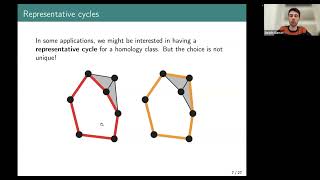
Harmonic Persistent Homology for Disentangling Multiway Interaction in Data
Explore Harmonic Persistent Homology for analyzing multi-omics data, uncovering hidden patterns in complex diseases, and identifying biomarkers associated with latent biological pathways.
Garbh-Ini Project - Machine Learning for Maternal and Child Health
Explore machine learning applications in healthcare through the Garbh-Ini Project, focusing on predicting outcomes, analyzing medical data, and bridging the gap between computational modeling and clinical practice.
Big Data in Biology - How EMBL Delivers Big Data for Biology, and Some Highlights
Explore how EMBL manages and utilizes big data in biology, with insights on key developments and applications in genomics and bioinformatics.
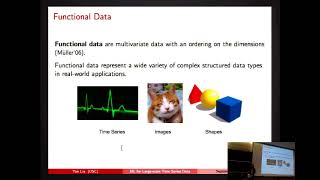
Learning and Mining in Large-Scale Time Series Data - 2015
Explore machine learning approaches for analyzing large-scale time series and spatio-temporal data, with applications in healthcare and climate modeling.