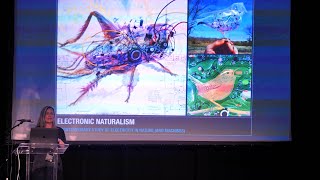
Hacking Nature’s Musicians - The Art of Electronic Naturalism
Explore the intersection of art and technology through electronic naturalism, mimicking animal sounds with analog circuits and blurring the line between living organisms and electronic devices.
Making the Most of ‘Omics Data - Manuel Mayr, King’s College London
Exploring innovative 'omics data analysis for cardiovascular research, focusing on proteomics, lipidomics, and their applications in disease prediction and understanding atherosclerosis progression.
Application of Molecular Methods in Diagnostic Microbiology - Dr. Alice Wort
Explore molecular methods in diagnostic microbiology, focusing on high-throughput screening and cutting-edge technologies to enhance patient care in a state-of-the-art laboratory setting.
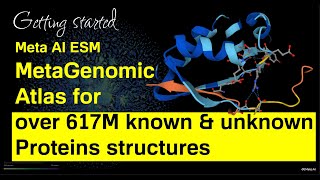
Getting Started with ESM Metagenomic Atlas with API and Large Language Models
Introduction to Meta AI's ESM Metagenomic Atlas, exploring protein structures and their importance. Covers API usage, large language models, and practical demonstrations using various tools and resources.
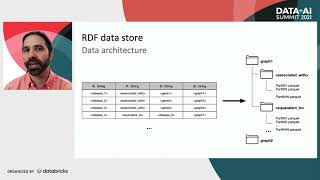
Drug and Vaccine Discovery Using Knowledge Graphs and Apache Spark
Explore how GSK uses knowledge graphs and Apache Spark to build a massive medical database, enabling advanced drug and vaccine discovery through innovative data querying and machine learning techniques.
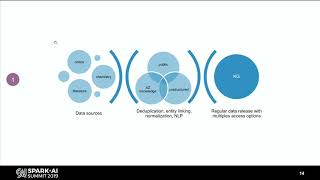
Building a Knowledge Graph with Spark and NLP for Novel Drug Recommendations
Explore drug discovery using knowledge graphs, NLP, and Spark. Learn techniques for efficient data processing, entity recognition, and relationship extraction to enhance pharmaceutical research.
Kolmogorov Complexity for DNA Sequences Analysis in Python
Learn to analyze DNA sequence complexity using Kolmogorov Complexity and Python. Covers theoretical background, Lempel-Ziv algorithm, and practical implementation with code walkthrough and visualization.
TCGA Biomarkers Identification Using Machine Learning - Complete Walkthrough
Comprehensive walkthrough on using machine learning to identify TCGA biomarkers, covering data preparation, neural network construction, and gene set enrichment analysis.
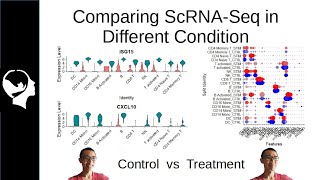
Comparing scRNA-Seq - Seurat Integration Analysis
Learn to integrate and compare scRNA-Seq datasets from different conditions using Seurat, covering data import, integration, differential expression analysis, and visualization techniques.
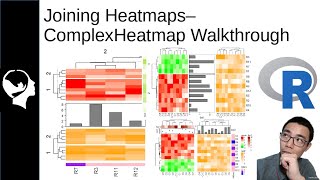
Joining Multiple Heatmaps - ComplexHeatMap Tutorial
Learn to combine multiple heatmaps in R using ComplexHeatmap. Master horizontal and vertical merging, customization, and annotations for effective data visualization in bioinformatics.
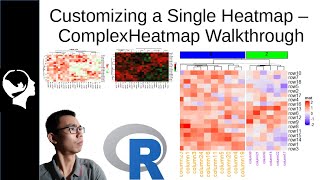
Creating a Heatmap in R - ComplexHeatmap Tutorial Part 1
Learn to create intricate heatmaps in R using ComplexHeatmap package. Master setup, color customization, title modification, and data ordering for effective visualization of multidimensional genomic data.
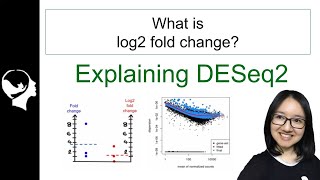
Log2 Fold-Change & DESeq2 Model in a Nutshell
Explore log2 fold-change, DESeq2 model, and differential expression analysis challenges. Learn the theory behind DESeq2 and its practical application in R for bioinformatics research.
RNASeq Analysis - Differential Expressed Genes from FastQ
Comprehensive guide to RNASeq analysis using open-source tools, covering FastQ to DEG identification with Rsubread and DESeq2. Includes step-by-step instructions and practical tips for bioinformatics researchers.
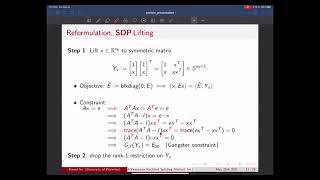
A Peaceman-Rachford Splitting Method for the Protein Side-Chain Positioning Problem
Explore protein side-chain positioning through doubly nonnegative relaxation and Peaceman-Rachford splitting method, with insights on facial reduction and numerical experiments for optimal solutions.
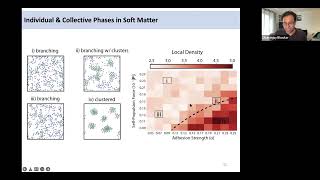
Data-Driven Modeling & TDA of Self-Organized Multicellular Architectures
Explore data-driven modeling and topological data analysis for classifying multicellular structures in cancer and embryonic development, focusing on cell motility and adhesion patterns.
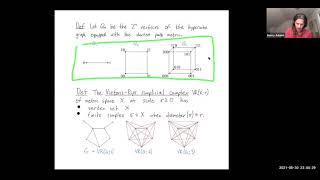
Henry Adams - Vietoris-Rips Complexes of Hypercube Graphs
Explore Vietoris-Rips complexes of hypercube graphs, their homotopy types, and applications in genetic recombination and persistent homology. Discover formulas, open questions, and conjectures in this fascinating area of applied algebraic topology.
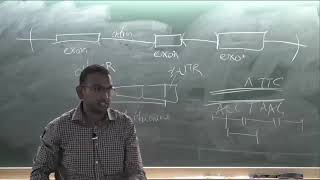
Sequence Alignment - Hidden Markov Models, Category Theory and All That Jazz by Soumyashant Nayak
Explore sequence alignment methods, from traditional algorithms to modern pseudo-alignment techniques, with insights on hidden Markov models and applications in RNA-Seq data analysis and evolutionary genetics.

Molecular Docking with AutoDock VINA - Script-Based Method for Multiple Ligands
Learn script-based molecular docking with AutoDock Vina for virtual screening of multiple ligands. Explore conformational space, calculate binding energies, and identify potential lead compounds efficiently.
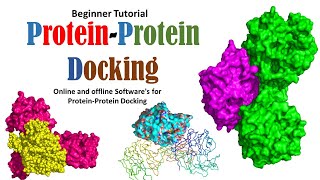
Protein-Protein Docking Tutorial for Beginners Using ClusPro, PatchDock, and Hex
Learn to perform protein-protein docking using validated tools like ClusPro, PatchDock, and Hex. Gain hands-on experience with step-by-step demonstrations and access to relevant literature.
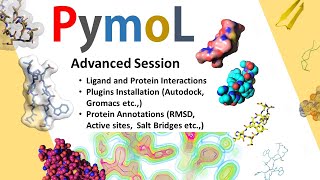
PyMol Advanced Session: Protein-Ligand Interactions and Plugin Installation
Explore advanced Pymol features: protein-ligand interactions, plugin installation, and protein annotations. Learn to visualize and analyze molecular structures effectively.

PCR Primer Designing Using NCBI Primer BLAST - In Silico Design and Validation
Learn to design PCR primers using NCBI Primer BLAST, covering key requirements, tools, and step-by-step process for effective primer selection and validation in molecular biology applications.