Pantheon DNA Data Storage CODEC: Experiences, Challenges, and Innovations
Dive into the groundbreaking world of DNA data storage through Pantheon CODEC, exploring synthesis technologies, error correction methods, and practical implementation challenges in cold-data storage systems.

DNAe2c Error Correction Code for DNA Data Storage - 10x Improvement Over Reed Solomon Codes
Discover advanced error correction techniques for DNA data storage through DNAe2c, achieving 10x better performance than Reed Solomon codes with minimal overhead for improved data integrity and storage efficiency.

WGS Variant Calling - Variant Filtering and Annotation - Part 2 - Detailed NGS Analysis Workflow
Detailed tutorial on filtering and annotating genetic variants using GATK tools. Covers hard filtering, genotype refinement, and Funcotator for comprehensive variant analysis in bioinformatics workflows.
Weighted Gene Co-expression Network Analysis - Step-by-Step Tutorial - Part 1
Learn step-by-step Weighted Gene Co-expression Network Analysis (WGCNA) for RNA-Seq data, covering data manipulation, outlier detection, normalization, module identification, and visualization techniques.
Single-Cell Trajectory Analysis Using Monocle3 and Seurat - Step-by-Step Tutorial
Step-by-step tutorial on single-cell trajectory analysis using Monocle3 and Seurat. Covers theory, workflow, and practical implementation in R, including data processing, visualization, and gene expression analysis along trajectories.

Setup RNA-Seq Pipeline From Scratch - Fastq to Counts - Step-by-Step Tutorial
Step-by-step tutorial on processing RNA-Seq data: quality control, trimming, alignment, and quantification. Covers tools like FastQC, Trimmomatic, HISAT2, and featureCounts, with comparisons of aligners and best practices.
Bioinformatics and Computational Biology - The Present Gateway to Research
Comprehensive overview of bioinformatics and computational biology, covering research fields, career paths, applications, job prospects, and educational opportunities for aspiring professionals in this cutting-edge domain.

Pseudo-Bulk Analysis for Single-Cell RNA-Seq Data - Detailed Workflow Tutorial
Comprehensive tutorial on pseudo-bulk analysis for single-cell RNA-Seq data, covering the what, why, and how. Includes data manipulation, aggregation, and differential expression analysis using R, Seurat, and DESeq2.
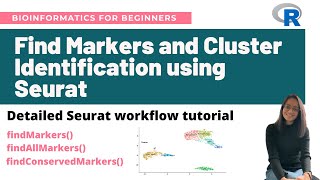
Find Markers and Cluster Identification in Single-Cell RNA-Seq Using Seurat - Workflow Tutorial
Comprehensive tutorial on identifying cell markers in single-cell RNA-Seq data using Seurat, covering various marker identification methods, data visualization, and cluster annotation techniques.
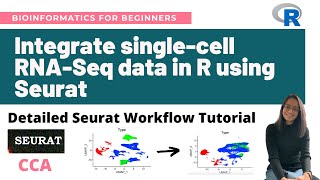
Integrate Single-Cell RNA-Seq Datasets in R Using Seurat - Detailed Seurat Workflow Tutorial
Comprehensive tutorial on integrating single-cell RNA-Seq datasets using Seurat in R, covering data merging, batch effect correction, and visualization techniques for improved analysis.

DESeq2 Basics Explained - Differential Gene Expression Analysis - Bioinformatics 101
Comprehensive guide to DESeq2 for differential gene expression analysis in RNA-seq data, covering statistical models, normalization methods, and key steps in the analysis pipeline.

How to Analyze Single-Cell RNA-Seq Data in R - Detailed Seurat Workflow Tutorial
Comprehensive tutorial on analyzing single-cell RNA-Seq data using Seurat in R, covering data processing, quality control, normalization, dimensionality reduction, and clustering for genomics research.

Visualize Gene Expression Data in R Using Ggplot2 - Bioinformatics for Beginners
Learn to visualize gene expression data using R and ggplot2. Create barplots, density plots, boxplots, scatterplots, and heatmaps from RNA-Seq data. Hands-on tutorial for beginners in bioinformatics.
How to Manipulate Gene Expression Data from NCBI GEO in R Using Dplyr - Bioinformatics for Beginners
Learn to manipulate gene expression data from NCBI GEO using R and dplyr. Covers data reading, metadata retrieval, and essential dplyr functions for effective bioinformatics analysis.
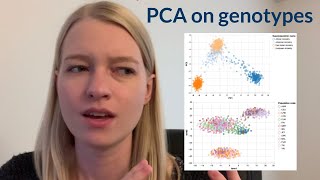
Genes and Geography - A Bioinformatics Project
Comprehensive bioinformatics walkthrough: analyze population genotype data using PCA/TSNE, from data acquisition to visualization, with practical coding in Python and Colab.
Understanding Parkinson's Disease Through Data Science
Explore data science applications in understanding Parkinson's disease, including building a global data ecosystem and driving scientific discovery for neurodegenerative diseases.
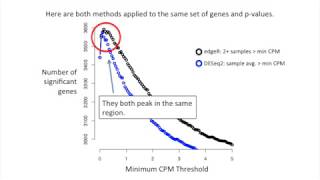
EdgeR and DESeq2, Part 2 - Independent Filtering
Explore edgeR and DESeq2's approaches to filtering low-count genes in RNA-seq analysis. Learn about false positives, FDR, CPM, and sequencing depth impacts on gene expression studies.
Predicting COVID-19 mRNA Vaccine Stability with AI - Grandmaster Series
Explore AI-driven prediction of COVID-19 mRNA vaccine stability with NVIDIA's Kaggle Grandmasters. Learn top-performing machine learning models for RNA degradation forecasting.

Leveraging Innovation to Improve the Identification of Patients with Hereditary Cancer
Explore innovative techniques in hereditary cancer detection, including RNA genetic testing and AI-powered risk assessment, to improve diagnostic yield and patient identification for genetic counseling.

Bioinformatics and Computational Terminology for the Clinic - Webinar - Ambry Genetics
Demystifying bioinformatics concepts in genetic testing reports, focusing on key terminology and underlying details for NGS panel and exome-sequencing tests to enhance clinicians' understanding and interpretation.

Approaches to Classification of Variants in TP53 and Other Hereditary Cancer Genes - Ambry Genetics
Overview of variant classification methods in hereditary cancer genes, focusing on TP53. Compares ACMG codes with quantitative models, providing examples of evidence calibration and data mining for gene-specific classification.