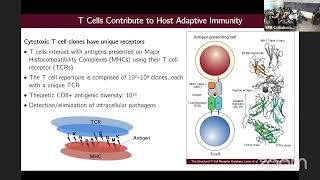
Biophysical Modeling of Tumor-Immune Interactions for Optimizing T-Cell Immunotherapy
Explore biophysical modeling techniques for tumor-immune interactions to enhance T-cell immunotherapy effectiveness and optimize treatment strategies.
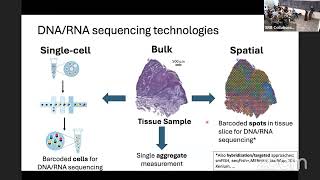
Quantifying Tumor Heterogeneity Across Space and Time
Explore advanced techniques for analyzing tumor heterogeneity spatially and temporally with Dr. Ben Raphael's in-depth presentation on cutting-edge mathematical oncology approaches.
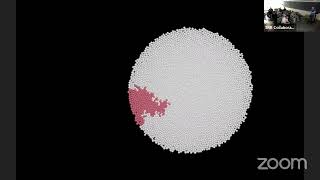
A Top-Down-Bottom-Up Approach to Evolution-Based Therapies in Compact Populations
Explore evolution-based therapies in compact populations through a top-down-bottom-up approach with Dr. Jona Kayser's seminar on mathematical oncology.
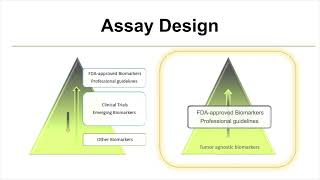
Flexible Capabilities to Enable Comprehensive Genomic Profiling
Explore implementation of Comprehensive Genomic Profiling in oncology, covering flexible automation, sample management, and data analysis to improve patient care and treatment decisions.

Valedictory - Who Am I? Exploring Life Beyond Computer Science
Martin Tompa explores his identity beyond computer science, focusing on his passion for genealogy and family history. He shares personal stories and family secrets in this engaging valedictory lecture.
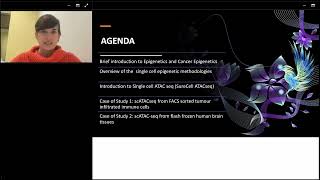
Deciphering Cancer Cell Heterogeneity for Precision Medicine
Explore single-cell ATAC-seq techniques to identify open chromatin regions and understand gene expression regulation in individual cancer cells for advancing precision medicine.
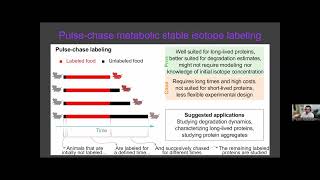
Derailed Protein Turnover in the Aging Mammalian Brain
Explore protein turnover disruption in aging brains, its impact on cell homeostasis, and implications for neurodegenerative diseases with Dr. Jeffrey Savas.
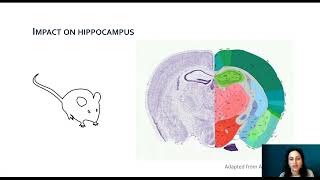
Cell Type-Specific Vulnerability to Traumatic Brain Injury
Explore cell type-specific vulnerability in traumatic brain injury, focusing on hippocampal damage and its impact on neural stem cells and cognitive impairment.
Predicting, Tracking, and Controlling Diseases and Epidemics to Prevent New Epidemics and Pandemics
Explore genomic surveillance and ecological mapping to predict, track, and control climate-amplified diseases, preventing future epidemics and pandemics. Learn from experts about CLIMADE's global efforts.
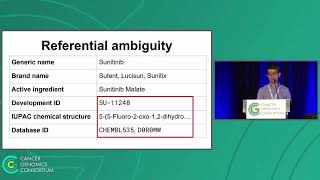
Overcoming Challenges in Semantic Alignment of Therapeutics Knowledge Using TheraPy
Explore semantic alignment challenges in therapeutics knowledge and learn how TheraPy can help overcome them in cancer genomics research.
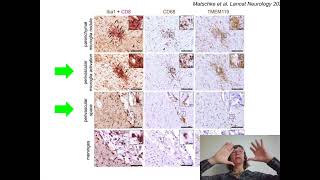
Neuropathology of SARS-CoV-2 as Revealed by Spatial Biology
Explore SARS-CoV-2's neuropathology through spatial biology. Discover infected brain barrier cells, interferon-gamma signaling in hiPSC-derived BCECs, and gene expression analysis using spatial transcriptomics in FFPE tissue sections.
Pathogen Discovery - Lecture 2
Explore pathogen discovery techniques, their importance in disease ecology, and applications in understanding emerging infectious diseases and outbreak management.
Balancing Community and Clinical Genomic Surveillance for Public Health
Explore genomic surveillance strategies for public health, balancing community and clinical approaches to effectively monitor and respond to infectious disease outbreaks and emerging pathogens.
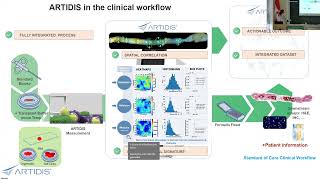
Probing Spatial Patterns in Breast Cancer via Affinity Matrices
Explore spatial patterns in breast cancer using affinity matrices, uncovering insights into tumor structure and progression.
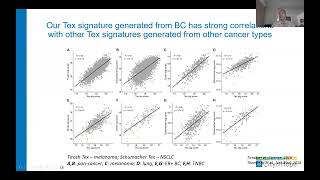
What Makes Tumors Hot? Insights from Experimental-Computational Integration
Explore experimental-computational integration to understand tumor characteristics and their impact on treatment effectiveness.
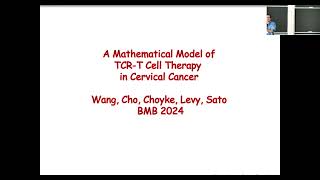
A Mathematical Model of TCR-T Cell Therapy for Cervical Cancer
Explore a mathematical model for TCR-T cell therapy in cervical cancer treatment, focusing on its applications and implications in oncology research.
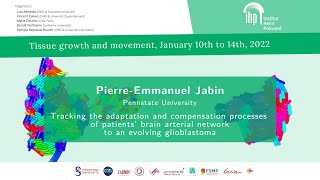
Tracking the Adaptation and Compensation Processes of Patient's Brain Arterial Network to Evolving Glioblastoma
Explore automated methods for analyzing brain arterial networks and blood flow dynamics in glioblastoma patients using MR imaging, revealing disease progression and compensatory mechanisms.
Tree-Free Phylodynamic Inference for Emerging Viral Pathogens and Lineages
Explore tree-free phylodynamic methods for analyzing emerging viral pathogens and lineages, focusing on innovative approaches to study viral evolution and spread.
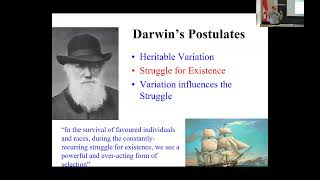
Evolutionary Therapies: Beating Cancer at Its Own Game
Explore revolutionary cancer therapies that outsmart tumor evolution, leveraging mathematical modeling to optimize treatment strategies and overcome resistance.
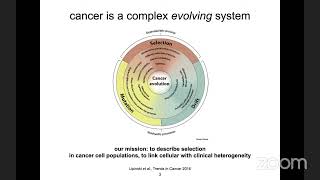
How Diversity Indices Help Understand Cancer Ecology and Evolution
Explore diversity indices and entropy to gain insights into cancer ecology and evolution, enhancing understanding of tumor dynamics and progression.
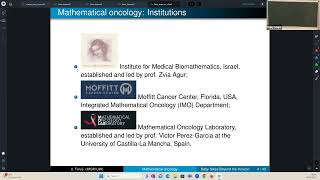
Mathematical Oncology: Insights into Cancer Treatment from a Mathematical Perspective
Explore mathematical models for cancer treatment, gaining insights into tumor growth, drug delivery, and therapeutic strategies from a quantitative perspective.