Cognitive Collectives - Understanding Multi-Scale Collective Intelligence
Explore groundbreaking research on collective animal behavior and intelligence through Max Planck Institute's examination of cognitive systems and group decision-making dynamics.
New Tools for Analyzing Collective Behavior
Explore analytical frameworks for understanding how local agent interactions create large-scale collective behaviors, with applications in opinion dynamics, swarming, and coordinated movement.
Collective Behavior from Surprise Minimization
Explore how cognitive principles and probabilistic decision-making drive collective behavior in animal groups, offering new perspectives on emergent patterns in biological and engineered systems.
Learning to Disagree: Rational Agents and Persistent Polarization
Explore how rational agents can maintain disagreements despite information exchange, examining Aumann's theorem and the role of perceived opposing preferences in driving persistent polarization.
Green Light SONATA - Training Traffic Controllers Using Collective Intelligence
Discover how AI-powered traffic control systems use musical improvisation principles to optimize vehicle movement, featuring innovative approaches to collective intelligence and neural network training.
Emerging Intelligence: From Neurons to Social Dynamics
Explore how internal psychological processes and social interactions shape collective behavior, from neural networks to group dynamics, through mathematical modeling and behavioral theory.
Negative Feedback as a Noise Suppression Mechanism in Collective Foraging
Explore how social insects use negative feedback signals in foraging behavior, examining their role in variance reduction and system robustness through stochastic dynamics analysis.
Does Life Compute? Understanding Protein Folding and Biomolecular Assembly
Explore the mathematical structures behind protein folding and biomolecular assembly, examining computational approaches and theoretical models that illuminate life's fundamental processes.
How Multiscale Collectives Collect Across Scales in Biological Systems
Explore groundbreaking research on how collective systems operate across different scales, from embryonic development to bioelectric patterns in brain formation, using minimal two-scale models and causal networks.
Building RAG Applications: Speaking with Unstructured Data Using LangChain - Part 1
Dive into building a RAG application using Langchain, multiple LLMs, and vector stores to enable interactive conversations with unstructured data through a Streamlit interface.
Building RAG Applications: Speaking with Unstructured Data Using LangChain - Part 2
Dive into building an end-to-end RAG application using Langchain, multiple LLMs, and vector stores to enable interactive conversations with unstructured data through a Streamlit interface.
Building End-to-End RAG Applications with Unstructured Data - Part 3: Docker Integration
Dive into containerization with Docker and Docker Compose while building a RAG application that processes unstructured data using LangChain, multiple LLMs, and vector stores through Streamlit.
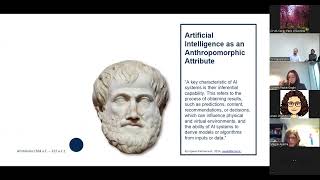
The Emergence of AI in the Humanities and Social Sciences
Explore the evolution and impact of AI in humanities and social sciences, from historical representations to modern applications, while examining critical research perspectives and interdisciplinary approaches.

Shadow AI - The Dark Horse of Cybersecurity Threats
Discover how Shadow AI poses hidden cybersecurity risks, learn identification techniques, and implement strategies to protect organizational data and AI models from emerging threats.
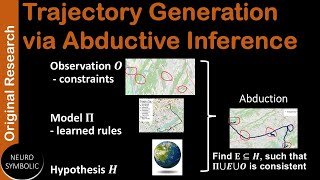
Trajectory Generation via Abductive Inference
Discover how abductive inference enables efficient geospatial trajectory generation through innovative logical programming and deep learning approaches for AI advancement.
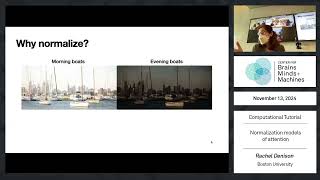
Normalization Models of Attention - From Neural Computation to Behavioral Goals
Explore how attention interacts with neural normalization to shape perception and behavior, featuring hands-on MATLAB exercises and computational modeling frameworks for cognitive processing.

Building Your Own Private OCR System with LlamaOCR
Discover how to build a private OCR system using LlamaOCR to convert images and scanned documents into structured Markdown, with practical demonstrations in JavaScript and Python through Colab.

New Frontiers in Cancer Care: Advances in Genomics, AI, and Personalized Treatment
Explore groundbreaking advances in cancer treatment, from genomic sequencing to AI-driven research, and discover how personalized medicine is revolutionizing patient care and prevention strategies.
Five Trends Driving Transformation in Healthcare and Life Sciences with Microsoft Power Stack
Discover how Microsoft's Power Stack revolutionizes healthcare through AI-powered analytics, low-code development, and innovative solutions that enhance productivity and decision-making in life sciences.
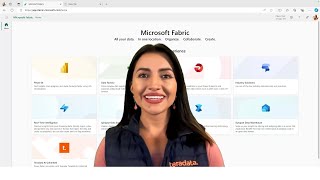
Accelerate AI and ML Development with AI Unlimited on Microsoft Fabric
Discover how AI Unlimited on Microsoft Fabric accelerates AI/ML development, enabling fast experimentation, testing, and secure deployment for data professionals through Teradata's innovative platform.

AI for the Public Sector with Microsoft 365 Copilot GCC
Discover how Microsoft 365 Copilot GCC empowers public sector agencies with AI capabilities, focusing on mission success, responsible practices, and data privacy in government cloud environments.