Information-Directed Sampling for AI Agent Alignment - From Theory to Practice
Explore Stanford's groundbreaking Information-Directed Sampling approach for aligning AI agents with human values, focusing on optimal decision-making and continuous learning in dynamic environments.
Fourier-Enhanced Fine-Tuning Vision Language Models Using PEFT-VFPT
Discover how Visual Fourier Prompt Tuning revolutionizes vision model fine-tuning by integrating Fast Fourier Transform, enhancing adaptability and accuracy while using minimal trainable parameters.
Emergence of AI Agent Individuality and Social Behavior Through MBTI Personalities
Explore how AI agents spontaneously develop distinct personalities, social behaviors, and collective intelligence through natural language interactions in a groundbreaking research study.
Faster Inference Using Output Predictions with OpenAI and vLLM
Master advanced inference techniques for faster AI model outputs using OpenAI predictions and vLLM speculative decoding, with practical demonstrations and cost optimization strategies.
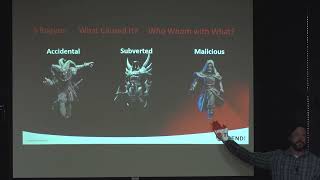
Three Categories of Rogue AI and How to Mitigate Risk
Discover essential strategies for identifying and defending against three types of rogue AI behaviors, including practical implementation of OWASP guidelines and Zero Trust frameworks for secure AI deployment.
AI Under the Hood: Unmasking Hidden Threats
Explore a comprehensive analysis of AI threat modeling frameworks, examining safety protocols and risk assessment methods for AI/ML applications while learning to identify and address potential vulnerabilities.
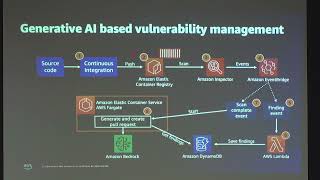
Applying Generative AI to Container CVE Remediation in CI Pipelines
Discover how to leverage generative AI for automating container vulnerability remediation in CI pipelines, with practical demonstrations and implementable solutions for efficient security management.
Safeguarding Machine Learning Systems - A Comprehensive Security Plan
Discover a holistic security framework for ML systems, covering data protection, model fortification, platform security, compliance measures, and human-centric safeguards for robust AI deployment.
From McCulloch-Pitts to Retina: A Journey Through Neural Networks and Sensory Encoding
Explore the evolution of neural networks from McCulloch-Pitts to modern retina-inspired digital encoding, examining theoretical biophysics' impact on AI and signal processing breakthroughs.
How Can Large Language Models Learn From Humans? - Understanding Psycholinguistic Predictions and Sheaf Theory
Explore how combining lexical predictions from LLMs with syntactic structures can improve language understanding, using sheaf theory to better match human reading patterns and comprehension.
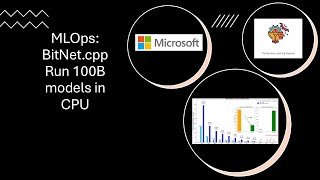
BitNet.cpp - Inferencia de Modelos de hasta 100B en CPU
Descubre cómo implementar inferencia de modelos BitNet con precisión de 1 bit usando el framework de Microsoft para CPU, permitiendo el despliegue eficiente de modelos de hasta 100B de parámetros.
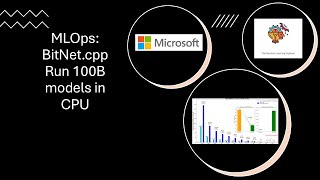
BitNet.cpp - CPU Inference Framework for 1-bit Large Language Models
Explore BitNet CPP's optimized framework for efficient 1-bit LLM inference, featuring specialized kernels for fast, lossless CPU-based processing of 1.58-bit models.
Converting Alibaba Cloud Qwen2-VL Model to OpenVino IR Format - Spanish Tutorial
Aprende a convertir e implementar el modelo Qwen2-VL de Alibaba Cloud a formato OpenVino IR para optimizar inferencias en CPU, con ejemplos prácticos y código detallado.
Converting Qwen2-VL 2B Model to OpenVino IR Format for CPU Inference
Learn how to convert and optimize Qwen2-VL 2B model for CPU inference using OpenVino IR format, with practical implementation steps and performance insights.

How AI Could Hack Democracy
Explore law professor Lawrence Lessig's critical analysis of AI's current impact on democratic systems and the urgent need for attention to these challenges before reaching AGI.
Progress in Agentic AI - From Chatbots to Autonomous Systems
Explore the latest advancements in agentic AI systems, from automated ML research to self-optimizing models, with insights into Sakana AI's groundbreaking developments and future prospects.

Building an Open Source Agentic RAG Application with Llama
Dive into building advanced LLM applications using LangChain v0.2 and LangGraph, focusing on context-aware reasoning and autonomous agent development with RAG implementation.

Generative AI Full Course 2024 - From Basics to Advanced Applications
Comprehensive exploration of Generative AI, covering fundamentals, tools, applications, and advanced concepts like LangChain and RAG. Hands-on demos and practical implementations included.
Data Structure and Algorithm with Interview Questions - Comprehensive Python Guide
Comprehensive guide to data structures and algorithms, covering essential concepts, Python implementation, and practical applications in AI. Includes interview preparation and coding challenges.
All-in-One Artificial Intelligence Full Course 2024 - AI Tutorial for Beginners
Comprehensive exploration of AI, covering neural networks, deep learning, computer vision, NLP, and generative AI. Includes hands-on demos and real-world applications for beginners to advanced learners.

Micro-crowdsourcing: How Swarming Bacteria Integrate Signals During Collective Migration
Explore how bacteria communicate and move collectively, focusing on P. mirabilis's identity-based signaling and its impact on bacterial communities and population-wide swarming behavior.