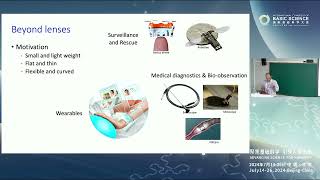
Lensless Imaging: Overview, Opportunities, and Challenges
Explore lensless imaging advancements, principles, and applications in 3D reconstruction, discussing challenges and future opportunities in camera design and computational algorithms.
Building World Model Intelligence: The Crucial Role of Perception
Explore multimodal sensing's role in building comprehensive world models. Discover advancements in wireless perception, AI model adaptability, and integrated sensing for transformative applications.
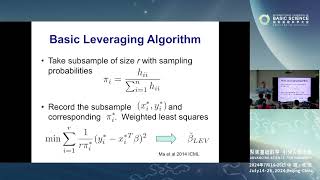
Small but Mighty: Subset Selection and Knowledge Distillation
Explore cost-efficient AI training methods, focusing on subset selection and knowledge distillation techniques to address challenges in large language model development.
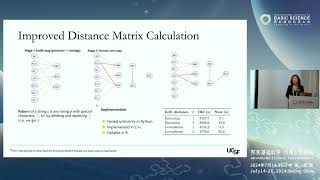
Prediction of Multi-Class Peptides by T-Cell Receptor Sequences with Deep Learning
Explore deep learning techniques for predicting multi-class peptides using T-cell receptor sequences, enhancing immune system understanding and potential disease treatments.
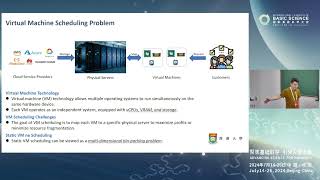
How Optimization Helps Industry: Real Applications in the Era of AI and Cloud Computing
Explore real-world optimization challenges in AI and cloud computing industries, from live streaming to AI-chip design. Gain insights into mathematical representations and recent advancements.
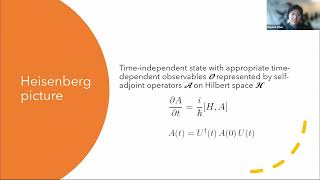
The Time in Thermal Time - Exploring Timelessness in Quantum Gravity
Explore the 'problem of time' in quantum gravity and critically examine the thermal time hypothesis as a potential solution, delving into concepts of equilibrium and statistical states in timeless contexts.
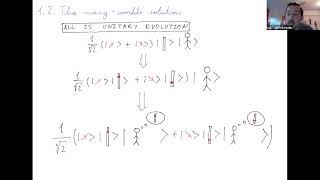
On Playing Gods: The Fallacy of the Many-Worlds Interpretation
Explore the methodological argument refuting the many-worlds interpretation of quantum theory, examining its problematic aspects and incompatibility with fundamental scientific principles.
AI on the Edge - Advancing Edge Computing and Next-Generation Networks
Explore AI's role in advancing edge computing and next-gen networks. Discover opportunities for AI on the edge in DOD Microelectronics Commons Program.
Self-Play Fine-Tuning Converts Weak Language Models to Strong Language Models
Explore a novel fine-tuning method for Large Language Models that improves performance without additional human-annotated data, using self-play mechanisms and theoretical guarantees.
Functional Tokens for On-device Multimodal Models - Nexa AI
Explore innovative functional tokens for on-device multimodal AI models, enhancing accuracy and efficiency in function calling tasks while achieving remarkable performance across languages and modalities.
AI Automation in the Digital World - Current Progress and Challenges
Explore the current state and limitations of AI agents in automating digital tasks. Examine challenges in tool use, reasoning, and knowledge, and discover potential solutions for achieving true AI autonomy.
Building an End-to-End Web Application with Microsoft's Semantic Kernel
Develop a web app using Microsoft's Semantic Kernel to integrate LLMs, enhancing their capabilities with structured responses and external data sources.

An Open Source Approach to Build Guardrails for Deploying ML Models in Healthcare
Explore an open-source framework for responsible ML deployment in healthcare, focusing on evaluation and monitoring across patient sub-populations.
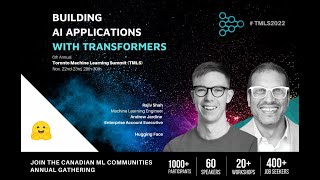
Building AI Applications with Transformers
Learn to leverage transformers for AI applications like auto-completion, semantic search, and document AI using open-source tools and models. Explore embeddings, Generative AI, and emerging trends in multimodal and large language models.
Fine-Tuning Language Models with Declarative ML Orchestration
Gain hands-on experience using Flyte to declaratively specify infrastructure for fine-tuning language models on your own data, overcoming compute resource challenges.
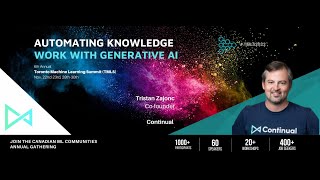
Automating Knowledge Work with Generative AI
Explore generative AI's impact on knowledge work, learn to apply models for business solutions, and gain hands-on experience in automation techniques.
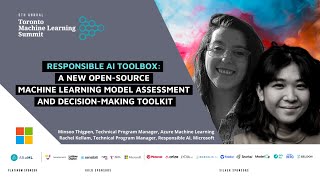
Responsible AI Toolbox: Practical Approaches and Tools for Ethical Machine Learning
Explore practical approaches to responsible AI and learn how open-source and cloud-integrated capabilities empower data scientists to understand and improve ML models ethically.
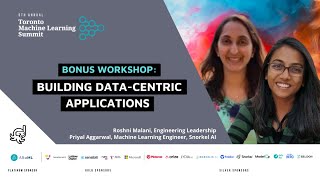
Building Data-Centric Applications with Federated Learning
Explore federated learning to overcome data silos and enhance machine learning models. Learn benefits, challenges, and practical applications in a hands-on environment.
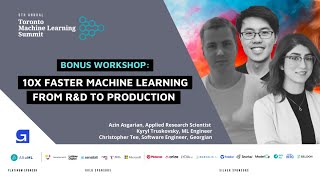
10X Faster Machine Learning: From R&D to Production
Supercharge ML experimentation with PyTorch Lightning and DVC, and streamline production using Kubeflow. Learn to overcome challenges in complex ML model development and deployment.

How You Can Start Designing AI with Purpose
Explore ethical AI design principles and learn to create purposeful, responsible machine learning systems for real-world applications.
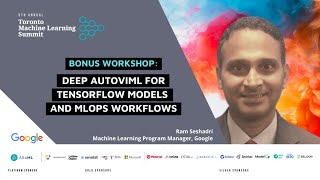
Deep AutoViML for TensorFlow Models and MLOps Workflows
Explore Deep AutoViML for building powerful TensorFlow models and MLOps workflows. Learn to fast prototype data pipelines and models using TF 2.4+ and Keras preprocessing layers.