
Artificial Intelligence in Oil Fields
Explore AI applications in oil field operations, enhancing efficiency and decision-making processes in petroleum engineering and reservoir management.
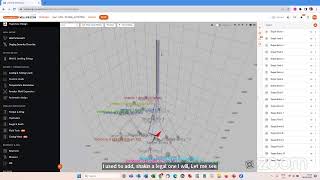
Digital Transformation: A New Era of Well Construction
Explore digital transformation's impact on well construction, revolutionizing processes and enhancing efficiency in the oil and gas industry.

From One Brain to Everyone's Brain
Explore the evolution of collective intelligence and its impact on society with Dr. Omar Alfarisi's insights on brain connectivity and shared knowledge.
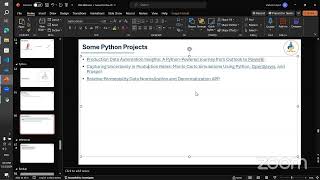
Practice Machine Learning for Petroleum Engineers with Little to No Code
Explore machine learning applications in petroleum engineering with minimal coding. Gain practical skills for implementing ML solutions in reservoir analysis and production optimization.
The Elusive Generalization: Classical Bounds to Double Descent to Grokking
Explore the evolution of generalization in machine learning, from classical bounds to double descent and grokking, challenging traditional assumptions and practices in the field.
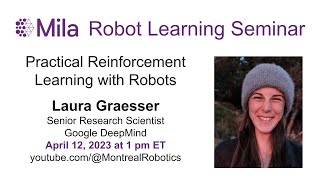
Practical Reinforcement Learning with Robots
Explore practical reinforcement learning for robotics, covering environment design in simulation and real-world applications, with insights on implementing RL in robotic systems.
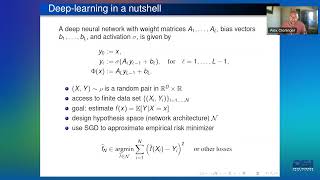
Networks that Adapt to Intrinsic Dimensionality Beyond the Domain
Explore neural networks' ability to adapt to intrinsic dimensionality, focusing on ReLU networks approximating functions with dimensionality-reducing feature maps. Gain insights into manifold learning and data analysis.
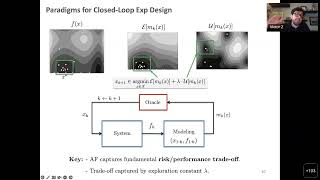
Bayesian Optimization: Exploiting Machine Learning Models, Physics, and Throughput Experiments
Explore new Bayesian Optimization paradigms leveraging machine learning, physics, and high-throughput experiments. Learn to accelerate searches, enable parallel exploration, and utilize large-scale models for various applications.
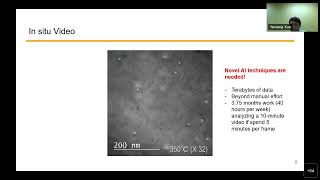
Scaling Up AI: Embedding Physics Modeling into End-to-end Learning and Harnessing Random Projection
Explore AI-driven scientific discovery through embedding physics models in end-to-end learning and utilizing random projection for efficient simulation and gradient propagation in PDE-based systems.
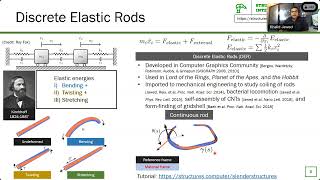
Reduced Order Modeling and Inverse Design of Flexible Structures by Machine Learning
Explore machine learning applications in structural mechanics, focusing on reduced-order modeling for dynamic simulations and inverse design of shape-morphing structures using neural networks and active learning.
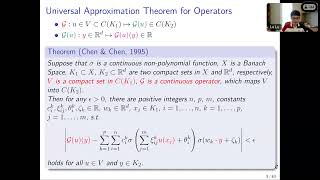
Deep Neural Operators with Reliable Extrapolation for Multiphysics and Multiscale Problems
Explore deep neural operators for complex systems, focusing on DeepONet and its extensions for multiphysics and multiscale problems. Learn about extrapolation challenges and solutions in deep learning models.
Predicting Heart Rhythm Disorders from Spatio-Temporal Imaging Data Using AI
Explore AI-driven techniques for predicting heart rhythm disorders using spatio-temporal imaging data, combining fluorescence and ultrasound imaging to overcome diagnostic limitations.
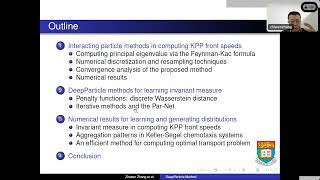
DeepParticle: Learning Invariant Measure by Deep Neural Network Minimizing Wasserstein Distance
Explore DeepParticle: an integrated approach combining deep learning, optimal transport, and interacting particles to solve high-dimensional PDEs, demonstrated through Fisher-Kolmogorov-Petrovsky-Piskunov front speeds in incompressible flows.
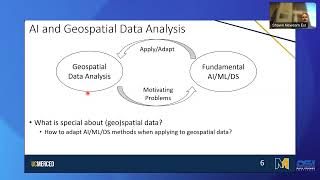
GeoAI: Past, Present, and Future
Explore GeoAI's evolution, applications, and future prospects in geographic data analysis. Gain insights into spatial context integration, multi-modal foundation models, and potential challenges with generative AI.
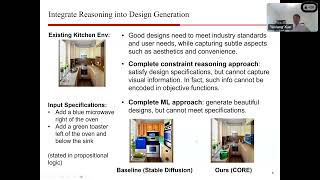
Vertical Reasoning Enhanced Learning, Generation and Scientific Discovery
Explore vertical reasoning's impact on AI, enhancing image generation, symbolic regression, and PDE learning. Discover innovative approaches to integrating reasoning and learning for advanced AI applications.
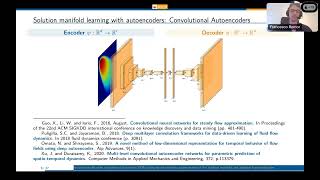
Intrusive Model Order Reduction Using Neural Network Approximants
Explore innovative neural network-based techniques for efficient reduced-order modeling of complex parametric partial differential equations, focusing on intrusive and interpretable methodologies.

ML Observability for Mission-Critical Use Cases
Explore key components and challenges of ML Observability for critical AI deployments, including explainability, monitoring, and risk mitigation. Learn from real-world case studies.

Deep Dive into ChatGPT: Architecture and Comparison with Bard and LLaMa
Explore ChatGPT's architecture, implementation, and evolution. Compare with Bard and LLaMa. Learn to build tinyGPT. Gain insights into transformers, attention mechanisms, and the GPT family of models.

Multimodal Generative AI: Technology Overview and Business Implications
Explore multimodal generative AI's technology, business applications, and limitations. Gain insights into training, costs, and open-source systems like LLaVA for text, image, and audio processing.

Deploying Deep Learning Models for Inference at Production Scale
Optimize and deploy AI models at scale using NVIDIA TensorRT and Triton Inference Server. Learn production-ready techniques for efficient inference across various platforms and infrastructures.

From Zero to SOTA: Fine-Tuning BERT Using Hugging Face for World-Class Training Performance
Discover how to fine-tune BERT using Hugging Face and Graphcore's IPU for state-of-the-art NLP performance. Learn to accelerate AI development, optimize models, and leverage cloud platforms for efficient machine learning workflows.