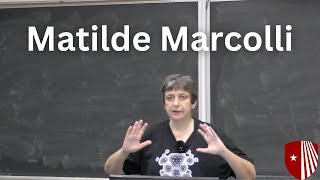
Mathematical Structures in Generative Linguistics
Explore mathematical structures in generative linguistics, from formal languages to Hopf algebras and geometric spaces for modeling semantics and syntactic variation across languages.
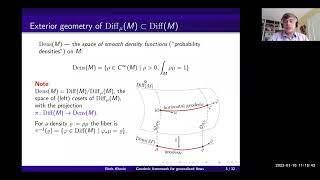
Geodesic Framework for Vortex Sheets and Generalized Fluid Flows
Explore geodesic frameworks for vortex sheets and generalized fluid flows, examining group-theoretic approaches to ideal hydrodynamics and Lie groupoid symmetries in mathematical physics.

AI in Writing and Coding
Explore AI's impact on writing and coding, learning practical applications and ethical considerations for enhanced productivity and creativity.
Computational Imaging for Realistic Computer Graphics and Beyond
Explore advanced techniques in computational imaging for creating realistic graphics and expanding applications beyond traditional computer graphics.
Embracing Digital Disruption: How Organizations Adapt to New Technologies
Explore digital disruption's impact on organizations, from AI to Web3. Learn innovation management strategies for value creation and capture across sectors.

Data Learning: Machine Learning in Climate Action
Explore machine learning applications in climate action, focusing on data-driven solutions for environmental challenges and sustainable development.

Exploring AI's Role in Fine Art: An Introduction to Explainable Fine Art
Explore AI's impact on fine art through an introduction to explainable fine art, delving into innovative technologies and interdisciplinary perspectives.

AlphaGeometry: Solving IMO Geometry Problems without Human Demonstrations
Explore AlphaGeometry, a groundbreaking theorem prover for Euclidean plane geometry that outperforms previous methods and approaches IMO gold medallist level, solving complex problems without human demonstrations.

Deep Learning with Noisy Labels
Explore techniques for training deep learning models with noisy labels, addressing challenges in data collection and annotation across various domains, including medical imaging.

Recent Progress on Grokking and Probabilistic Federated Learning
Explore recent advancements in grokking phenomenon and probabilistic federated learning. Gain insights into neural networks, Gaussian processes, and Bayesian inference for machine learning applications.

Optimal Transport for Distributionally Robust Optimization and Applications in Machine Learning
Explore optimal transport in distributionally robust optimization, focusing on its applications in machine learning, distribution shifts, and responsible AI. Gain insights into solving challenging optimization problems.

Safe Automation for Intelligent Systems
Explore fault estimation in automation, blending model-based approaches with data-driven analytics. Learn about applications in lateral safety systems for automated vehicles.
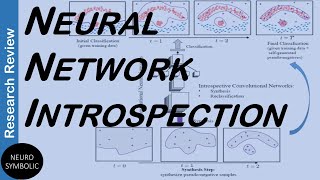
Neural Network Introspection - Approaches from Machine Learning and Knowledge Representation
Explore AI introspection approaches from ML and KR perspectives, covering ICNs, generative vs. discriminative models, and concept induction for enhanced machine learning understanding.
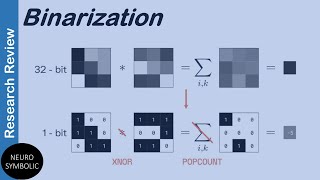
Introduction to Binarized Neural Networks
Explore binarized neural networks: motivation, quantization benefits, core concepts, training methods, and recent developments in this cutting-edge AI field.
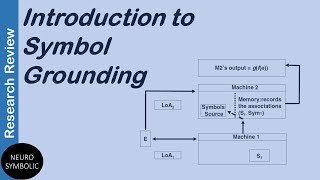
Introduction to Symbol Grounding
Explore the symbol grounding problem, its philosophical roots, and major approaches including representationalist, semi-representationalist, and non-representationalist solutions.
Learning with Logical Constraints: Methods and Applications
Explore multiple methods for learning with logical constraints, including LTN, SPL, NASR, and STLNet. Gain insights into cutting-edge AI techniques combining symbolic methods and deep learning.
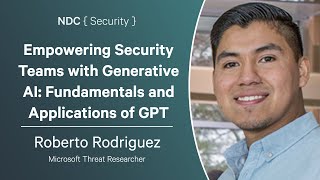
Empowering Security Teams with Generative AI: Fundamentals and Applications of GPT Models
Explore how GPT models can enhance security research through few-shot learning, code generation, and retrieval augmentation. Gain insights and practical examples to leverage AI in empowering security teams.
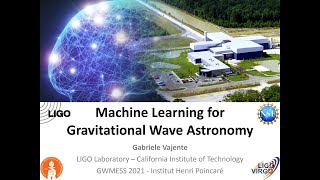
Machine Learning for Gravitational Wave Astronomy
Explore machine learning applications in gravitational wave astronomy, focusing on advanced detection and analysis techniques for cosmic phenomena.
How to Pick a GPU and Inference Engine for Large Language Models
Explore GPU selection and inference engine optimization for large language models. Compare quantization effects, software options, and cost-efficiency across various GPUs and model sizes.

LLM Tool Use - GPT4o-mini, Groq, and Llama.cpp
Explore advanced LLM tool use techniques with GPT4o-mini, Groq, and Llama.cpp. Learn function calling, zero-shot prompting, and local inference for efficient AI development.
Text-to-Speech Fine-tuning Tutorial - StyleTTS2 Voice Cloning and Model Adaptation
Master text-to-speech fine-tuning techniques, from dataset preparation to model training. Explore voice cloning, StyleTTS2, and performance optimization for advanced speech synthesis projects.