Deep Generative Models - Energy Based Models - Lecture 12
Explore energy-based models in deep learning, their applications, and theoretical foundations. Gain insights into this powerful approach for modeling complex data distributions.
Deep Generative Models - Normalizing Flows - Lecture 9
Explore normalizing flows in deep generative models, focusing on their principles, applications, and recent advancements in this Stanford lecture by Prof. Stefano Ermon.
Deep Generative Models - Energy Based Models - Lecture 14
Explore energy-based models in deep learning, their applications, and theoretical foundations. Gain insights from Stanford's expert on advanced generative modeling techniques.
Deep Generative Models - Lecture 6: Variational Autoencoders
Explore Variational Autoencoders (VAEs) in deep generative modeling, covering theoretical foundations and practical applications in this Stanford lecture by Prof. Stefano Ermon.
Evaluation of Generative Models - Stanford CS236 Deep Generative Models Lecture 15
Explore evaluation methods for deep generative models, including metrics and techniques to assess model performance, quality, and effectiveness in various applications.
Deep Generative Models - Energy Based Models - Lecture 11
Explore energy-based models in deep learning, their applications, and theoretical foundations. Gain insights from Stanford's expert on advanced generative modeling techniques.
Stanford CS236: Deep Generative Models - Lecture 7 - Normalizing Flows
Explore normalizing flows in deep generative models with Stanford's Stefano Ermon. Learn advanced techniques for creating flexible and expressive probability distributions in machine learning.

Stanford CS236 - Deep Generative Models - Lecture 1: Introduction
Explore deep generative models with Stanford's Prof. Ermon. Learn key concepts, applications, and cutting-edge techniques in this comprehensive introduction to a rapidly evolving field of AI.
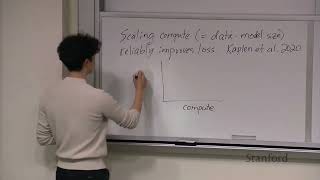
Intuitions on Language Models and Shaping AI's Future - Stanford CS25 Lecture
Explore intuitions on language models and the evolution of Transformer architectures with OpenAI researchers. Gain insights into next-word prediction, scaling laws, and the future of AI development.
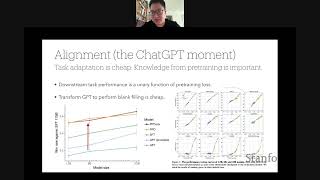
From Large Language Models to Large Multimodal Models - Stanford CS25 - Lecture 4
Explore the evolution from large language models to multimodal AI, focusing on CogVLM and CogAgent. Learn about integrating visual perception with language capabilities and future research directions.
Leveraging Social Theories to Enhance Human-AI Interaction
Explores challenges in human-AI partnerships, focusing on interpretability tools' limitations and cognitive heuristics. Proposes incorporating social theories to improve decision-support systems and human-AI interaction.
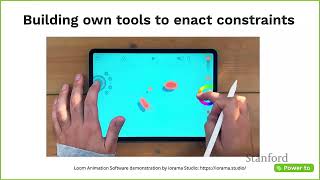
Rethinking Power Dynamics in Software Tools for Artists
Explore how software tools empower and limit artists, examining power dynamics in creative technology and proposing ways to support unpredictable, emergent artistic practices through thoughtful design.
Stanford CS109 - Fairness in Probability for Computer Scientists - Lecture 26
Explore fairness in probability and computer science, examining ethical considerations and algorithmic bias in data-driven decision-making systems.
Advanced Prostate Cancer Imaging - Latest Techniques and Applications
Explore cutting-edge prostate cancer imaging techniques, including new radiotracers, genetics, PET/SPECT imaging, and AI-driven personalized management strategies.
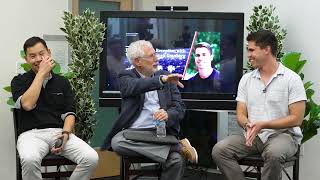
Silicon Valley and the U.S. Government: Vannevar Labs' Innovations in Security and Defense - Stanford Seminar
Explore Vannevar Labs' innovative computer vision and NLP solutions for security and defense, and gain insights into Silicon Valley-government collaborations driving technological advancements.
Silicon Valley and the U.S. Government: Interview with Sue Gordon - Stanford Seminar
Sue Gordon, former top intelligence officer, discusses government-industry collaboration and innovation in national security, sharing insights from her extensive career in intelligence agencies.
Overview of Transformers - Stanford CS25: Lecture 1
Comprehensive introduction to NLP, Transformers, and AI agents, covering history, functionality, recent breakthroughs, applications, and challenges in the field of artificial intelligence.
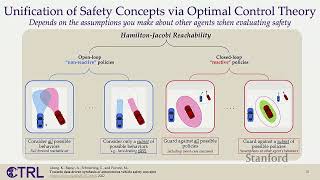
Towards Trusted Human-Centric Robot Autonomy - Stanford Seminar
Exploring human-centric robot autonomy: balancing safety and fluency in interactions. Insights on data-driven safety concepts and legible robot behavior for prosocial human-robot engagement.
The State of Design Knowledge in Human-AI Interaction
Exploring challenges and progress in designing intelligent interactive systems, focusing on user control, mental models, and cognitive engagement with AI-powered interfaces.
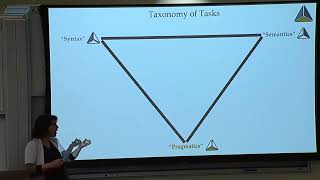
Robot Learning in the Era of Large Pretrained Models - Stanford Seminar
Exploring interactive robot learning with large pretrained models, focusing on visual representations, data collection strategies, and leveraging language models for robotics applications.
Silicon Valley and the U.S. Government: Shield AI's Innovations in Defense Technology
Explore Shield AI's innovative AI and autonomy technology for defense, featuring insights from co-founder Brandon Tseng on collaborations between Silicon Valley and the U.S. government.