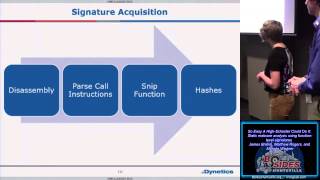
Static Malware Analysis Using Function Level Signatures
Learn static malware analysis techniques using function-level signatures, suitable for high school students and beginners in cybersecurity.
Reverse Engineering Demystified - OISF 2013
Explore reverse engineering techniques, from source code analysis to binary disassembly. Learn about vulnerability discovery, static and dynamic approaches, and overcoming obstacles in software analysis.
Kali Linux Live Boot USB Flash Drive Creation - Workshop
Learn to create a Kali Linux live boot USB flash drive with persistence, covering setup, partitioning, file systems, and troubleshooting for enhanced penetration testing capabilities.
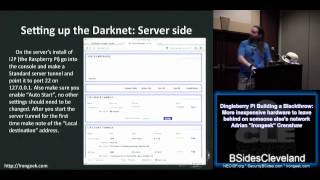
Building a Blackthrow with Raspberry Pi - Part 3
Learn to build a Blackthrow device using Raspberry Pi for penetration testing and network security. Explore hardware setup, software configuration, and practical applications.
Testing Enterprise DLP Systems - Advanced Data Exfiltration Techniques
Explore advanced data exfiltration techniques and learn how to test enterprise DLP systems effectively, enhancing your cybersecurity skills and knowledge.
Burp Suite: Informing the 99% of What the 1%ers Know - Lecture 1.2.4
Explore advanced techniques and insights for using Burp Suite, a popular web application security testing tool, to enhance your penetration testing and vulnerability assessment skills.
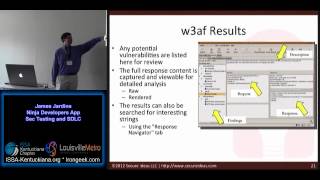
Application Security Testing and SDLC for Developers
Learn app security testing techniques and tools for the software development lifecycle, including reconnaissance, mapping, vulnerability assessment, and exploitation.
Automation Beyond Testing and Embedded System Validation
Exploring automation beyond testing for embedded systems, including ad-hoc scripting, factory flashing, and CI for system updates. Discusses separating automation from testing infrastructure for flexibility.
Automated Testing Laboratory for Embedded Linux Distributions
Explore key challenges and solutions in building automated testing infrastructure for embedded Linux, focusing on Tizen OS. Learn to create an open-source testing lab for quality assurance.
Testing with Volcanoes - Fuego and LAVA Going Distributed
Explore distributed testing with Fuego and LAVA, combining tools for broader coverage across multiple sites. Learn integration techniques, infrastructure setup, and future developments in embedded Linux testing.
Farming Together: Building Open-Source Board Farms for Continuous Integration
Explore board farm challenges and solutions for continuous integration in embedded systems. Discuss harmonizing efforts to create an open-source platform for automated testing and remote development.
Fighting Advanced Threats at Their Software Roots - Scaling Software Security
Exploring strategies to scale software security beyond developers, addressing vulnerabilities at their roots, and transforming the software ecosystem to combat advanced threats effectively.
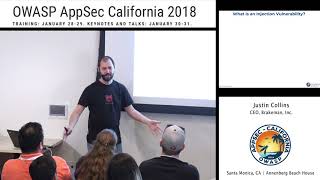
Taking on the King: Killing Injection Vulnerabilities - APPSEC Cali 2018
Explore strategies to combat injection vulnerabilities, including cross-site scripting, with insights on secure coding practices, framework design, and static analysis tools for improved application security.
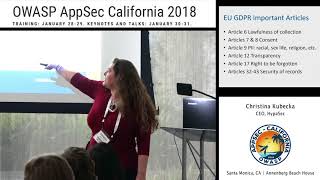
Privacy Violations, Fines, and Economic Sanctions - Creating Darker Opportunities in Cybercrime
Explore privacy violations, fines, and economic sanctions in cybersecurity. Learn about EU GDPR implications, cyber crime opportunities, and how sanctioned countries exploit digital vulnerabilities for funding.
Building an AppSec Program with a Budget of $0 - Beyond the OWASP Top 10
Explore OWASP projects to build a comprehensive AppSec program without spending money. Learn how to implement open-source tools for training, development, testing, and defense to create a robust security framework.
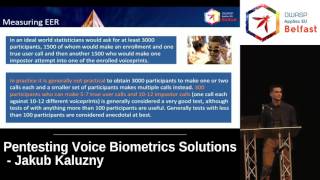
Pentesting Voice Biometrics Solutions - AppSec EU 2017
Explore pentesting techniques for voice biometrics, including tools for IVR automation, voice fuzzing, and bypassing algorithms. Learn security requirements and compare with traditional password methods.
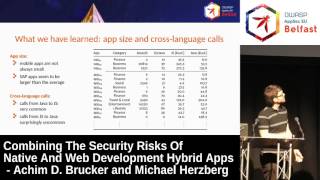
Combining Security Risks of Native and Web Development in Hybrid Apps - AppSec EU 2017
Explore security risks in hybrid app development, combining native and web technologies. Learn defensive programming and testing strategies for secure cross-platform mobile applications.
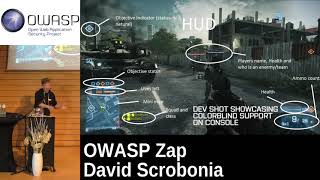
OWASP Zap - Introduction and Usage Guide
Explore OWASP Zap's capabilities for web application security testing with David Scrobonia's comprehensive overview, highlighting key features and best practices for effective vulnerability detection.
Threat Model-as-Code: Integrating Security into the Software Development Lifecycle
Integrating threat modeling into software development lifecycle using "Automaton" framework, enabling actionable outputs and automated security testing for improved product security.
Monitoring Application Attack Surface and Integrating Security into DevOps Pipelines
Explore methods for calculating and tracking web application attack surface evolution, and learn to integrate security testing into CI/CD pipelines using metrics-based policies.
Securing C Code That Seems to Work Fine
Explore strategies for securing C codebases in high-performance environments, balancing best practices with startup culture. Learn from real-world successes and failures in implementing application security controls.