
The DevSecOps Builder's Guide to the CI/CD Pipeline
Comprehensive guide to integrating security into DevOps practices, focusing on CI/CD pipeline implementation for enhanced software delivery and protection.
Detecting CSRF Vulnerability Reliably - Programmatic Approach
Explore a programmatic approach to reliably detect CSRF vulnerabilities in web applications, overcoming common shortcomings of existing tools and improving automated security testing.
AppSec Pipelines and Event-based Security - Moving Beyond Traditional Security Testing
Explore event-based security and AppSec pipelines to enhance traditional security testing methods. Learn innovative approaches for improving application security from an experienced professional.
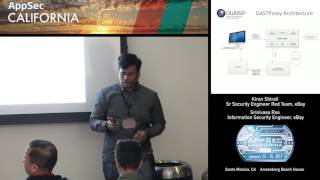
DASTProxy: Automated Security Testing Focused on Business Context
Explore DASTProxy: a tool for automated security testing that focuses on business context rather than crawling, enhancing efficiency and effectiveness in application security assessments.
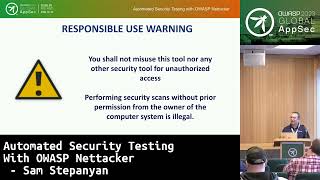
Automated Security Testing With OWASP Nettacker
Learn automated security testing techniques using OWASP Nettacker, a powerful open-source tool for vulnerability assessment and information gathering in web applications and networks.
Threat Modeling for AI Apps with Attacks as Code
Explore automated threat modeling for AI apps using Secops-Chaos framework. Learn to encode TTPs as security experiments and map MITRE ATLAS TTPs to AI apps in Kubernetes environments.
Active Scan Augmenting Manual Testing with Attack Proxy Plugins
Explore advanced web security techniques with ActiveScan++, a Burp Suite plugin for detecting complex vulnerabilities like host header poisoning and code injection through heuristic probes and automated analysis.

New Web Hacking Tool CAIDO: A Potential Burp Suite Alternative
Explore CAIDO, a potential Burp Suite alternative for web hacking. Learn setup, project creation, targeting, sitemap, scope, replay, automation, and conversion features.
A Universal Way to Exploit Android PendingIntents in High-profile and System Apps
Explore Android PendingIntent vulnerabilities in high-profile apps, learn exploitation techniques, and discover security implications through case studies and practical demonstrations.
Rugged Driven Development with Gauntlt
Explore Gauntlt, an open-source framework for automated security testing in DevOps. Learn how it bridges the gap between security, development, and operations teams, enabling continuous validation of cloud infrastructure.
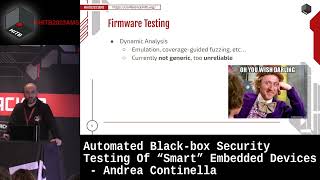
Automated Black-box Security Testing of Smart Embedded Devices
Innovative approach for IoT black-box fuzzing using "fuzzing triggers" from companion apps to generate optimal inputs, overcoming limitations of existing tools and discovering zero-day vulnerabilities.
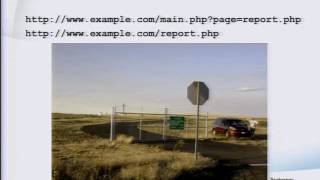
Automated vs. Manual Security - You Can't Scan for The Stupid
Explore the limitations of automated security tools and the importance of manual testing in identifying vulnerabilities that scanners miss, particularly those caused by human error.
Start Writing Security Tests Now
Learn methodologies and frameworks for automating security testing in your applications, enabling developers to address common vulnerabilities and collaborate more effectively with pentesters.
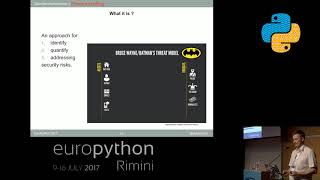
CyberSecurity.bootcamp
Explore cybersecurity essentials for Python applications, covering threat modeling, attack vectors, security testing, and best practices to protect your servers from malicious threats.

Black Hat Asia 2025
Black Hat Asia 2025