Building Python-Based Extensions with Dynatrace - A Practical Guide
Learn to build Python-based extensions for Dynatrace using the Extensions SDK. Explore architecture, create new extensions, upgrade existing ones, and leverage tools for efficient development and deployment.
Supercharge Your Java Applications with Python
Enhance Java apps with Python using GraalPy. Explore embedding Python in Java, integrating AI libraries, and leveraging multi-language capabilities for data science and machine learning.
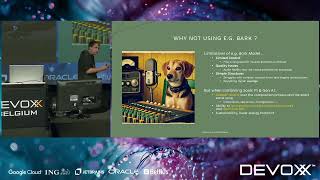
Harmonizing Code and Melody: Making Electronic Music with AI and Multi-Agent Systems
Explore MusicAgent: Innovative multi-agent system for composing, arranging, and producing music using Python, Sonic Pi, and LLMs. Learn live electronic music creation and AI-driven composition techniques.
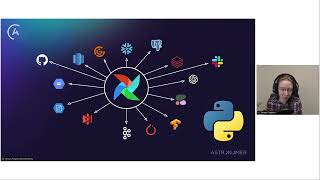
Apache Airflow: Where Data Engineers and ML Engineers Meet
Explore production-quality Generative AI pipelines using Apache Airflow. Learn to orchestrate workflows, integrate data engineering, and implement MLOps best practices for robust AI applications.
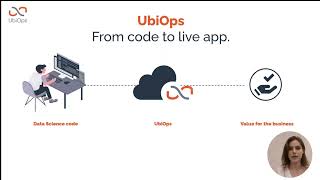
Deploying Generative AI Models - Best Practices and Interactive Example
Explore best practices for deploying generative AI models at scale, with an interactive example using UbiOps for serverless and cloud-agnostic implementation.
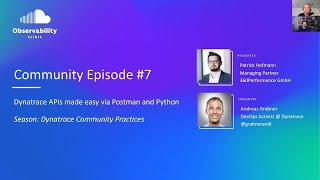
Dynatrace API Automation: Postman Collections and Python Client Library - Episode 7
Discover tips for easier Dynatrace API automation using Postman collections and Python client library. Learn through live demos and practical examples to enhance your Dynatrace workflow.

Physics Problem: Block Sliding Down a Movable Wedge - Classical Mechanics Series
Solve a complex physics problem involving a block sliding down a movable wedge, with a bonus Python numerical model for practical application.
Interpretability Agents: Automating and Scaling Model Interpretation
Explore automated interpretability agents for scaling model interpretation, enabling efficient analysis of AI systems through hypothesis-driven experimentation and modular design.

PyCharm IDE Setup for Python Development - Part 4
Configure PyCharm IDE with Anaconda, set up GitHub repos, and optimize your Python development environment for efficient coding.
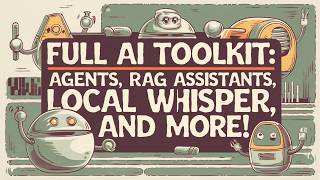
AI Agents and Tools in Action - Demos and Tutorials
Explore cutting-edge AI demos and tutorials on agent collaboration, RAG systems, game development, and voice transcription. Master advanced techniques in Python, OpenAI API, and Claude AI.
Parallelizing Your ETL with Dask on Kubeflow
Leverage Dask's parallelism capabilities on Kubeflow for advanced ETL processing. Learn to use the Dask Operator to optimize resource utilization in interactive Jupyter sessions and pipeline workflows.
Feature Engineering Made Simple
Master feature engineering techniques to streamline your machine learning workflow. Explore systematic approaches using Anovos, an open-source library for efficient data processing and model building.
MLOps for Fairness - Creating Comprehensive Fairness Workflows
Explore MLOps techniques for identifying, measuring, and mitigating bias in ML systems at scale. Learn to create comprehensive fairness workflows using Python tools for industry-level challenges.
Automated Machine Learning Tuning with FLAML
Explore automated machine learning and tuning using FLAML, a fast Python library. Learn to automate ML tasks, perform general tuning, and conduct zero-shot AutoML efficiently.
Lessons Learned from DAG-Based Workflow Orchestration
Explore DAG-based workflow orchestration challenges and learn about Prefect Orion's DAG-less system for enhanced runtime flexibility and developer experience in data pipelines.
Building Production ML Monitoring from Scratch - Live Coding Session
Build a cloud-native ML monitoring stack using open-source tools. Create a live web dashboard to measure model drift, feature statistics, and performance metrics in production, with Python-based custom metrics integration.
CyclOps: A Framework for Data Extraction, Model Evaluation and Drift Detection in Clinical Machine Learning
Explore CyclOps, a unified framework for healthcare ML, enabling data extraction, model evaluation, and drift detection in clinical settings. Streamline development of robust AI models.
Introduction to Model Deployment with Ray Serve
Learn to deploy ML models using Ray Serve. Explore Ray Core APIs, create scalable architectures, and integrate with MLflow and FastAPI. Gain hands-on experience in distributed computing and model deployment.

Raspberry Pi Pico W - Creating a Four-Bit Binary Counter Using PIO State Machine - Lesson 91
Master PIO state machine programming on Raspberry Pi Pico W to create a four-bit binary counter, exploring in_, nop(), and invert instructions while learning timing control and simple multiplication techniques.

Building a Scalable Web Scraping API for Large-Scale Data Collection Using FastAPI and Python
Master building a scalable web scraping API for large-scale data collection using FastAPI and Python. Learn deployment steps, multi-core optimization, and practical implementation on Linode's cloud platform.

Annotate Images Like a Pro - Python Image Annotation Tool Demo
Master Python-based image annotation with a comprehensive tool for 2D and multi-dimensional images. Learn manual and semi-automatic techniques, export options, and additional features for efficient image analysis and model training.