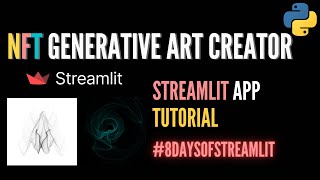
NFT Generative Art Creator in Python Web App Tutorial - Day 7
Learn to create generative art using Python and Samila library in a Streamlit web app. Explore mathematical functions for unique digital artwork generation.

How I Make Science Animations
Neuroscience PhD student shares creative process, software tools, and techniques for making science animations, including mathematical visualizations, 3D neuron activity, and brain models.
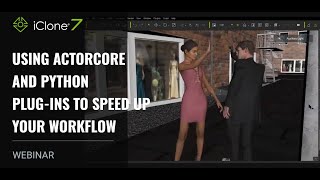
Using ActorCore and Python Plug-ins to Speed Up Your Workflow
Enhance 3D animation workflow using ActorCore 2.0's motion library, 3D scanned characters, and iClone's Python API plugins for efficient scene creation and camera movement.
Using ActorCore and Python Plug-ins to Speed Up Your Workflow
Enhance 3D animation workflow using ActorCore's motion library and iClone's Python API plugins. Learn to combine pre-made assets with custom scripts for efficient, high-quality scene creation.
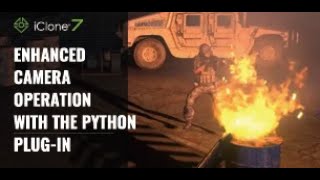
Enhanced Camera Operation and Python Plug-ins for iClone
Learn to enhance iClone 7 camera operations using Python plug-ins. Explore hand gesture puppeteering, smooth camera follow, auto-focus, and dolly zoom techniques for improved 3D animation workflows.

Flower Photography: Dreamy Bokeh Background - Camera and Editing Tips
Discover camera techniques and editing solutions for creating dreamy bokeh backgrounds in flower photography, using Photoshop and Topaz Mask AI to enhance your images.
Topaz Studio 2 - Using the Focal Blur Filter for Natural Background Blur
Learn to create natural out-of-focus backgrounds using the Focal Blur Filter in Topaz Studio 2, enhancing your photo editing skills and achieving professional-looking results.
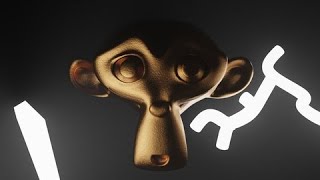
Demystifying Add-ons: A Workshop - Creating and Debugging Blender Add-ons
Learn to create, debug, and share Blender add-ons with a live demo covering registration, operators, UI implementation, and testing. Gain practical insights into the entire add-on development process.
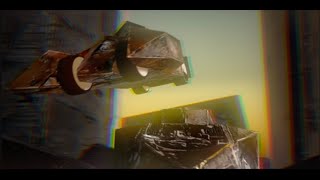
Weaving Art and Code Together - Enhancing Creativity and Productivity
Explore how programming enhances artistic creativity and productivity, with insights on integrating code into artwork for more effective storytelling and efficient creation.
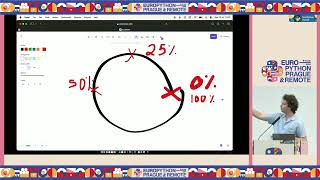
Animations from First Principles
Explore animation creation from scratch, learning to draw shapes, animate processes, and morph figures using simple functions and loops. Gain skills to build your own visually appealing animations.
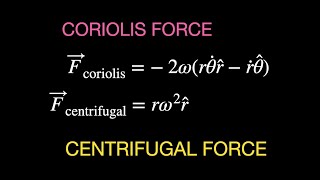
Non-Inertial Frames - Deriving the Centrifugal and Coriolis Force
Delve into accelerating reference frames, exploring centrifugal and Coriolis forces through mathematical derivations and Python implementations in classical mechanics.
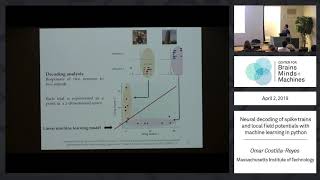
Neural Decoding of Spike Trains and Local Field Potentials with Machine Learning in Python
Learn Python-based machine learning techniques for neural decoding, focusing on preprocessing, model selection, and optimization for spike trains and local field potentials from macaque cortical areas.
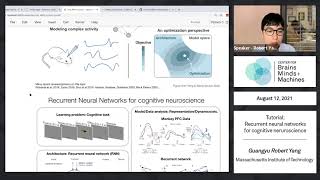
Recurrent Neural Networks for Cognitive Neuroscience
Hands-on tutorial exploring RNNs in cognitive neuroscience through coding exercises. Learn to train and analyze RNNs for various tasks, with lecture and workshop components using Google Colab Notebooks.
Projectile Motion Visualization - Adding Rulers
Enhance projectile motion visualization with rulers, colors, and loops in VPython. Learn to create dynamic physics simulations for better understanding and analysis.
Wave Function Evolver - Calculating Expectation Values - Episode 3
Explore wave function calculations, expectation values, and quantum mechanics concepts through interactive coding and visualization techniques.
Double Pendulum Simulation: Coding and Energy Conservation - Part 5
Explore double pendulum physics through coding, focusing on energy conservation and chaotic motion. Skip algebra for practical implementation in VPython.
Pendulum Dynamics - Exploring Different Driving Functions
Explore pendulum behavior with different driving functions. Visualize and analyze changes in motion using Python simulations, including kick, sawtooth, and step functions.
Pendulum Dynamics in Phase Space - Damped Driven Pendulum Simulation
Explore damped driven pendulum behavior through phase space plots, with coding examples in VPython to visualize complex motion and periodic forces.
Pendulum Simulation - Breaking Simple Harmonic Motion
Explore pendulum motion beyond simple harmonic approximations through coding, visualizing how small angle assumptions break down as amplitude increases.
Wave Function Evolver: Lennard-Jones Simulation Analysis - Episode 10
Explore Lennard-Jones simulation behavior by modifying potential energy minimum locations. Augment code to analyze changes and generate insights for physics enthusiasts and programmers.
Gravity Simulator - Double-Planet System - Episode 3
Explore double-planet and trinary star systems using a gravity simulator. Learn to code physics simulations and visualize complex celestial interactions in VPython.