Introduction to Python for Data Science
Explore Python tools for data science, covering data processing, visualization, and modeling. Learn end-to-end data science through a real-world case study with expert insights.
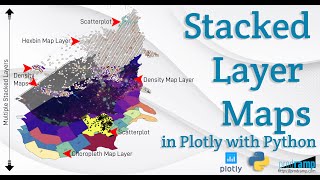
Beautiful and Informative Multilayer Stacked Geo Maps in Plotly With Python
Learn to create multi-layer stacked geo maps in Plotly with Python, combining hexbin, scatter, and density layers for beautiful and informative geospatial data visualizations and dashboards.
Understanding Graph Neural Networks - Part 1
Comprehensive introduction to Graph Neural Networks, covering fundamentals, mathematics, and practical implementation using NetworkX and PyG. Ideal for beginners seeking hands-on experience with GNNs.
How You Can Build Your Own Worldwide Wildfire Data Collection and Host on Kaggle
Learn to collect, process, and visualize global wildfire data using NASA sources, data engineering techniques, and tools like Kepler.gl, mapboxgl, and Streamlit for insightful analysis and presentation.
A Very First Look at H2O Hydrogen Torch
Explore H2O Hydrogen Torch: a no-code deep learning tool for diverse AI tasks. Learn its capabilities, experiment as novice and expert, and understand prediction pipelines and deployment options.
Impactful and Informative Geo Maps With Pandas and Plotly
Create impactful geo maps using Pandas and Plotly. Learn to visualize large datasets with bubble, heat, and hexagon maps. Hands-on tutorial covers data processing, Plotly integration, and map creation techniques.

Learn Data Science Full Course - 2020
Comprehensive introduction to data science, covering key concepts, tools, and methodologies. Ideal for beginners seeking to understand the field's fundamentals and career prospects.
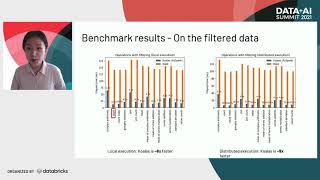
Koalas: Scaling Pandas APIs on Apache Spark - Performance and Comparison with Dask
Explore Koalas: pandas-like APIs for big data on Apache Spark. Compare performance with Dask, learn about recent updates, and understand its scalability for data science tasks.
Growing the Delta Ecosystem - Delta-RS for Rust and Python
Explore delta-rs, a Rust library extending Delta Lake beyond Spark. Learn its current capabilities, roadmap, and real-world application in kafka-delta-ingest for high-throughput data transfer.
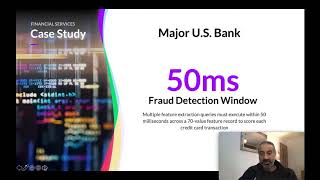
Accelerating MLOps with Apache Spark and SingleStore
Learn to accelerate MLOps using Apache Spark and SingleStore. Discover how to build fast analytical applications, manage supervised learning models, and scale AI/ML operations for data science success.

Project Zen - Improving Apache Spark for Python Users
Discover improvements in Apache Spark for Python users, including redesigned documentation, type hints, PyPI distribution options, and enhanced PySpark features for a more Pythonic experience.

Fugue: Unifying Big Data Analytics Ecosystems for ETL and Machine Learning
Unifying big data ecosystems with Fugue: SQL-like framework for ETL and ML pipelines, compatible with Spark, TensorFlow, and more. Simplifies development, improves performance, and enhances maintainability.
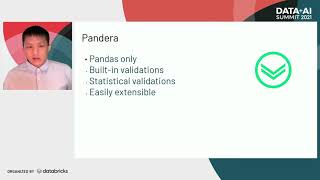
Fully Utilizing Spark for Data Validation with Fugue and Pandera
Explore lightweight data validation for Spark using Fugue and Pandera, enabling partition-specific rules and efficient big data processing without compromising on functionality.
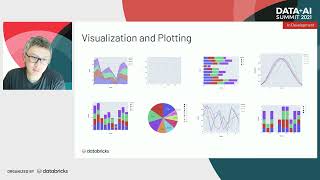
Deep Dive into New Features of Apache Spark 3.1
Explore Apache Spark 3.1's new features: ANSI SQL compliance, streaming enhancements, Python improvements, and performance optimizations for faster, easier, and smarter data processing.
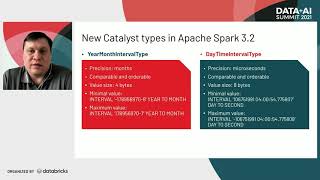
Comprehensive View on Intervals in Apache Spark 3.2
Explore Apache Spark 3.2's interval enhancements, including ANSI SQL conformance, new interval types, and improved APIs. Learn to construct, use, and manage intervals effectively in Spark SQL and PySpark.
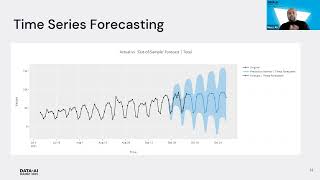
Time Series Forecasting with PyCaret
Explore automated time series forecasting with PyCaret's low-code module. Learn setup, EDA, training, and forecasting techniques to streamline your predictive modeling workflow.
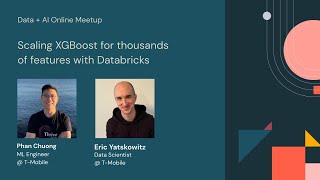
Scaling XGBoost for Thousands of Features with Databricks
Scaling XGBoost for online advertising: Learn to handle thousands of features, optimize model training, and avoid common pitfalls in both Python and Scala implementations on Spark.
Master Databricks and Apache Spark Step by Step - PySpark Using RDDs
Explore PySpark and RDDs in Databricks: Learn about lazy evaluation, transformations, and actions while analyzing data using Resilient Distributed Datasets.
Data Science: Introduction to Pandas
Explore Pandas for data manipulation: peek, sort, filter, and analyze with mathematical functions, correlation, and covariance.
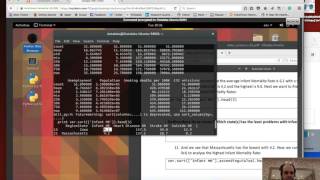
Data Science Tutorial 1 - Pandas Analysis
Learn to analyze data using Pandas, covering data types, columns, plotting, correlation, and covariance in this comprehensive tutorial.
Data Analysis with Pandas
Learn essential Pandas techniques for data analysis, including data manipulation, correlation analysis, and visualization, to enhance your Python data science skills.