
Ruff: An Extremely Fast Python Linter and Code Formatter Written in Rust
Explore Ruff, a high-speed Python linter and formatter in Rust. Learn its functionality, performance optimizations, and design choices that make it significantly faster than alternatives.

Ruff: An Extremely Fast Python Linter and Code Formatter Written in Rust
Explore Ruff, a high-speed Python linter and formatter in Rust. Learn its functionality, performance optimizations, and design choices that make it significantly faster than alternatives.

Building Generative AI Applications with RAG - A Quick Start Guide
Discover how to rapidly build and evaluate Retrieval Augmented Generation (RAG) applications using Python, from essential concepts to testing strategies and performance optimization.
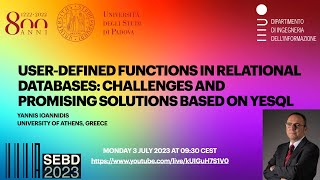
User-Defined Functions in Relational Databases - Challenges and Promising Solutions Based on YeSQL
Explore the challenges and solutions of User-Defined Functions in relational databases, focusing on YeSQL's innovative approach to seamlessly integrate Python UDFs with enhanced performance and functionality.
ComfyUI Installation and Control Net Manager Guide - Part 1
Master ComfyUI's fundamentals through step-by-step installation, node operations, and advanced features like ControlNet integration and workflow management for AI image generation.
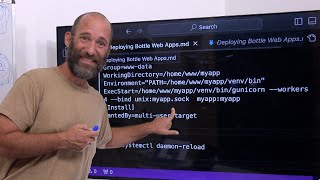
Deploying Python Web Applications with Bottle, Gunicorn, and NGINX
Master production-ready web deployment using Bottle framework with Gunicorn and NGINX. Configure secure environments, implement reverse proxying, and optimize performance for scalable Python applications.
Relation Extraction from Texts Using OpenNRE - A Beginner's Guide
Master relation extraction techniques using OpenNRE toolkit in Python, from basic concepts to practical implementation. Perfect for beginners seeking to uncover meaningful connections in text data.
Transaction Log as the Heart of Delta Lake - Understanding Structure and Operations
Dive into the mechanics of Delta Lake's transaction log through hands-on PySpark exercises, exploring its structure, operations, and advantages over traditional data lakes.
Nth Pack Element: Efficient Access Techniques - A Case Study
Explore efficient techniques for accessing nth elements of variadic packs in C++, from naive approaches to modern C++20 features, with performance comparisons and practical insights.
Extend and Embed Python with C++ - Techniques and Frameworks
Discover techniques to extend Python with C++ and embed Python in C++ applications. Learn about ctypes, SWIG, and pybind11 for performance optimization and scripting capabilities.
TTPs of Attacks on OSS in Python - Trusty Package Security
Explore tactics and techniques of supply-chain attacks on Python open-source software, including starjacking, installation, delivery, and exfiltration. Learn defensive strategies against these threats.
Introduction to Neural Networks
Explore neural networks, their components, and architectures. Learn about RNNs, LSTMs, and CNNs with practical examples in Python for movie review and image classification tasks.
Introduction to Python Libraries and Algorithms for Machine Learning
Explore Python libraries and algorithms for machine learning, covering regression, clustering, and classification using popular tools like Pandas.
Python 101 - Introduction to Python for Data Science
Learn Python basics for data science: explore versatile programming tools, efficient data computation, and knowledge extraction techniques.
Advanced Python Libraries for Data Science
Explore advanced Python libraries for data science, focusing on scikit-learn, TensorFlow, and PyTorch Geometric. Learn implementation, methodologies, and practical applications through code exercises.
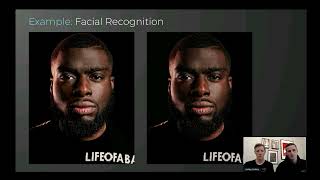
An Introduction to Drift Detection
Explore drift detection in machine learning, covering types, detection methods, and practical applications using Alibi Detect. Gain hands-on experience with real-world examples and state-of-the-art techniques.
Introduction to Data Analysis Using Pandas
Learn to effectively analyze data using pandas in Python. Master data manipulation, aggregation, and visualization techniques for extracting valuable insights from tabular datasets.
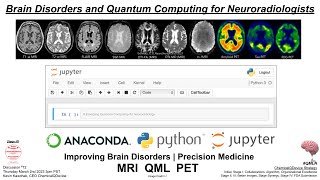
Brain Disorders and Quantum Computing for Neuroradiologists
Explore quantum computing's potential in neuroradiology, focusing on AI applications for brain MRI analysis and the benefits of hybrid quantum systems for processing large datasets in medical imaging.
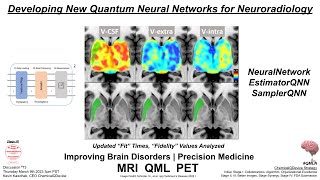
Developing New Quantum Neural Networks for Neuroradiology
Explore quantum neural networks for neuroradiology, focusing on modifications to Qiskit/Python circuits, updated fit times, fidelity values, and applications in MRI/PET image classification.
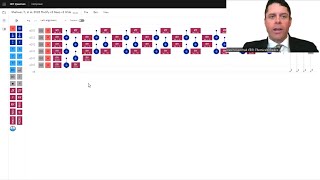
Quantum Gate Calculations to Brain Algorithms Design - Live Demo
Explore quantum gates and circuits in IBM Qiskit, focusing on applications in neuroradiology and brain MR image classification using hybrid classical-quantum networks.
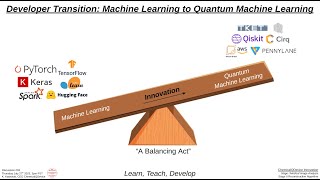
Developer Transition: Machine Learning to Quantum Machine Learning
Explore quantum machine learning frameworks, tools, and resources to transition from classical ML. Gain insights into QML algorithms, simulators, and future developments in the field.