Introduction to Python
Explore Python's versatility and power through practical examples. Learn how this expressive language with extensive libraries can be used for various programming tasks, from simple scripts to complex applications.
Introduction to Natural Language Processing with Python
Explore basic NLP concepts using Python, including text representation and classification for sentiment analysis, categorization, and authorship recognition.
A Practical Introduction to Data Science
Explore data science fundamentals, machine learning algorithms, and hands-on Python implementation using scikit-learn. Gain insights from building a data science department and practical applications.
The State of C# - What Have I Missed
Explore recent C# features like improved async programming, pattern matching, tuples, and deconstruction. Learn how these additions enhance developer productivity and code readability.
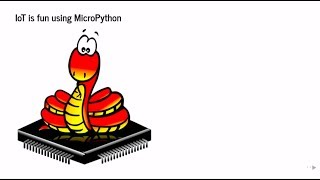
IoT is Fun Using MicroPython
Explore MicroPython for embedded devices: learn implementation, features, and hands-on coding to unleash the power of Python in IoT applications.
Integrate Python and C++ with pybind11
Discover how to combine Python's rapid development with C++'s performance using pybind11. Learn to expose C++ libraries as Python modules for efficient hybrid solutions in data science and machine learning.
Building Useful Project Utils in Python
Learn techniques for creating maintainable Python utilities to replace complex shell scripts, covering code organization, command-line interfaces, filesystem manipulation, and unit testing for improved project management.
Data on the Inside, Data on the Outside
Explore distributed data management in microservices, focusing on reference data implementation and solutions for efficient inter-service communication and data sharing.
The State of C# - What Have I Missed?
Explore recent additions to C# including asynchronous code support, pattern matching, tuples, and deconstruction. Discover how these features enhance developer productivity and code readability.
The Shape of Data - Machine Learning and Topology
Explore unsupervised learning and topological data analysis to uncover hidden insights in complex datasets, with applications in health and finance using Python and R.
Event Driven Collaboration
Explore event-driven collaboration in microservices architecture, addressing data distribution challenges and integrating services using events. Learn implementation examples in C#, Python, and Go with RabbitMQ and Kafka.
Anchored Metadata
Explore anchoring techniques for associating metadata with code, separate from source files. Learn about context-based updating and see practical implementations in Python and Rust.

How to Build Python-C++ Libraries
Explore challenges and solutions for building Python libraries with native code, including automation, CI pipelines, Python-CMake integration, and cross-platform compilation techniques.
Anchored Metadata
Explore anchored metadata: a technique for associating external metadata with code regions using context-aware anchors, improving code organization and maintainability.

How to Use the Roboflow Upload API - Python
Learn to programmatically add images and annotations to datasets using Roboflow's Upload API, enabling active learning and continuous improvement of computer vision models.
Sentence Similarity With Transformers and PyTorch
Learn to measure semantic similarity between sentences using BERT and PyTorch. Explore tokenization, vector creation, and cosine similarity calculation for powerful NLP applications.
Identify Stocks on Reddit with SpaCy - NER in Python
Learn to extract stock mentions from Reddit using SpaCy's Named Entity Recognition, enabling automated classification and analysis of unstructured text data for financial insights.
Table Question-Answering with TAPAS in Python
Learn to implement table question-answering using TAPAS in Python, covering retrieval pipelines, dataset preprocessing, and advanced aggregation queries with Hugging Face transformers and Pinecone vector database.

Hugging Face Datasets - Dataset Builder Scripts for Beginners
Learn to create and manage dataset builder scripts for Hugging Face, including download management, Apache Arrow datatypes, and integration with popular machine learning frameworks for efficient model training and fine-tuning.

Playwright: Introduction and Demonstration for Automation Testing
Explore Playwright's powerful automation testing capabilities through a concise demo, showcasing its versatility across multiple programming languages.

Automation Testing with Python and Selenium
Master web app testing using Python and Selenium. Write scripts, control browsers, verify functionality, and generate comprehensive HTML reports with Allure for enhanced test analysis.