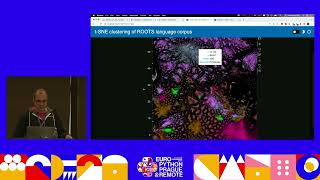
The Needle and the Haystack - Visualizing Single Datapoints Out of Billions
Explore techniques for visualizing and interactively inspecting billions of datapoints using HoloViz ecosystem, overcoming limitations of traditional web-based tools for large datasets.
Polars vs Pandas - What's the Difference?
Explore the differences, pros, and cons of Polars and Pandas data manipulation libraries. Gain insights into their unique features and understand when to use each for optimal data analysis.
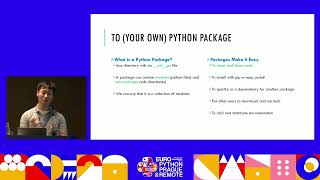
From Jupyter Notebooks to a Python Package - The Best of Both Worlds
Learn to transform Jupyter notebooks into a Python package, enhancing code sharing, refactoring, and version control while retaining notebook benefits. Gain practical skills for improved data science workflows.
Would Rust Make You a Better Pythonista?
Discover how learning Rust can enhance your Python skills, with real-world examples and insights on improving code performance, safety, and design patterns in both languages.
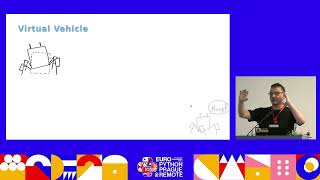
Async Robots
Explore parallel programming for interactive robot control using Python's async features. Learn from experiences with the Fluffbug robot, addressing challenges and solutions in CircuitPython.
Apache Arrow and Substrait - The Secret Foundations of Data Engineering
Explore Apache Arrow and Substrait's impact on data engineering, including their role in interoperability, query planning, and building efficient database systems with minimal code.
An Unbiased Evaluation of Environment Management and Packaging Tools
Comprehensive comparison of Python packaging and environment management tools, offering structured insights to help developers choose the right solution for their projects.
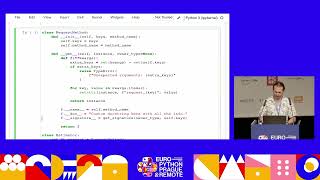
Dynamically Generated Methods with a Non-Generic Signature
Explore dynamic method generation in Python using Descriptors, PEP-362, and PEP-487. Learn scikit-learn's approach to attaching generated methods to classes, understanding use-cases and challenges.
Interactive, Animated Reports and Dashboards in Streamlit with Ipyvizzu
Create interactive, animated reports and dashboards using Streamlit and ipyvizzu. Learn to build data apps that non-data scientists can explore, enabling them to apply business expertise and find insights.
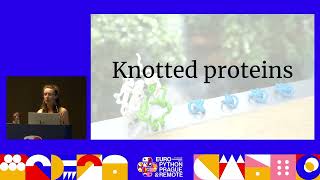
Using NLP to Detect Knots in Protein Structures
Explore how NLP and machine learning detect protein knots from amino acid sequences, uncovering their impact on function and stability using Python-based tools like Biopython and Hugging Face.
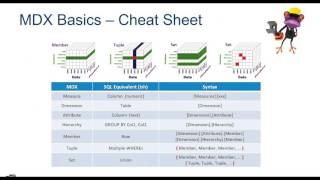
Beginners Guide to MDX
Explore MDX fundamentals, including T-SQL queries, star schemas, and cube visualization. Learn key concepts like sets, tuples, and subcubes through demos and practical examples.
Visualization Best Practices for Explainable AI
Explore machine learning visualization techniques for explainable AI across industries, covering model understanding, data analysis, and performance evaluation using Jupyter, Python, and Power BI.
Stepping into Data Science - Predictive Analytics
Explore data science processes, feature engineering, and predictive analytics using Python. Learn to create training and predictive experiments with practical examples and machine learning techniques.
Desenvolvimento e Administração em SQL Server com Python
Integração do Python com SQL Server para desenvolvimento de aplicações e administração de infraestrutura em ambientes de bancos de dados, explorando as capacidades multiplataforma e poliglotas do SQL Server desde a versão 2017.
Identifying Anti-Patterns in Analytical Queries
Learn techniques to optimize SQL-based analytical queries, restructure jobs, and eliminate performance bottlenecks. Improve efficiency and deliver results faster across various data tools and platforms.
Code Like a Snake Charmer – Advanced Data Modeling in Python
Comprehensive Python data modeling tutorial covering extraction, cleaning, transformation, visualization, predictive modeling, validation, and deployment using popular libraries and Azure integration.
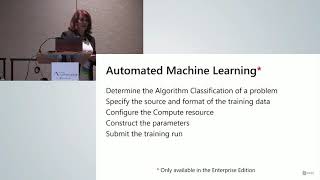
Hidden Differences Between Azure ML Products Revealed
Explore Azure ML products, their differences, and use cases. Learn to create end-to-end ML workflows, integrate with SQL Server, and manage models in production using various Azure tools.
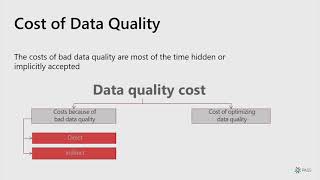
Data Quality Round-trip in the MS Dataplatform
Explore comprehensive data quality solutions using Microsoft's Data Platform, including Machine Learning, Azure Data Factory, and SQL Server 2019, to address and resolve data quality challenges.
AI Cognitive Services - Vision 101
Introduction to Azure's Computer Vision and Custom Vision APIs, covering basics, model creation, training, and implementation using Python in Azure Notebooks.
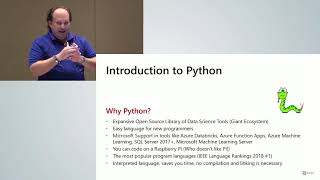
Code Like a Snake Charmer - Introduction to Python
Learn Python basics, data manipulation, and integration with Microsoft tools for enhanced data analytics and machine learning capabilities.
Power of Electric Snakes! PySpark for Big Data and Data Science
Learn to harness PySpark for big data analytics, covering RDDs, DataFrames, transformations, and machine learning. Gain practical skills for efficient data processing and analysis using Python and Spark.