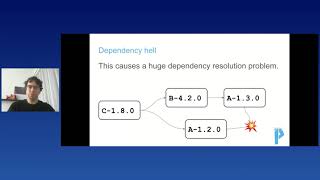
Python Monorepos - What, Why and How
Explore the advantages of monorepos for Python codebases, including scalable management, collaboration, and effective tooling. Learn to evaluate codebase architecture choices for optimal development workflows.
The Libre-SOC Project
Explore the Libre-SOC Project: an open-source initiative using Python to create a programmable, spy-free System-on-a-Chip for smartphones and computers, emphasizing transparency and user control.
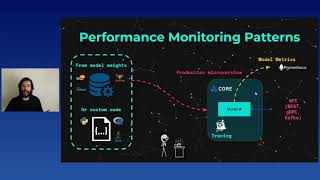
Production ML Monitoring - Outliers, Drift, Explainers & Statistical Performance
Practical deep dive into advanced ML monitoring techniques, covering outliers, drift, explainers, and statistical performance for robust production deployment and scalability.
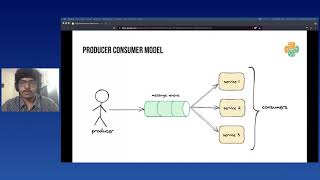
High Performance Data Processing with Python, Kafka and Elasticsearch
Explore high-performance data processing using Python, Kafka, and Elasticsearch. Learn to implement a Producer-Consumer model for real-time data updates in various applications.
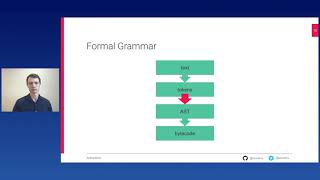
Formalizing a Language
Explore formal grammar, Python's parsing engine changes in 3.9, and their impact on language evolution. Gain insights into programming language creation and future Python developments.
Analyzing COVID Vaccine Popularity in Europe Using FastAPI, Postgres & Azure
Explore COVID vaccine data analysis using FastAPI, Postgres, and Azure. Learn to process, store, and visualize European vaccine popularity data with Python tools and cloud services.
Traveling Through a Secure API in Python
Learn to build a secure "Where Have I Been" map application using Python and Auth0, covering API endpoint creation, data protection, manipulation, and deployment.
A Crowdsourced Map for Checking Supermarket Wait Times Worldwide
Explore the development of a crowdsourced map for tracking supermarket wait times during the pandemic, utilizing Redis, uWSGI, and Flask to scale from a Raspberry Pi to multiple VPS servers.
Streamlit - The Fastest Way to Build Data Apps
Discover how to rapidly create data science apps using Streamlit, an open-source framework that simplifies development with Python scripts, eliminating the need for front-end coding.
Developing Flask Applications for Google Cloud
Learn to build Flask apps for Cloud Run, using Cloud Code for faster development. Explore integration with Cloud SQL, Pub/Sub, and Secret Manager on Google Cloud's serverless platform.
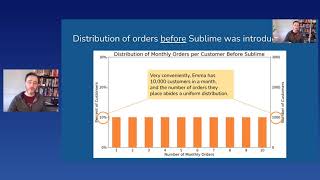
Sliding into Causal Inference, with Python
Explore causal inference tools in Python to simulate parallel realities and answer 'what if' questions. Learn about randomized experiments, differences-in-differences, propensity scores, and synthetic controls.
Making AI Happen at Your Company
Practical insights on implementing AI in established companies, covering strategy, technology adoption, cultural shifts, and overcoming legacy system challenges.
Raise Better Errors with Exception Groups
Explore Python 3.11's Exception Groups for robust error handling. Learn to overcome current limitations and write cleaner code using new features like except* keyword.
Python & Visual Studio Code - Revolutionizing the Way You Do Data Science
Discover how Visual Studio Code, GitHub, Codespaces, and Azure ML enhance Python data science productivity. Learn about VS Code Notebooks, Data Wrangler, collaboration features, and deployment options.
How to Embed a Python Interpreter in an iOS App
Learn to embed Python 3.10 in native iOS apps, allowing users to script app behavior. Discover how to integrate Python with Swift, add third-party libraries, and modify app functionality at runtime.
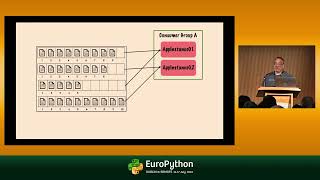
Event-Driven Microservices with Python and Apache Kafka
Explore event-driven microservices using Python and Apache Kafka. Learn to build loosely coupled, extensible distributed systems with an example application and practical considerations.
Data Warehouses Meet Data Lakes
Explore modern data architecture using PySpark, Hudi, Delta.io, and Iceberg to address datalake challenges, supporting real-time processing and enterprise-wide digital transformation.
Protocols - Static Duck Typing for Decoupled Code
Explore static duck typing with Protocols in Python for improved code decoupling and correctness verification. Learn use cases and implementation techniques for more idiomatic and efficient programming.
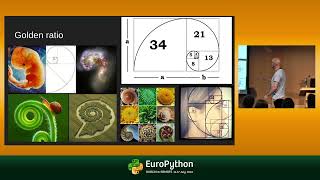
Using Python to Predict Asset Price Reversals
Learn to predict potential trend reversals in stocks and cryptocurrencies using Python, Pandas, and Plotly. Discover how to identify Fibonacci retracement levels for low-risk trade entries.
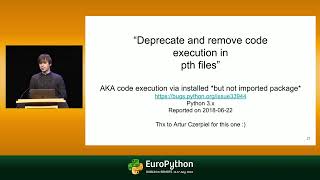
CPython Bugs and Risky Features
Explore security risks in CPython, including directory vulnerabilities, code injection possibilities, and socket issues. Learn about potential threats and mitigation strategies for Python developers and administrators.
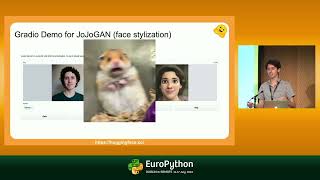
How to Craft Awesome Machine Learning Demos with Python
Learn to create interactive Machine Learning demos using Python, Gradio, and Streamlit. Discover how to craft engaging interfaces and share your models with both ML experts and novices.