
15 Things You Should Know About Spacy
Discover 15 key insights about spaCy, an open-source NLP library for Python. Learn its strengths, limitations, and practical applications for processing and understanding large text corpora.
Difficulties of Python Code Development - Packages, Virtualenvs and Package Managers
Explore Python development essentials: packages, virtual environments, and package managers. Learn pros and cons, best practices, and tools for efficient code management and dependency resolution.
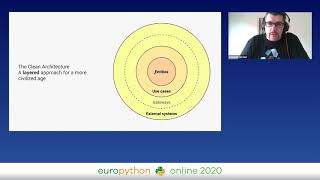
Clean Architectures in Python
Explore clean architecture principles for Python, focusing on layer separation and internal APIs to create maintainable, testable, and loosely coupled systems.
Building Smarter Solutions with No Expertise in Machine Learning
Explore practical ML solutions using existing models and AutoML techniques, with interactive demonstrations and insights for quick implementation without deep expertise.
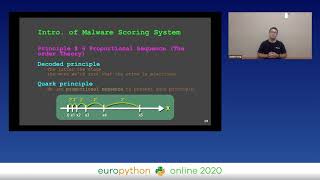
So, You Want to Build an Anti-Virus Engine?
Learn to build an Android malware analysis engine using Python, combining criminal law principles with bytecode analysis to create a robust scoring system that can detect threats even in obfuscated code.
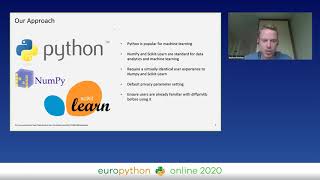
Diffprivlib - Privacy-Preserving Machine Learning with Scikit-Learn
Explore differential privacy in machine learning using Diffprivlib, a tool for training accurate models with robust privacy guarantees, seamlessly integrating with scikit-learn and numpy.
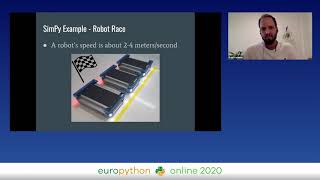
Boosting Simulation Performance with Python
Explore discrete-event simulation for robotics, boosting performance and determinism. Learn to overcome challenges in event-driven systems and distributed simulations for faster development and testing cycles.

Decision Science with Probabilistic Programming
Explore generative models and probabilistic programming for decision-making under uncertainty, integrating with robust optimization techniques to enhance business strategies.
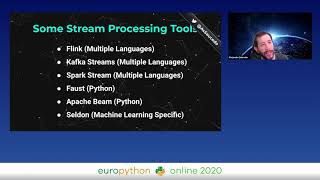
Real Time Stream Processing for Machine Learning at Massive Scale
Practical insights on building scalable data streaming ML pipelines for real-time processing using Python, Kafka, SpaCy, and Seldon. Covers key concepts and best practices through a Reddit comment moderation case study.
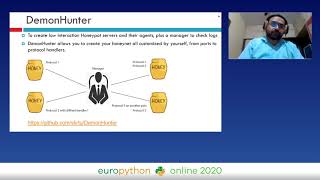
Deceptive Security Using Python
Explore deceptive security techniques using Python, including WebTrap and DemonHunter tools. Learn how to implement machine learning for XPath injection attack mitigation in web services.
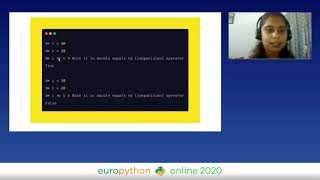
Object Internals
Explore Python's object internals, memory management, and data structure behavior. Gain insights into mutability, copying, sorting, and memory allocation for improved code understanding and optimization.

Live-Coding a Music Synthesizer
Live-coding session using NumPy and SoundDevice to create realistic instrument sounds with math. Gradually build a synthesizer from simple sine waves to playing classical music, while exploring music theory concepts.
Resurrecting a Django Project in Python 2.7 for 3.8
Explore the process of reviving and updating a Django project from Python 2.7 to 3.8, focusing on challenges, solutions, and best practices for modernizing legacy code.
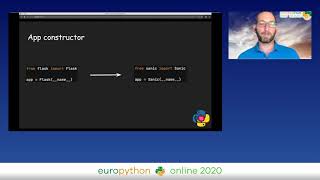
Flasync Await
Explore async programming in Python, focusing on its benefits for web applications. Learn to transform Flask apps to Sanic, with tips on measuring, monitoring, and testing async code.
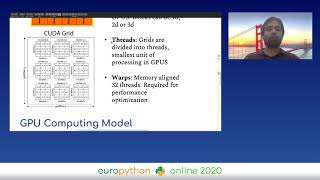
Writing Extensions and Bindings for GPU Made Easy
Learn to optimize deep learning computations by writing custom C and CUDA extensions for GPU, with a focus on image search across billions of items and seamless integration with Python codebases.
Ray - A System for High-performance, Distributed Python Applications
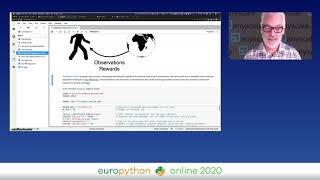
Ray: open-source framework for scaling Python applications from laptop to cluster, solving performance challenges in ML/AI systems. Learn its features, use cases, and how it compares to alternatives.
The Python Data Visualization Landscape in 2020
Explore Python's data visualization libraries including Matplotlib, Plotly, Bokeh, and Altair. Learn about dashboarding solutions like Dash, Panel, and Voila, and understand their key features and recent developments.
The Painless Route in Python to Fast and Scalable Machine Learning
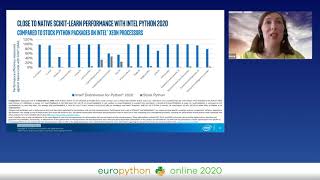
Learn to optimize Python for high-performance machine learning, from Intel-enhanced packages to scalable data processing and analytics pipelines that rival C++/MPI performance on large datasets and clusters.
Top 15 Python Tips for Data Cleaning - Understanding
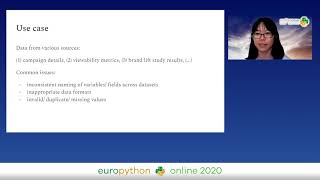
Discover 15 essential Python tips for effective data cleaning and understanding, focusing on Pandas and NumPy libraries to enhance your data analysis skills.
Can We Deploy Yet?
Prepare your Python project for production deployment with essential checklist, Docker image optimization, environment differences, and real-world strategies for handling exceptions, logs, and metrics.
Mastering a Data Pipeline with Python - 6 Years of Learned Lessons from Mistakes
Explore key insights and best practices for building robust data pipelines with Python, covering data acquisition, transformation, storage, and workflow management based on 6 years of experience.