Per Python ad Astra
Explore astrodynamics with poliastro, a Python library for computing orbital maneuvers and plotting trajectories. Learn about JIT compiling and the role of open source in space exploration.
Infrastructure as Code - "pip install" Your Environment
Learn to build your own infrastructure-as-a-service using Python, Flask, and Docker. Create a Postgres-as-a-service system with just 300 lines of code, enabling self-service database provisioning and streamlining development workflows.

Introduction to aiohttp
Explore asynchronous HTTP programming with aiohttp, an alternative to WSGI frameworks. Learn client and server APIs, advanced techniques, and asyncio-based coding tips for efficient web development.

Things I Wish I Knew Before Starting Using Python for Data Processing
Discover essential Python techniques and software development principles for effective data processing, enhancing your skills beyond the scientific stack.

Modern OpenGL with Python
Learn to create 2D and 3D graphics applications using Python and modern OpenGL. Explore graphics theory, OpenGL evolution, and practical implementation, including shaders and lighting models.
Metaclasses for Fun and Profit - Making a Declarative GUI Implementation
Explore metaclasses for declarative GUI implementation in Python, focusing on clean layout description and leveraging advanced language features for efficient widget structure creation.

The Gilectomy
Explore CPython's Global Interpreter Lock removal, its impact on performance, and potential solutions for multi-core utilization in this technical deep dive.
LIGO - The Dawn of Gravitational Wave Astronomy
Explore the groundbreaking discovery of gravitational waves by LIGO, its significance in astronomy, and the crucial role Python played in this scientific milestone.
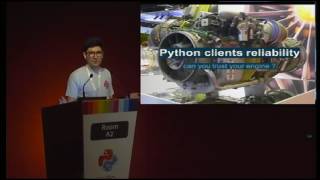
Using Service Discovery to Build Dynamic Python Applications
Learn to build dynamic, distributed Python applications using service discovery technologies like Consul, etcd, and Zookeeper. Compare their strengths and weaknesses through code examples and a live demo.
Moving Away from NodeJS to a Pure Python Solution for Assets
Explore a pure Python approach to asset management in web development, eliminating the need for NodeJS and simplifying project setup and deployment processes.
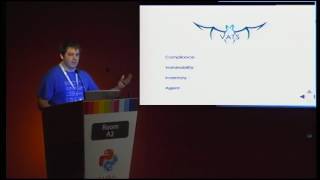
Cybersecurity in the Financial Sector with Python
Explore cybersecurity beyond ethical hacking, focusing on crucial aspects in finance. Learn Python applications for protecting financial systems and data.
Managing Mocks
Explore effective mocking techniques in Python for improved unit testing. Learn to create, manipulate, and inspect mock objects, handle common scenarios, and maximize the unittest.mock library's potential.
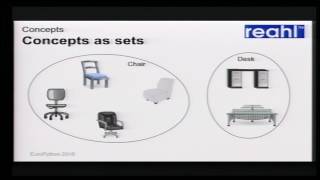
What's the Point of Object Orientation?
Explore the fundamentals of Object Orientation, its underlying theory, and practical applications in Python. Gain insights to improve design decisions and maximize OO benefits.
What is the Best Full Text Search Engine for Python?
Explore and compare full text search engines for Python, including ElasticSearch, Postgres Full Text Search, Sphinx, and Whoosh. Gain insights on performance, features, and selection criteria.

Simplifying Computer Art in Python
Explore Python-based computer art creation using PygletHelper, a simplified OpenGL interface. Learn to draw and animate geometric shapes without extensive graphics knowledge.
Leveraging Documentation Power for Better Web APIs
Explore leveraging documentation and type systems for web APIs, offering features like browsable interfaces, input/output validation, and automated testing to enhance development and user experience.
Documentation-Driven Development
Explore documentation-driven development's impact on code quality, community growth, and programmer development, drawing insights from Django's successful approach.
Asynchronous Network Requests in a Web Application
Explore techniques for implementing asynchronous network requests in web applications, including Twisted event loops, coroutines, and asyncio, and their compatibility with WSGI server parallelization models.
Pytest 3.0
Explore new features, breaking changes, and improvements in pytest 3.0. Learn about fixture enhancements, tox integration, and outcomes from the developer sprint that shaped this major release.
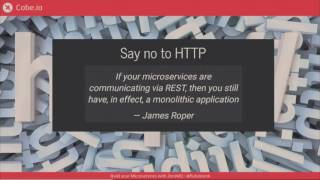
Build Your Microservices with ZeroMQ
Explore ZeroMQ as a powerful alternative to HTTP for building microservices, offering flexible communication patterns, asynchronous API, and improved architecture simplification.
Music Transcription with Python
Explore real-time monophonic music transcription using Python, converting audio to MIDI events through pitch and duration analysis, with potential for live sound manipulation.