Modern Algebra
Explore fundamental concepts and advanced topics in modern algebra through a comprehensive series of lectures by Prof. Manindra Agrawal, covering key principles and applications.
Thermodynamics
Comprehensive exploration of thermodynamic principles, from basic concepts to advanced applications, covering laws, processes, and cycles in engineering systems.
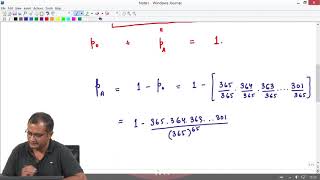
Statistical Mechanics
Comprehensive exploration of probability, statistical ensembles, and quantum mechanics, covering discrete and continuous distributions, entropy, and applications to physical systems.
Quantum Chemistry of Atoms and Molecules
The course introduces students to quantum Chemistry. The syllabus is as follows. Black body radiation. Failure of classical mechanics. Marsden experiment and Rutherford theory. Hydrogen atom spectrum. Bohr Sommerfeld theory. etc.
Combustion
Comprehensive exploration of combustion principles, from chemical reactions and kinetics to flame dynamics, diffusion processes, and advanced topics like turbulent combustion and detonations.
Jonas Dalege on the Physics of Attitudes & Beliefs
Exploring statistical mechanics to understand belief formation and attitude dynamics. Insights into cognitive dissonance, ambivalence, and social interactions through physics-inspired models of opinion networks.
Thermodynamic Speed Limits for Multiple, Coevolving Subsystems
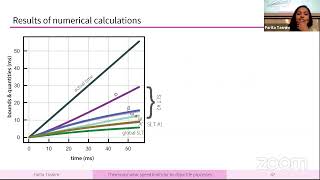
Explore thermodynamic speed limits for coevolving subsystems, focusing on tighter bounds for composite systems and their applications in cell sensing dynamics.
Thermodynamics of Far From Equilibrium Systems, Biochemistry, and Life in a Warming World
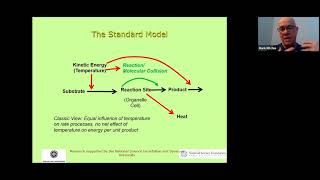
Explores new thermodynamic approaches to biological temperature responses, challenging traditional enzyme stability theories and offering insights into optimum temperatures for biochemical reactions and ecological impacts.
A Statistical Physicist Looks at Some Complex Systems
Explore complex systems through statistical physics, examining random walks, lead changes in sports, and data analysis techniques for understanding dynamic processes.
The Landauer Limit and Thermodynamics of Biological Computation
Explore the intersection of physics, information theory, and biological computation, focusing on the Landauer limit and its implications for engineered and natural systems.

Why is Time a One-Way Street?
Explore the paradox of time's arrow with physicist Leonard Susskind, delving into how the past differs from the future and examining current perspectives in physics and cosmology on this intriguing phenomenon.
Complex Time - Cognitive Regime Shift II - When-Why-How the Brain Breaks
Exploring brain function loss through complexity science, from cellular to cognitive levels, discussing indicators, mechanisms, and analytical approaches for understanding aging and diseased brains.
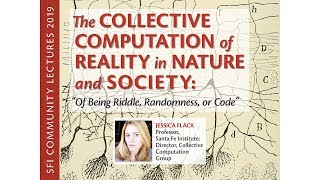
The Collective Computation of Reality in Nature and Society
Explore how nature computes through collective processes, challenging traditional views on complexity and information processing in biological and social systems.
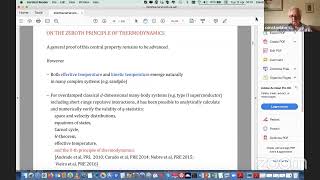
Nonadditive Entropies and Statistical Mechanics at the Edge of Chaos - Cornerstones
Explore nonadditive entropies and statistical mechanics at chaos' edge. Delve into Boltzmann-Gibbs entropy, Q-logarithm, and complex networks, challenging traditional thermodynamic principles.

Recognizing the Alien in Us
Explore the intersection of physics and biology in the quest to define life, its origins, and potential existence beyond Earth, guided by astrobiologist Sara Walker's innovative perspectives.
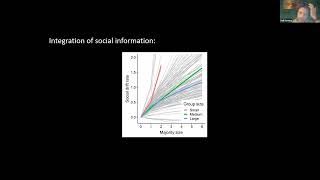
From Individual-Level Cognition to Collective Dynamics - Ralf Kurvers
Explore collective dynamics in social systems through evidence accumulation models, evolutionary algorithms, and real-world applications in resource finding, predictions, and robotics.
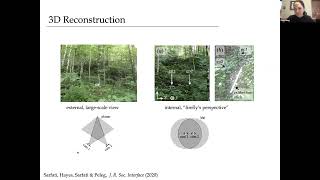
The Physics of Firefly Communications – Orit Peleg
Explore firefly communication, synchronization, and 3D reconstruction. Discover adaptive behaviors, environmental effects, and interspecies interactions in this fascinating study of bioluminescent insects.
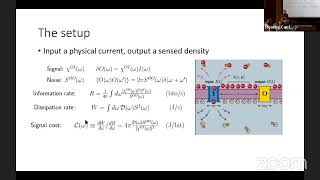
Connecting Molecular Details to Macroscopic Behaviors with Thermodynamics and Information Theory
Explore how molecular details connect to macroscopic behaviors using thermodynamics and information theory, focusing on E. coli chemotaxis and the energetic costs of biological information processing.
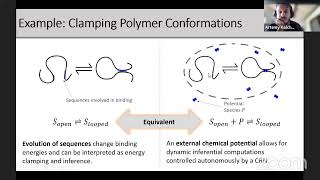
Detailed Balanced Chemical Reaction Networks as Generalized Boltzmann Machines
Explore the intersection of chemical reaction networks and machine learning, focusing on detailed balanced systems and their relation to generalized Boltzmann machines.
A New Thermodynamics of Biochemistry - Part 2
Exploring thermodynamics in living systems, from cellular metabolism to ecosystems. Insights on climate change, agriculture, and the search for extraterrestrial life through a new lens of biochemistry and physics.
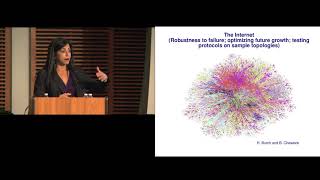
The Science of Networks - C4 Public Lectures
Explore the emerging science of networks, their structure, and function across diverse systems. Learn about phase transitions, interdependence, and mathematical models for predicting network behavior and consequences.