Optical Engineering
This course in optical engineering covers topics such as geometric optics, refraction, image formation, aberrations, Gaussian beams, and interferometry.
Introduction to Photonics
Explore the fundamentals of photonics, covering wave optics, fiber optics, lasers, and semiconductor light sources. Gain hands-on experience through lab demonstrations and tutorials.

Refractive Index Diagnostics: Spatial Heterodyning and Two-Color Interferometry - Lecture 8
Explore advanced interferometry techniques for plasma diagnostics, including spatial heterodyning and two-color methods, to enhance measurement precision and overcome limitations.

Introduction to Principles of Plasma Diagnostics - Lecture 1
Explore the fundamentals of plasma diagnostics, including their importance and applications in various types of plasmas. Gain insights into this crucial field of study.

Refractive Index Diagnostics: Spatial Heterodyning and Two-Color Interferometry - Lecture 8
Explore advanced interferometry techniques for plasma diagnostics, including spatial heterodyning and two-color methods, to enhance measurement precision and overcome limitations.

Refractive Index Diagnostics - Interferometry and Temporal Heterodyning - Lecture 7
Explore interferometry and temporal heterodyning techniques for plasma diagnostics, enhancing understanding of refractive index measurements in advanced physics applications.

Refractive Index Diagnostics: Interferometry and Temporal Heterodyning - Lecture 7
Explore interferometry and temporal heterodyning techniques for plasma diagnostics, enhancing understanding of refractive index measurements in advanced physics applications.

Refractive Index Diagnostics: Spatial Heterodyning and Two-Color Interferometry - Lecture 8
Explore advanced interferometry techniques for plasma diagnostics, including spatial heterodyning and two-color methods, to enhance measurement precision and overcome limitations.
NISAR: The Next Phase in Remote Sensing of the Earth
Explore NISAR satellite mission's advanced Earth remote sensing capabilities, focusing on solid Earth science, hydrology, and disaster assessment with Prof. Mark Simons.
Quantum Sensors Based on Matter-Waves
Explore cutting-edge matter-wave interferometry and its applications in precision metrology, from testing Einstein's equivalence principle to detecting gravitational waves in groundbreaking experiments.
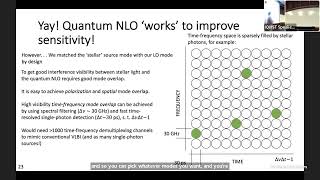
Quantum-Enhanced Interferometric Imaging: Advancing Very-Long-Baseline Interferometry for Astronomy
Explore quantum-enhanced interferometric imaging techniques for astronomy, focusing on innovative methods to improve telescope resolution using entangled light states and VLBI technology.
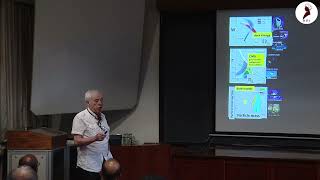
Telescopes on the Moon: The Next Decades - Exploring Space Through Lunar Observatories
Explore groundbreaking astronomical possibilities as lunar-based telescopes revolutionize our understanding of dark ages cosmology, early universe radiation, and exoplanet discoveries in unprecedented detail.
The Extreme Instruments of Astrophysics - LIGO
Explore the cutting-edge science behind LIGO, the most precise device ever built, detecting gravitational waves and pushing the boundaries of astrophysics, quantum mechanics, and engineering.
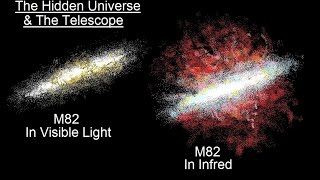
Astronomy - Telescopes
Explore telescopes, from basic principles to advanced technologies, covering refracting and reflecting designs, adaptive optics, interferometry, CCDs, and various types of astronomical observations.
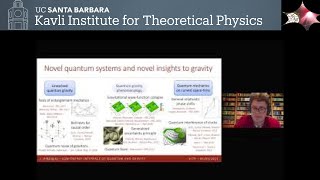
Low-Energy Interface of Quantum and Gravity - Igor Pikovski
Exploring the interface between quantum mechanics and gravity through novel experiments, focusing on atomic clocks, interferometry, and quantum effects in gravitational fields.
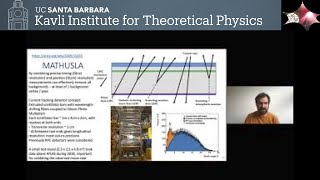
Far Detectors at the LHC - Jamie Boyd
Explores novel experiments for fundamental physics, focusing on far detectors at the LHC. Covers topics like dark matter, axions, and weak short-range forces, discussing opportunities and challenges in experimental physics.
Novel Experiments for Fundamental Physics - General Discussion - KITP Conference Participants
Explore cutting-edge experiments in fundamental physics, including dark matter, axions, and gravitational waves. Discuss theoretical interpretations and potential advancements using cold atoms and interferometric techniques.
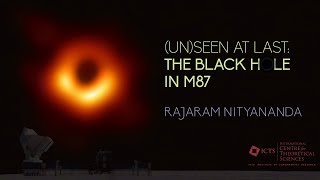
Unseen at Last - The Black Hole in M87 by Rajaram Nityananda
Explore the groundbreaking M87 black hole image, its scientific significance, and the advanced techniques used to capture it. Learn about black hole physics and their role in galactic centers.
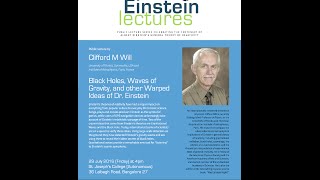
Black Holes, Waves of Gravity, and Other Warped Ideas of Dr. Einstein
Explore Einstein's revolutionary theories, including black holes and gravitational waves, and their impact on science and culture. Learn about recent breakthroughs in detecting cosmic phenomena using advanced technology.
What Happens When Black Holes Collide - Expert Answers on Gravitational Waves
Explore the fascinating world of gravitational waves, black hole collisions, and the stretching of spacetime. Gain insights into cutting-edge physics research and its implications for our understanding of the universe.

Gravitational Waves and Particle Physics: From Detection to Future Prospects - Lecture
Explore gravitational waves and particle physics with Nobel Laureate Barry Barish and Brian Greene, discussing LIGO, detections, future prospects, and the intersection of these cutting-edge fields.