
Fundamentals of Gas Dynamics
The course introduces compressible flow and its constitutive equations. The physical concepts behind isentropic flows, area-Mach number relation etc will be discussed with practical problems in mind.
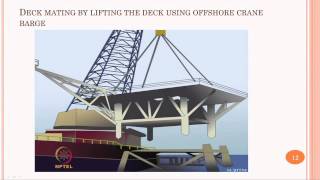
Dynamics of Ocean Structures
Explore the principles and behavior of ocean structures, including motion equations, design considerations, and environmental impacts. Gain insights into marine engineering and offshore technology.

Introduction to Newtonian Mechanics - Lecture 1
Comprehensive introduction to Newtonian mechanics, covering kinematics, dynamics, and calculus applications in physics. Explores motion concepts and equation derivations for a solid foundation in classical mechanics.
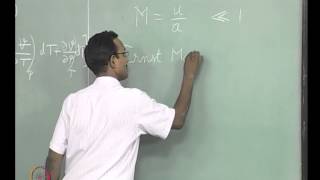
Gas Dynamics
This course discusses topics in gas dynamics. Review of fundamentals: concepts from fluid mechanics, basic thermodynamic relations. Compressible flow: the concept of waves in a fluid, mach waves, compression waves, expansion waves.

Special - Select Topics in Classical Mechanics
Explore advanced topics in classical mechanics, from equations of motion to chaotic systems. Gain deep insights into oscillators, relativity, fluid dynamics, and electrodynamics.
Special Topics in Classical Mechanics
Comprehensive exploration of advanced classical mechanics topics, including equations of motion, oscillations, relativity, electrodynamics, and chaotic systems.
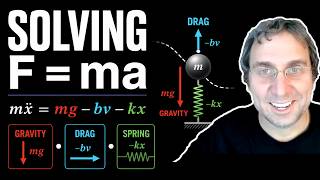
Analytical Dynamics - Lagrangian and 3D Rigid Body Dynamics
Comprehensive exploration of analytical dynamics, covering Lagrangian mechanics and 3D rigid body motion. Extends knowledge beyond undergraduate level, focusing on deriving equations of motion and analyzing system behavior.

Physics One
Explore advanced physics concepts, from equations of motion to Lagrangian mechanics, using mathematical language to develop authentic physicist thinking skills.

Physics 1 Course - Unit 3
Master constant acceleration and free fall motion in physics through comprehensive problem-solving and in-depth exploration of equations, gravitational concepts, and real-world applications.
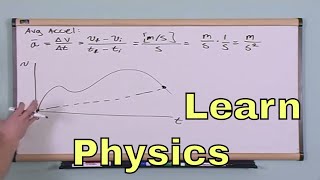
Physics 1
Comprehensive introduction to fundamental physics concepts, covering motion, energy, momentum, rotation, gravitation, and fluid mechanics, with practical applications and problem-solving techniques.
Grade 9 Physics - Motion
Explore motion in a straight line, uniformly accelerated motion, velocity-time graphs, equations of motion, and relative velocity in this comprehensive physics unit for Grade 9 students.
Applications of Calculus to Mechanics
Explore calculus applications in mechanics, covering circular motion, pendulums, and banked tracks. Learn to analyze forces, velocities, and accelerations in various scenarios.
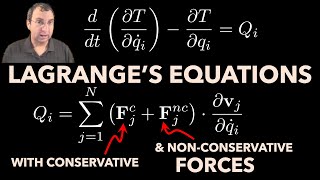
Lagrange’s Equations with Conservative and Non-Conservative Forces - Phase Space Introduction
Explore Lagrange's equations for conservative and non-conservative forces, rigid body systems, and phase space analysis. Learn to solve and classify motions using advanced analytical dynamics techniques.
Lagrange's Equations from D’Alembert’s Principle - Worked Examples
Explore D'Alembert's Principle and Lagrange's Equations through worked examples, including baton sliding, cart-pendulum system, and spring-mass system. Learn to formulate equations of motion for multiparticle systems.
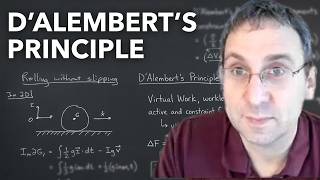
D’Alembert’s Principle of Virtual Work - Active Forces and Workless Constraint Forces
Explore D'Alembert's Principle of Virtual Work, analyzing active forces and workless constraint forces in analytical dynamics. Gain insights into nonholonomic constraints and multiparticle systems.
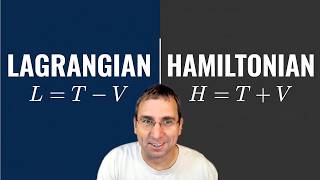
Hamiltonian Systems Introduction - Why Study Them?
Explore Hamiltonian systems and their advantages in mechanics. Learn about generalized momentum, canonical equations, and the transformation from Lagrangian to Hamiltonian formalism.
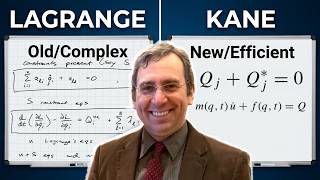
Kane's Method, Kane's Equations, Avoiding Lagrange Multipliers - Quasivelocities & Dynamic Equations
Introduces Kane's method for efficient modeling of constrained systems using quasivelocities, avoiding Lagrange multipliers. Covers theoretical foundations and practical examples like vehicle stability and semi-truck dynamics.

Motion in a Straight Line - Class 11 Physics
Master key concepts of motion in a straight line for Class 11 Physics, including distance, displacement, velocity, acceleration, graphs, equations, and motion under gravity.
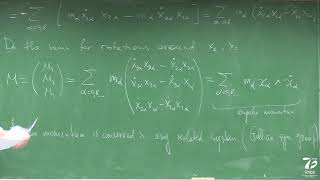
Introdução à Teoria de Vibrações e Ondas - Aula 03
Explore equações do movimento, oscilações e ondas lineares e não-lineares em física matemática avançada. Aprofunde-se em princípios variacionais, simetrias e leis de conservação.
Introdução à Teoria de Vibrações e Ondas - Aula 02
Explore equações do movimento, oscilações e ondas lineares/não-lineares. Aprofunde-se em princípios variacionais, simetrias, estabilidade e métodos espectrais em física matemática avançada.

Introdução à Teoria de Vibrações e Ondas - Aula 01
Explore os fundamentos da teoria de vibrações e ondas, abordando equações do movimento, oscilações e ondas lineares e não lineares, com aplicações práticas e métodos matemáticos avançados.