
Introduction to Newtonian Mechanics - Lecture 1
Comprehensive introduction to Newtonian mechanics, covering kinematics, dynamics, and calculus applications in physics. Explores motion concepts and equation derivations for a solid foundation in classical mechanics.
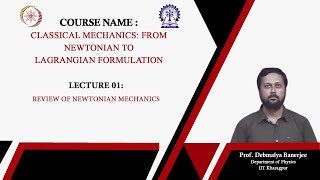
Classical Mechanics - From Newtonian to Lagrangian Formulation
This course deals with the fundamentals of classical mechanics. Mechanics is one of the core subjects for physics and engineering disciplines. This course starts from the basics of Newtonian mechanics.

Dimensions of Meaning and Understanding - Raphaël Millière
Explore dimensions of meaning and understanding, from lexical semantics to complex reasoning, with insights on knowledge acquisition and cognitive pitfalls.
Taller de Investigación sobre Mecánica Clásica
Explora los fundamentos y aplicaciones avanzadas de la mecánica clásica en este taller de investigación dirigido por el experto Santiago Chaves.
Taller de Investigación sobre Mecánica Clásica - 01 de febrero
Explora los fundamentos y aplicaciones avanzadas de la mecánica clásica en este taller de investigación dirigido por el experto Santiago Chaves.
Taller de Investigación sobre Mecánica Clásica - 23 de Enero
Explora los fundamentos y aplicaciones avanzadas de la mecánica clásica en este taller de investigación dirigido por el experto Santiago Chaves.
Tides in Binary Star Systems - Lecture 1
Explore gravitational waves, tides in binary star systems, and multipole moments in this advanced lecture on theoretical astrophysics and gravitational-wave astronomy.
An Elementary Introduction to Special Relativity - Lecture 1
Explore Einstein's Special Relativity through a unique lens, using basic Newtonian mechanics and the concept of inertial observers. Learn how bats' echo location illustrates fundamental principles in this innovative approach.
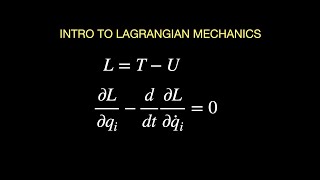
Introduction to Lagrangian Mechanics - Comparison with Newtonian Mechanics
Explore Lagrangian mechanics, comparing it to Newtonian physics. Learn to solve pendulum problems using both approaches and discover advanced applications like double pendulums.
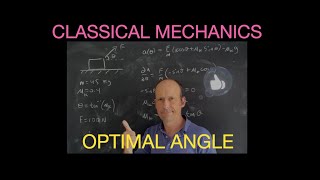
Classical Mechanics: Pulling a Block with Friction - Angle for Max Acceleration
Discover the optimal angle for maximum acceleration when pulling a sled, using physics principles and Python code to solve this real-world problem.
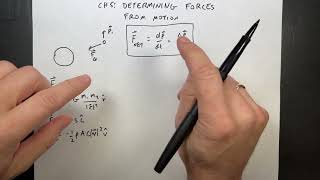
Determining Forces from Motion - Chapter 5
Explore key physics concepts like calculated forces, equilibrium, free body diagrams, circular motion, and friction in this comprehensive lecture on determining forces from motion.
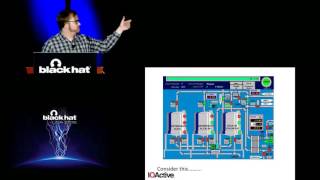
Remote Physical Damage 101 - Bread and Butter Attacks
Explore cyber-physical attacks on industrial systems, including generic "bread and butter" techniques and mitigation strategies beyond network security.
Interplay Between Concepts, Structure, and Empirical Practice: An Inspiration from Physics
Explore how Newtonian mechanics' methodological framework can inspire approaches to mathematical consciousness science, examining the relationship between concepts, structure, and empirical practice.
Historical Perspective: Renaissance to the Development of Mechanical Materialism - Part 1
Explore philosophical currents from ancient India to European Renaissance, tracing the evolution of scientific thought and mechanical materialism.
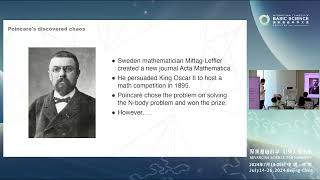
On the Painleve Conjecture in Celestial Mechanics - ICBS 2024
Explore the solution to the Painleve conjecture in celestial mechanics, focusing on noncollision singularities in the four-body problem of Newtonian mechanics.
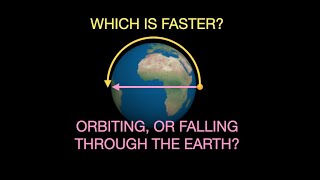
Is It Faster to Fall Through the Earth or Orbit Halfway Around?
Explore the physics behind falling through Earth vs. orbiting halfway around, comparing travel times and analyzing factors affecting motion in both scenarios.
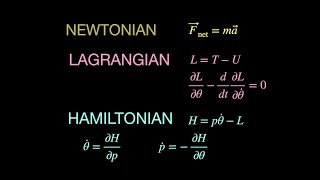
Newtonian, Lagrangian, and Hamiltonian Methods for Simple Pendulum Motion
Explore three methods for deriving pendulum equations of motion: Newtonian, Lagrangian, and Hamiltonian. Compare approaches and visualize results using Python.

How can you think like a Physicist? | Elif Kivilcim | TEDxBaku Oxford School
Elif Kivilcim will share how thinking like a physicist changed the way she views life, and why we should do the same! Elif Kivilcim is a high school student at Baku-Oxford School. This talk was given at a TEDx event using the TED conference format but independently organized by a local community. Le