
CUDA Toolkit 12.2 - New Accelerated Computing and Security Enhancements
Explore CUDA 12.2's new features: Hopper GPU support, confidential computing, heterogeneous memory management, and MPS prioritization enhancements for efficient, secure, and accelerated application development.
Confidential Containers for GPU Compute - Incorporating LLMs in AI Lift-and-Shift Strategy
Explore confidential containers for GPU-accelerated AI, integrating LLMs and Kubernetes for secure, high-performance computing while maintaining data privacy in cloud-native environments.
Exploit Parallelism for AI Workloads with WASM and OpenMP
Explore optimizing AI workloads using WebAssembly and OpenMP for multithreaded, shared memory, and vectorized operations, focusing on challenges and benefits in cloud computing environments.

Overcoming Challenges in Serving Large Language Models - SREcon23 Europe/Middle East/Africa
Explore hosting GPT models in Kubernetes, covering GPU sharding, tensor parallelism, and model optimization. Learn trade-offs between latency, accuracy, and resource allocation, with a live demo showcasing performance.

From Battlegrounds to Fairways - Terrain Procedural Tools in Frostbite
Explore Frostbite's innovative terrain procedural framework, enabling efficient creation of diverse game environments through automated workflows and GPU-based compositing for faster artist iteration.
Ray on Kubernetes - Powering Quantitative Research at Scale
Discover how Ray on Kubernetes revolutionizes quantitative research with scalable infrastructure supporting 100,000 CPU cores, spot instances, and seamless GPU integration for high-performance trading operations.
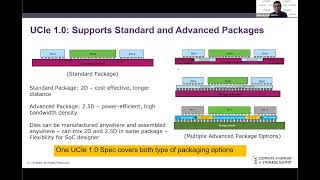
UCIe: An Open Standard for Package-Level Innovations in Computing Systems
Explore UCIe open standard for package-level innovations, covering key metrics, adoption criteria, and usage models for high-performance computing and heterogeneous processing integration.
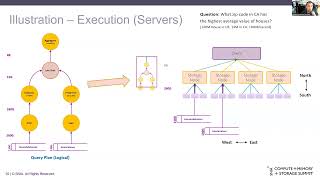
Decomposing Compute to Grow Computational Storage - Dynamic Query Partitioning in Storage Systems
Explore dynamic query partitioning in computational storage systems and learn how decomposable queries can optimize performance across storage device hierarchies for enhanced data processing capabilities.
Kata Containers 4.0 - Full Lifecycle GPU Management for AI/ML Workloads
Discover how Kata Containers 4.0 revolutionizes GPU management for AI/ML workloads through CDI framework integration, enhanced security features, and streamlined resource allocation in Kubernetes environments.

Improving the World's Slowest Raytracer - RADV Implementation Progress
Dive into the evolution of RADV's raytracing implementation, exploring performance improvements, compatibility expansions, and current capabilities in Mesa 23.2's graphics rendering system.

Reducing Stutters with Uber Shaders in Zink - OpenGL Driver Optimization
Discover how uber shaders optimize Zink's OpenGL driver performance by eliminating shader compilation delays and improving pipeline state handling for smoother graphics rendering.
Cross-Architecture Dynamic Migration Solution for Heterogeneous AI Acceleration Systems
Discover a unified solution for seamless application migration across diverse AI accelerators, enabling cross-architecture compilation and dynamic runtime adaptation without code modifications.
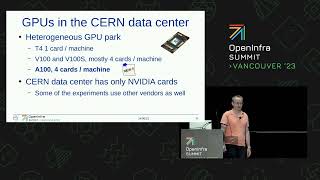
Multi-Instance GPU Deployment for Machine Learning and Particle Beam Simulations at CERN
Explore CERN's implementation of Multi Instance GPU technology using NVIDIA A100s, covering deployment strategies, virtualization approaches, and practical applications in machine learning and particle physics.

Intelligent Architectures for Intelligent Machines - Data-Centric Computing Systems
Explore modern computing architecture challenges and innovative solutions for data-centric design, focusing on machine learning acceleration, in-memory operations, and 3D-stacked memory technology.
Sokovan - Container Orchestrator for Accelerated AI/ML Workloads and Massive Scale GPU Computing
Discover how Sokovan optimizes AI/ML workloads through intelligent container orchestration, featuring dual-layer scheduling and hardware acceleration integration for enhanced GPU computing performance.
Data Platform for End-to-End AI Democratization
Explore how data platforms enable AI democratization through unified processing and training architectures, improving efficiency for recommender systems and deep learning workloads.

HDD Computational Storage Performance Analysis and Benchmarking - From System Tests to IPC
Dive into computational storage benchmarking techniques, exploring IPC analysis, SIMD programming, and inline assembler for optimizing genomics research performance on HDD systems.
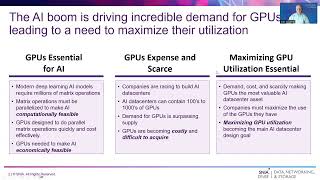
Storage Requirements for AI Infrastructure - From Data Preparation to Inference
Delve into the crucial role of storage systems across the AI lifecycle, from data preparation to inference, exploring performance requirements and infrastructure considerations for optimal GPU utilization.

Custom Chips Needed for Efficient High-Performance Computing
Explore the future of computing power through custom hardware solutions, from manycore systems to silicon development, addressing latency and energy efficiency challenges in high-performance computing.

Demolishing AI Gatekeepers - Breaking Down Barriers in AI Development
Explore how Web3 and decentralization can break Big Tech's monopoly on AI development by democratizing access to training data and GPU resources for unrestricted innovation.

Stable Diffusion 3.5 Large Tutorial - Configuration Guide and FLUX DEV Comparison
Master the optimal configuration and usage of Stable Diffusion 3.5 Large and FLUX DEV through SwarmUI, including model comparisons, LoRA implementation, and deployment across various computing platforms.