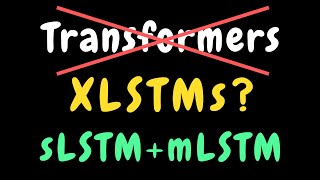
XLSTM: Understanding Extended LSTMs with sLSTM and mLSTM Architecture
Delve into the evolution of LSTM networks, exploring how XLSTM's innovative sLSTM and mLSTM components enable parallel processing and compete with transformers in sequence-related tasks.
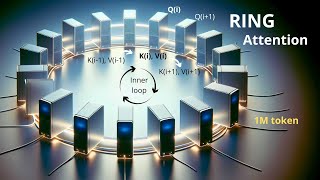
Ring Attention and Blockwise Transformers for Extended Context Length in Language Models
Dive into the technical mechanics of Ring Attention, exploring how it achieves million-token context lengths in large language models through blockwise parallel transformers and efficient implementation.

Rusticl OpenCL Implementation Status Update 2023
Discover the latest developments and implementations in Rusticl, exploring project updates and future outlook for this OpenCL implementation in Rust.

Mixture of Experts (MoE) in Large Language Models - A Simple Guide
Delve into the architecture and functionality of Mixture of Experts (MoE) systems in language models through clear examples and technical insights about token routing, gating networks, and computational efficiency.
Mistral 7B: Architecture, Performance and Implementation Guide
Dive into Mistral 7B's implementation, exploring grouped-query attention, efficient GPU usage, and hands-on demonstrations for running advanced language models on local hardware.
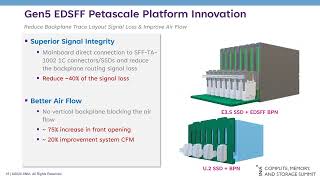
Storage Architecture Optimized for AI Workloads - High Performance Solutions for GPU Clusters
Discover how to optimize storage architecture for AI workloads, exploring high-performance solutions, capacity-optimized tiers, and real-world implementations for machine vision applications.
SoC Construction Using Universal Chiplet Interconnect Express (UCIe) - A Game Changer
Explore the Universal Chiplet Interconnect Express (UCIe) standard and its revolutionary impact on SoC construction, chiplet integration, and high-performance computing applications.

QLoRA: Efficient Training of Large Language Models Using Quantization and Low-Rank Adaptation
Discover how QLoRA enables efficient training of large language models on a single GPU through innovative techniques like NormalFloat, Double Quantization, and Paged Optimizers.
Fine-tuning Flan-T5 LLM with HuggingFace Accelerate - Tutorial
Learn how to fine-tune Flan-T5 LLM using HuggingFace Accelerate for multi-GPU environments, with step-by-step guidance on preprocessing and implementation for specific downstream tasks.

Fine-tune T5 Language Model for Text Summarization on Google Colab
Master fine-tuning techniques for T5 language models using HuggingFace's latest code, focusing on text summarization tasks with hands-on implementation in Google Colab's free GPU environment.
ChatGPT vs Flan-T5: Comparing Proprietary and Free LLMs with Performance Tuning
Explore the differences between ChatGPT and Flan-T5 LLM models, comparing their capabilities, accessibility, and performance optimization through practical demonstrations and hyperparameter tuning techniques.
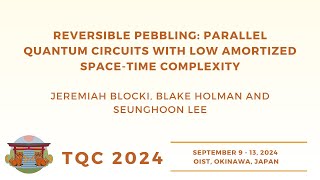
Reversible Pebbling - Parallel Quantum Circuits with Low Amortized Space-Time Complexity
Explore parallel quantum circuit construction through reversible pebbling games, focusing on efficient space-time complexity and quantum algorithm optimization for enhanced computational performance.
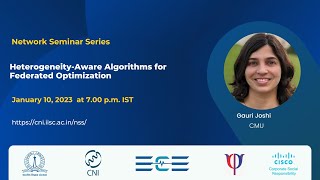
Heterogeneity-Aware Algorithms for Federated Learning and Distributed Optimization
Delve into advanced federated learning algorithms, focusing on heterogeneity challenges in distributed model training and innovative solutions for edge computing optimization.

Running BLOOM 176B LLM Inference with AWS ML and DeepSpeed
Dive into advanced LLM inference deployment using AWS's ml.p4de.24xlarge instance, exploring BLOOM 176B implementation with DeepSpeed and DJL for optimal performance and scalability.
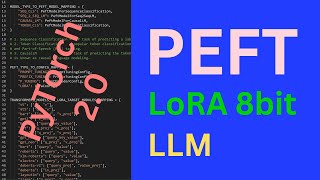
Optimizing LLM Fine-Tuning with PEFT and LoRA Adapter-Tuning for GPU Performance
Master efficient fine-tuning of large language models using PEFT and LoRA techniques, optimizing GPU memory usage through INT8 quantization and adapter-tuning for cost-effective model development.

Parameter-Efficient Fine-Tuning with LoRA - Optimizing LLMs for Local GPU Training
Master PEFT LoRA techniques to efficiently fine-tune large language models on local GPUs through low-rank adaptation, reducing memory requirements while maintaining model performance.

Experimental KERAS Feature Space for Medical AI Heart Attack Prediction
Dive into advanced feature scaling with KERAS Feature Space, building a medical AI system to predict heart attack probabilities using structured data classification and optimized data pipelines.
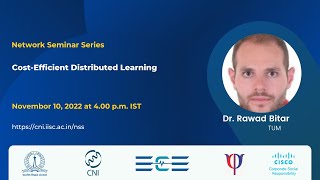
Cost-Efficient Distributed Learning
Discover strategies for optimizing distributed gradient descent algorithms by managing worker responses and implementing adaptive techniques to balance computational efficiency with model quality in machine learning systems.
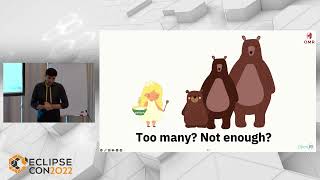
Adaptive Threading: The Goldilocks Dilemma with GC Parallelism
Dive into Eclipse OpenJ9's GC internals, exploring adaptive threading optimization and parallelism techniques to minimize garbage collection pause times and enhance Java application performance.
Infrastructure and Tooling - Full Stack Deep Learning - March 2019
Explore infrastructure and tooling for deep learning projects, covering GPU machines, experiment tracking, and all-in-one solutions like AWS SageMaker.
Efficient AutoML with Ludwig, Ray, and Nodeless Kubernetes
Explore efficient AutoML using Ludwig and Ray, leveraging heuristics for model production. Learn how Nodeless Kubernetes optimizes GPU resource management, reducing costs in cloud environments.