Kueue: Kubernetes-Native Job Queueing for Batch Workloads
Explore Kueue, a Kubernetes-native job queueing solution for efficient resource management and fair sharing in batch workloads, addressing limitations in pod-centric scheduling.
Innovations in Theoretical Computer Science 2020 - Session 5
Explore cutting-edge research in theoretical computer science, including secure computation, communication protocols, coding theory, and fault-tolerant algorithms presented at ITCS 2020.

Modular Language Models: Addressing Limitations of Dense Training
Explore modular language models: specialized components for distinct domains, enabling customization, parallelization, and sparse activation. Discover a new approach to collaborative LM development.
How openEuler is Powering Tomorrow's AI and Smart Infrastructure
Explore openEuler's innovations in AI infrastructure and heterogeneous computing, including cloud-native solutions and openEuler NEXT, designed to optimize AI workflows and enhance user experience.
Scheduling Array Operations for GPU and Distributed Computing
Explore array operation scheduling for optimized execution across hardware. Learn about static scheduling, type theory, and parallelization for GPUs and distributed computing.

Report on Co-dfns: Current State, Developments, and Future Outlook - Dyalog '22
Explore the latest developments in Co-dfns, a high-performance compiler for parallel dfns, and its impact on the computing landscape. Learn about its benefits and future prospects.
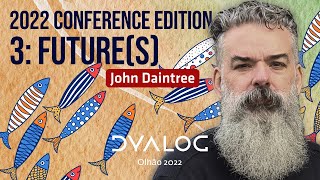
Future(s) - Asynchronous Programming in Dyalog - Part 3a
Explore asynchronous programming in Dyalog, including green threads, .NET tasks, and futures. Learn about unifying I-beam functions and see demonstrations using N-queens and wait functions.
Multi-Stage Vertex-Centric Programming for Agent-Based Simulations
Explore multi-stage vertex-centric programming for agent-based simulations, improving performance and control flow in complex graph algorithms through meta-programming techniques.
In-Order Execution Nails Every Weak Memory Behavior
Explore in-order execution's comprehensive coverage of weak memory behaviors, unveiling its significance in modern computing systems.
How Do We Know That Weak Memory Matters?
Explore weak memory's impact on system reliability and security, examining evidence and alternative explanations with Mike Dodds.

TensorFlow Lite in Android with Google Play Services
Explore TensorFlow Lite integration in Android using Google Play services, enabling efficient ML model deployment, reduced app size, and improved performance without static library bundling.

Trillion Parameter Models Are Here
Explore ZeRO-Infinity's breakthrough in training trillion-parameter ML models with limited GPUs, revolutionizing large-scale deep learning and expanding possibilities for AI researchers and practitioners.
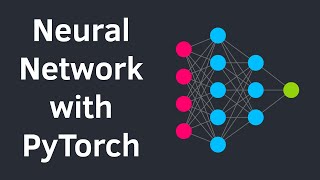
Build a Neural Network with Python Tutorial - Deep Learning with PyTorch
Learn to build, train, and evaluate a neural network for weather prediction using PyTorch. Covers data preprocessing, model architecture, GPU acceleration, and practical applications.
Langchain Async Explained - Make Multiple OpenAI ChatGPT API Calls at the Same Time
Explore async support in Langchain for parallel OpenAI API calls, boosting application speed. Learn to implement async for LLM, chain, and agent calls with practical examples and code.
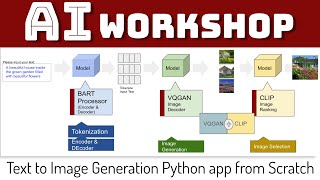
AI Workshop - Build Your Own Text-to-Image Application with DALL-E Mini in Python from Scratch
Learn to build a text-to-image application using DALL-E mini in Python. Covers model setup, code implementation, and result generation, providing hands-on experience with AI-driven image creation.
Prototype of a GPT Based Swarm Intelligence System as Example to Inspire More Advanced Swarm Systems
Explore a prototype GPT-based swarm intelligence system, demonstrating ensemble approaches and inspiring advanced swarm development. Includes code reviews, parallelism, and comparisons to true swarm behavior.

Building a Faster-Than-Rust-and-C++ Perfect Hash Table
Explore the journey of optimizing hash tables, from basic concepts to advanced techniques, achieving performance improvements that surpass Rust and C++.

The Power of Randomization - Distributed Submodular Maximization on Massive Datasets
Explore distributed algorithms for submodular maximization in machine learning, focusing on a parallel approach that achieves constant factor approximation guarantees for large-scale problems.

Stable Diffusion 2.0 Fine-Tuning with DreamBooth on Free Colab
Fine-tune Stable Diffusion 2.0 with DreamBooth on free Google Colab. Create custom AI avatars and profile pictures. Learn data collection, processing, model training, inference, and conversion for Automatic1111 compatibility.

Parallel Discrete Sampling via Continuous Walks
Explore innovative techniques for sampling discrete distributions using continuous walks, with applications in determinantal point processes and directed Eulerian tours.
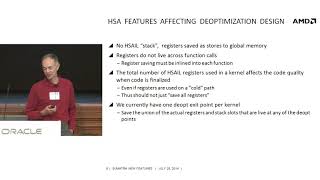
GPU/JVM Cooperation - Optimizing Java Performance with GPU Integration
Explore GPU/JVM cooperation, optimization techniques, and performance enhancements for Java applications leveraging GPU capabilities.