
Challenges in Formalising Recent Results in Formal Language Theory
Explore challenges in formalizing recent results linking formal language theory and computational group theory, with insights on making proofs more amenable to formalization.
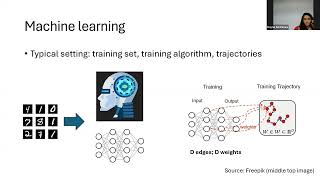
Metric Space Magnitude and Generalization in Neural Networks
Exploring metric space magnitude in neural networks: new topological complexity measures for assessing generalization capabilities, with applications to transformers and deep graph networks.
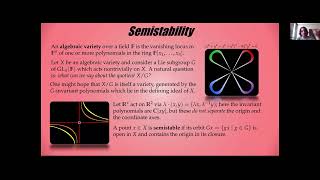
Harder-Narasimhan Filtrations of Persistence Modules
Explore Harder-Narasimhan types in quiver representations, examining their applications and limitations in persistence modules across various contexts in algebraic topology.

Computing Generalized Ranks of Persistence Modules via Unfolding to Zigzag Modules
Efficient algorithm for computing generalized ranks of persistence modules using unfolding to zigzag modules, with applications in algebraic topology and data analysis.
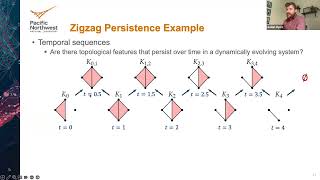
Understanding Temporal Hypergraph Dynamics with Zigzag Persistence
Explore temporal hypergraphs and zigzag persistence to analyze complex systems' topological evolution, applied to cybersecurity and social networks for understanding underlying dynamics.
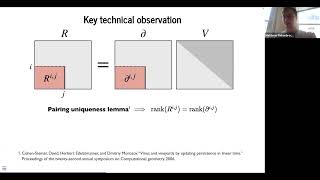
Spectral Relaxations of the Persistent Rank Invariant - Applied Algebraic Topology Network
Spectral relaxations of persistent rank invariant: A framework for continuous relaxations, offering stability and differentiability while preserving key properties and enabling efficient GPU-parallelized computation.

An Artist's Guide to Using Nanite Tessellation in Unreal Engine 5.4
Explore new Nanite features in UE 5.4, learn best practices for building efficient Nanite meshes, and optimize memory usage in this artist-focused guide to advanced tessellation techniques.

Python Apple MLX Tutorial: Introduction to Machine Learning on Apple Silicon
Learn MLX framework for Apple Silicon: GPU operations, transformers, language models, and generative AI concepts. Applicable to PyTorch and NumPy users.
Towards Steerable AI Systems
Exploring machine learning methods for steerable AI control, balancing short-term and long-term goals across stakeholders. Applications in search ranking and writing assistance discussed.

Boltzmann Machines - The Grandfather of Generative Models
Explore Boltzmann Machines, early generative models learning data probability distributions using stochastic rules and latent representations. Understand their goals, distribution, update rules, and evolution to Restricted Boltzmann Machines.
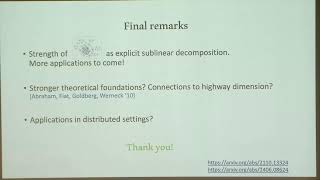
Sublinear Algorithms in Social Networks via Core-Periphery Decomposition
Explore sublinear algorithms for large networks using core-periphery structure and degree distribution. Learn about accelerating tasks like node sampling and shortest path computations.
Computing Small Rainbow Cycle Numbers with SAT Modulo Symmetries
Explores computing rainbow cycle numbers using SAT modulo Symmetries, enhancing understanding of envy-freeness in fair division of indivisible goods and improving EFX allocation feasibility guarantees.
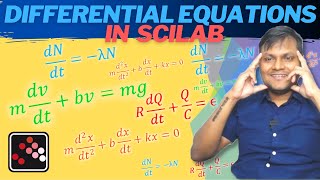
Solving Differential Equations in Scilab - First and Second Order ODEs
Learn to solve first and second order differential equations in Scilab using the ODE command, with practical examples from physics like radioactive decay, capacitor charging, and harmonic oscillators.

Measuring the Performance of CPython
Explore CPython's performance measurement techniques, benchmark suite, and continuous testing system. Learn about challenges in interpreter performance evaluation and apply insights to general software.
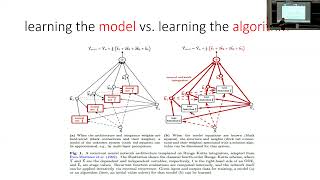
Data and Complex Systems Modeling: Past and Present Perspectives
Explore insights on data-driven modeling of complex systems, blending historical perspectives with current approaches in machine learning and dynamical systems.
How Data Deceives and Informs Us - Risks and Benefits of Data Analysis and AI
Explore data science and AI literacy with Emma McCoy, uncovering insights, potential pitfalls, and strategies to avoid biases in data analysis and AI outputs.

Bridging Persistent Homology and Discrete Morse Theory with Applications to Shape Reconstruction
Explore the connection between persistent homology and discrete Morse theory, unifying key concepts and applying insights to shape reconstruction in computational topology.
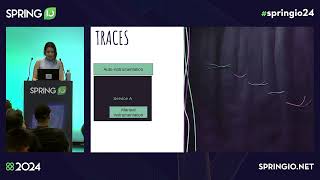
Navigating the Complexities of Service-to-Service Invocations - Deep Dive Into Causality
Explore tools and techniques for visualizing causality in Spring services, including traces, workflows, and service meshes. Learn to enhance system design and collaboration through causal relationship insights.
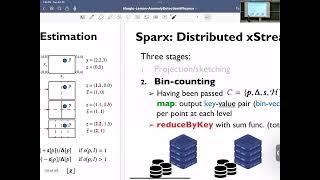
Anomaly Detection for Finance
Explore advanced techniques for identifying financial irregularities, enhancing risk management, and safeguarding assets in the complex world of modern finance.
On Clustering scRNA-seq Data
Explore challenges and strategies in clustering single-cell RNA sequencing data, focusing on the k-cluster method's effectiveness for analyzing neuronal datasets in fruit flies.

Drug Development in Oncology - Opportunities, Challenges and Mechanistic Modeling - Lecture 2
Explore opportunities and challenges in oncology drug development, focusing on mechanistic modeling approaches to enhance treatment strategies and overcome resistance.