Probabilistic Machine Learning in Bioinformatics
Explore probabilistic machine learning applications in bioinformatics, focusing on cutting-edge techniques and their impact on biological data analysis.

Computational Physics in the Classroom
Explore three approaches to integrating computational physics in education, using modeling techniques to illustrate key principles and functions.

ME3255 - Rocket Science Solutions with Python
Explore rocket science solutions using Python, covering advanced concepts and practical applications in aerospace engineering.
Learning Low-Degree Functions on the Discrete Hypercube
Explore computational learning theory through random query models and polynomial inequalities, improving estimates for query complexity in reconstructing hypercube functions.
Swarm-Based Gradient Descent Method for Non-Convex Optimization
Explore innovative swarm-based gradient descent techniques for solving non-convex optimization problems, presented by Prof. Eitan Tadmor from the University of Maryland.
Time Integration of Tree Tensor Networks
Explore numerical methods for time-dependent quantum dynamics using tree tensor networks, focusing on efficient algorithms and error analysis for high-dimensional problems.
The Geometry of the Deep Linear Network
Explore the geometric principles underlying deep linear networks, uncovering their mathematical foundations and implications for machine learning algorithms.
Optimal Transport and High Dimensional Probability - Gradient Flows on Wasserstein Space
Explore gradient flows on Wasserstein spaces, connecting optimal transport theory with high-dimensional probability concepts for advanced mathematical insights.
Understanding the Buzz Around Cilium: Introduction and Production Use at Alibaba
Explore Cilium's evolution from a networking CNI to a comprehensive solution for observability and security, with insights on its implementation at Alibaba Cloud and future directions.

What's New with Turing.jl and Its Ecosystem
Explore updates to Turing.jl, a probabilistic programming framework in Julia for Bayesian inference, and its expanding ecosystem of modular packages for enhanced usability and extensibility.
Using Julia as Part of an Anomaly Detection Pipeline
Explore Julia's role in anomaly detection pipelines, integrating data analysis, algorithm development, and real-time processing with Java-based web applications for efficient business solutions.
Secure Numerical Computations Using Fully Homomorphic Encryption
Explore secure cloud computing with homomorphic encryption using Julia packages. Learn to protect sensitive data while performing numerical computations on untrusted systems.
State of Julia's SciML Ecosystem - Current Status and Future Directions
Comprehensive overview of Julia's SciML ecosystem, highlighting maturity levels of various packages, current development focus, and future directions in scientific machine learning and differential equations.
Modeling and Simulation of Sampled-Data Systems
Explore modeling and simulation of sampled-data systems, including discrete-time partitions, clocks, and interactions between continuous and discrete components using ModelingToolkit in Julia.
Functional Programming and Scala for Machine Learning - YOW! 2015
Explore how functional programming and Scala can revolutionize machine learning, offering strongly-typed solutions for efficient algorithm implementation and scalable data processing.

Coding Challenge: Dragon Curve Fractal Animation
Learn to animate the Dragon Curve fractal using p5.js. Explore the algorithm, implement rotation and scaling, and create a mesmerizing visualization of this complex mathematical pattern.
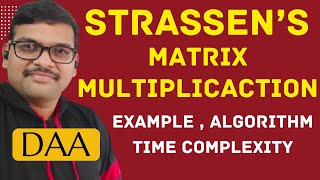
Strassen's Matrix Multiplication Algorithm - Concept and Time Complexity
Explore Strassen's Matrix Multiplication algorithm, its concept, and time complexity in the context of Divide & Conquer strategies for efficient matrix operations.
Inductive Definitions, Predicativity, and the Mahlo Universe
Explore inductive definitions, predicativity, and the Mahlo universe in type theory with Peter Dybjer. Gain insights into advanced mathematical concepts and their applications.
Structural Rules and Algebraic Properties of Intersection Types
Explore structural rules and algebraic properties of intersection types in lambda calculus, examining their impact on type assignment systems and programming language theory.
Isabelle as System Platform for the Archive of Formal Proofs
Explore Isabelle's role as a system platform for the Archive of Formal Proofs, examining its impact on mathematical formalization and proof verification.
Algebraic Theorems in PVS
Explore algebraic theorems using the PVS theorem prover. Learn to formalize and verify mathematical concepts in a rigorous computational environment.