
Some Very Nice Values of Cosine
Explore fascinating values of cosine and their applications in trigonometry. Gain insights into mathematical patterns and relationships.
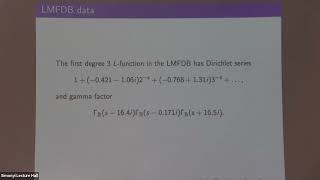
Second Moment of the GL_3 Standard L-function on the Critical Line
Explore advanced number theory concepts, focusing on GL_3 L-functions, moments of the Riemann zeta function, and applications to the Rankin-Selberg problem.
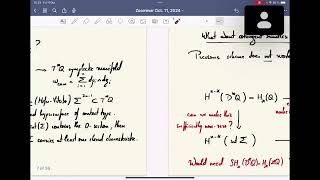
Floer Homology with DG Coefficients - Applications to Cotangent Bundles
Explore Floer homology with DG coefficients and its applications to cotangent bundles. Gain insights into symplectic geometry and dynamical systems through advanced mathematical concepts.
Non-escape of Mass for Arithmetic Quantum Limits on Hyperbolic 4-Manifolds
Explore non-escape of mass for Hecke-Maass cusp forms on hyperbolic 4-manifolds, addressing challenges in unbounded Hecke relations and utilizing quaternionic matrices for unique factorization.
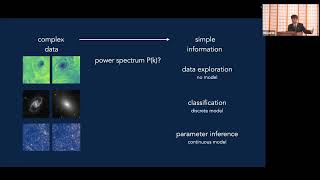
A Mathematical Vocabulary for Textures and its Astronomical Applications
Explore mathematical approaches to texture analysis and their applications in astronomy, focusing on innovative techniques for cosmic structure interpretation.
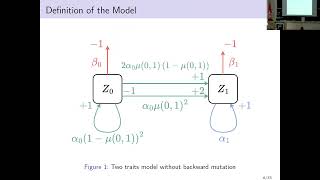
Genetic Composition of Supercritical Branching Populations Under Power Law Mutation Rate
Explore genetic composition in supercritical branching populations, focusing on power law mutation rates and their implications for evolutionary dynamics.
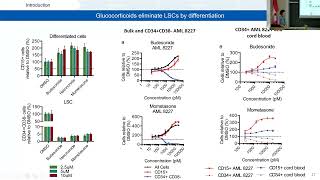
Mathematical Modelling of Premalignant and Disease Phases of Acute Myeloid Leukemia to Accelerate the Preclinical Development of New Therapies
Explore mathematical models of acute myeloid leukemia phases to advance preclinical therapy development. Learn innovative approaches in cancer research.
Spectral Analysis of Dirac Operators with a Purely Imaginary Dislocation
Explore spectral analysis of Dirac operators with imaginary dislocation, covering Green functions, pseudospectra, and effects of matrix potentials on essential and discrete spectra.
Dirichlet-to-Neumann Map for the p-Laplacian on Metric Measure Spaces
Explore the Dirichlet-to-Neumann map for p-Laplacian on metric measure spaces. Delve into Newton-Sobolev spaces, trace classes, and Besov functions in the context of Dirichlet and Neumann problems.
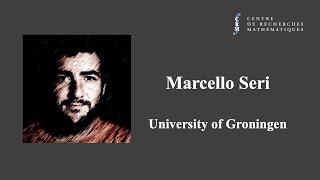
A Panorama of Singular Sub-Laplacians and Their Spectra
Explore exotic properties of Laplace-Beltrami operators on rank-varying sub-Riemannian structures. Delve into self-adjointness, spectral properties, and sub-Riemannian Weyl laws. Discover open questions in this fascinating field.

Two-sided Lieb-Thirring Bounds for Semi-bounded Schrödinger Operators
Explore upper and lower bounds for eigenvalues of semi-bounded Schrödinger operators, focusing on atomic Hamiltonians with Kato potentials and the landscape function in all spatial dimensions.

Bounds on Probability and Chebyshev's Inequality in Probability and Statistics
Explore Chebyshev's Inequality, its derivation, and practical applications in probability and statistics for engineering and business students.
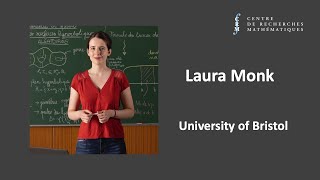
The Moduli Space of Twisted Laplacians and Random Matrix Theory
Explore the convergence of spectral number variance for twisted Laplacians to random matrix theory ensembles, extending Rudnick's work to break time-reversal symmetry and include Dirac operators.
Uncontextualized Significance Considered Dangerous in Evaluation - Session M1.5
Explore the dangers of uncontextualized significance in evaluation, presented by Nicola Ferro and Mark Sanderson at SIGIR 2024.
The Treatment of Ties in Rank-Biased Overlap - Evaluation M1.5
Explore the treatment of ties in Rank-Biased Overlap, examining its impact on information retrieval evaluation metrics and ranking systems.
EditKG: Editing Knowledge Graph for Recommendation - Lecture 1
Explore innovative techniques for editing knowledge graphs to enhance recommendation systems, focusing on improving accuracy and relevance.
Transformer-based Reasoning for Learning Evolutionary Chain of Events on Temporal Knowledge Graphs
Explore transformer-based reasoning for learning evolutionary event chains on temporal knowledge graphs, enhancing understanding of complex temporal relationships.
Branching Processes for Cascades on Networks
Explore branching processes and their application to network cascades, gaining insights into complex system dynamics and interdisciplinary physics concepts.
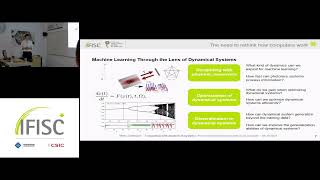
Computing with Dynamical Systems - From Implementations Towards Novel Concepts
Explore dynamical systems in computing, from practical implementations to cutting-edge concepts. Gain insights into complex systems and interdisciplinary physics applications.
MetaHKG: Meta Hyperbolic Learning for Few-shot Temporal Reasoning - M1.2
Explore meta hyperbolic learning for few-shot temporal reasoning in knowledge graphs, enhancing reasoning capabilities with limited data.

TulipaEnergyModel.jl: An Efficient and Flexible Energy Model
Explore an efficient, flexible optimization model for electricity markets and energy sector coupling, featuring graph theory for adaptable representation and customizable time resolutions.